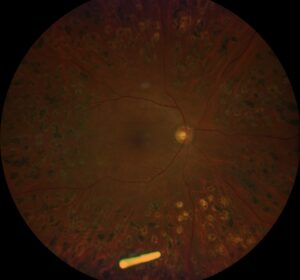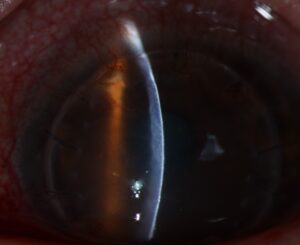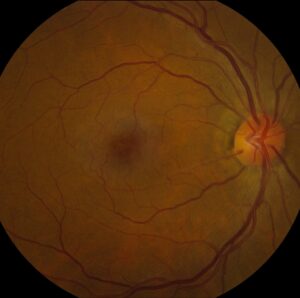
Silicone oil tamponade is used to hold the retina in place after vitrectomy in eyes with complex detachment, and it is the tamponade of choice when postoperative posturing is impractical or gas would not last long enough.
It remains in the eye until it is removed by a second operation, and during that time it can damage the cornea, lens, angle, and optic nerve.
Anticipating these complications, and choosing the right time to remove the oil, are as important as the original retinal repair.
What Is Silicone Oil Tamponade?
Silicone oil is polydimethylsiloxane, an inert, hydrophobic liquid that is lighter than water and floats in the vitreous cavity.
Viscosities of 1000 centistokes (cSt) and 5000 cSt are most common, with the higher viscosity resisting emulsification at the cost of harder injection and removal.
The oil provides a long-lasting tamponade of superior breaks, and its surface tension closes retinal breaks from within.
Inferior tamponade is less complete because the oil floats, and heavy silicone oils with a density greater than water have been developed for this problem.
Indications
- Proliferative vitreoretinopathy (see proliferative vitreoretinopathy)
- Giant retinal tears
- Complicated tractional or combined detachment, including diabetic detachment (see tractional retinal detachment)
- Patients who cannot position or who must travel by air or to altitude
- One-eyed patients in whom vision is essential
- Trauma and ocular infection with detachment
The Silicone Study found that oil and long-acting gas produced similar results for severe PVR, and both were better than short-acting gas.
Complications of Silicone Oil Tamponade
Cataract
Cataract is the most frequent complication in phakic eyes.
Contact between oil and the posterior lens capsule promotes rapid nuclear and subcapsular opacities, and the condition is nearly universal after prolonged tamponade.
Cataract surgery is often combined with oil removal.
Raised Intraocular Pressure and Glaucoma
Causes include:
- Pupillary block from oil in the anterior chamber in aphakic and some pseudophakic eyes
- Emulsified oil blocking the trabecular meshwork, which produces a chronic, difficult-to-treat glaucoma
- Inflammation and neovascular glaucoma in ischemic eyes
- Steroid response
An inferior peripheral iridectomy (Ando) helps prevent pupillary block in aphakic eyes with oil.
Management includes medical therapy, drainage surgery, or cyclophotocoagulation, and early removal of oil when the retina is stable.
Keratopathy
Oil in the anterior chamber contacts the corneal endothelium and causes endothelial decompensation and band keratopathy.
Eyes with oil in the anterior chamber need prompt oil removal from the anterior chamber and often vitreous refill.
Emulsification
Oil breaks into small droplets over time, which is more likely with longer duration, lower viscosity, and inflammation.
Emulsified oil is associated with inflammation, glaucoma, and reduced tamponade effect, and it can migrate anteriorly and form an inverted hypopyon.
Optic Neuropathy and Unexplained Visual Loss
Some eyes lose vision without an obvious cause, sometimes after oil removal, and various mechanisms have been proposed, including raised IOP, toxicity, and mechanical effects.
This complication is rare but underlines the need for regular follow-up.

Retinal Redetachment
Redetachment may occur under oil from PVR or from missed breaks.
It is often inferior, and repeat surgery may be required.
Oil can also migrate under the retina and cause subretinal deposits.
Hypotony and Band Keratopathy
Chronic hypotony can follow ciliary body damage in severe PVR, and it is difficult to treat.
Fundus Explorer Pro
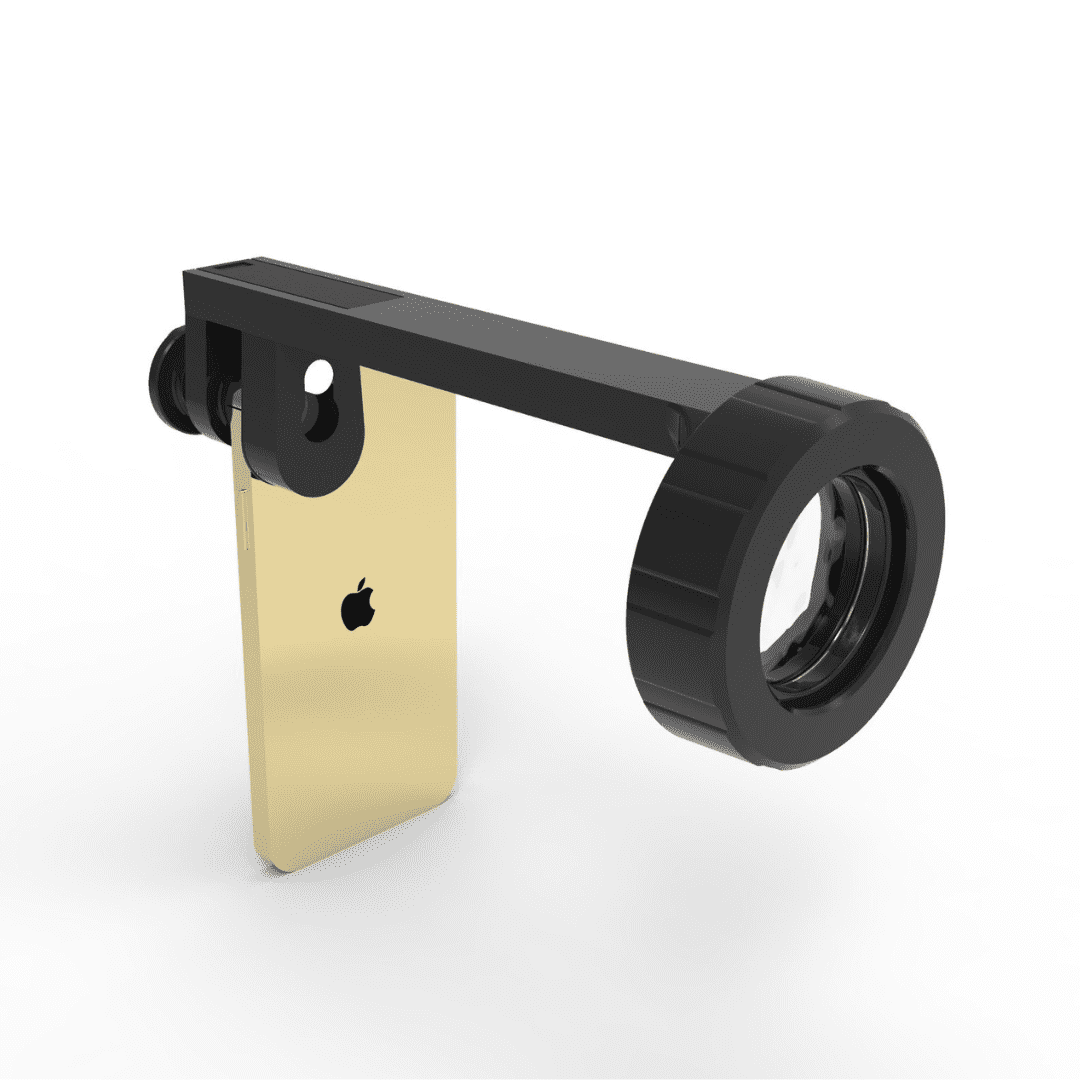
Photograph the retinal findings described here with the phone already in your pocket — 22 D optics and built-in illumination in one handheld unit.
From Choroida — the team behind this siteWhen to Remove the Oil
Timing depends on the retina, not on a fixed calendar interval.
- Many surgeons remove oil three to six months after surgery when the retina has been flat and stable
- Earlier removal is favored in eyes that develop glaucoma, keratopathy, or emulsification
- Long-term or permanent oil is considered in eyes with severe PVR, one-eyed patients, or those with hypotony, where removal would risk redetachment
Rates of redetachment after oil removal in published series are appreciable, and the risk is higher in eyes with severe PVR or hypotony.
Removal is often combined with membrane peeling, endolaser, and gas exchange to reduce the risk of redetachment.
Practical Points
Patients with oil in the eye have several practical needs.
- Air travel and altitude are safe with oil, unlike with intraocular gas, so travel restrictions are usually not required
- Applanation tonometry may be unreliable under oil, so palpation and repeated measurements are used when the value does not fit the clinical picture
- Anesthetic and dental teams should know about the oil, since it is not affected by nitrous oxide
- The refractive state changes under oil, so refraction should be repeated and spectacles updated after oil removal
- Vision under oil is often blurred by emulsification or lens changes, and improvement after removal is common when the retina is healthy
Follow-Up Under Oil
Eyes with oil should be seen regularly.
- Check IOP at each visit, since glaucoma may be silent
- Examine the anterior chamber for oil droplets, corneal changes, and emulsification
- Monitor lens status and plan cataract surgery
- Examine the retina, including the inferior periphery, for redetachment and PVR
- Ask about symptoms of visual change, and document the visual field
Patients should be given a warning card that indicates silicone oil is present, since IOP measurement, imaging, and anesthesia need adjustment.
Heavy Silicone Oils
Heavy oils, mixed with fluorinated compounds, sink in the vitreous and tamponade the inferior retina.
In an interim analysis of a randomized study of inferior PVR, heavy oil did not show a clear advantage over standard oil, and complications including inflammation and emulsification were noted (see vitreous substitutes and gas tamponade).
Use of these agents is limited to selected cases, with close follow-up.
Prognosis
Anatomic success rates with oil are good, and many eyes maintain useful vision.
Outcomes depend on the underlying disease more than on the oil itself, and results are best when complications are anticipated and treated early.
Document what you see
Two smartphone imaging tools built for everyday clinic use — one for the slit lamp, one for the fundus.
From Choroida — the team behind this siteReferences
- Federman JL, Schubert HD. Complications associated with the use of silicone oil in 150 eyes after retina-vitreous surgery. Ophthalmology. 1988;95:870-876.
- Lean JS, Stern WH, Irvine AR, et al. Vitrectomy with silicone oil or sulfur hexafluoride gas in eyes with severe proliferative vitreoretinopathy: results of a randomized clinical trial. Silicone Study Report 1. Arch Ophthalmol. 1992;110:770-779.
- Azen SP, Scott IU, Flynn HW Jr, et al. Silicone oil in the repair of complex retinal detachments: a prospective observational multicenter study. Ophthalmology. 1998;105:1587-1597.
- Barca F, Caporossi T, Rizzo S. Silicone oil: different physical proprieties and clinical applications. Biomed Res Int. 2014;2014:502143.
- Joussen AM, Rizzo S, Kirchhof B, et al. Heavy silicone oil versus standard silicone oil as vitreous tamponade in inferior PVR (HSO Study): interim analysis. Acta Ophthalmol. 2011;89:e483-e489.
Test yourself
A few questions straight from this article.
-
In standard silicone oil tamponade, how does the oil behave within the vitreous cavity?
Silicone oil is polydimethylsiloxane, an inert hydrophobic liquid lighter than water, so it floats and tamponades superior breaks while inferior tamponade is less complete. -
What is the trade-off of choosing 5000 cSt silicone oil over 1000 cSt oil?
Higher viscosity oil resists emulsification better than 1000 cSt oil, but it is harder both to inject and to remove. -
Which complication is the most frequent in phakic eyes under silicone oil tamponade?
Contact between oil and the posterior lens capsule promotes nuclear and subcapsular opacities, and cataract is nearly universal after prolonged tamponade, so surgery is often combined with oil removal. -
Which procedure helps prevent pupillary block from silicone oil in aphakic eyes?
An inferior peripheral (Ando) iridectomy keeps an aqueous pathway open beneath the floating oil and helps prevent pupillary block in aphakic eyes. -
Emulsified silicone oil reaching the anterior chamber classically produces which appearance?
Emulsified droplets migrate anteriorly and layer at the top of the anterior chamber as an inverted hypopyon; emulsification also brings inflammation, glaucoma and reduced tamponade effect. -
When do many surgeons remove silicone oil after successful retinal reattachment?
Timing follows the state of the retina rather than a fixed calendar interval, but many surgeons remove the oil three to six months after surgery once the retina has remained flat and stable. -
What did the Silicone Study show for tamponade in severe proliferative vitreoretinopathy?
The Silicone Study found silicone oil and long-acting gas produced similar results in severe PVR, and both were better than short-acting gas. -
What advice on air travel applies to a patient with silicone oil tamponade in the eye?
Silicone oil, unlike intraocular gas, is unaffected by altitude and cabin pressure, so travel restrictions are usually not required for eyes filled with oil. -
How should intraocular pressure be assessed in an eye filled with silicone oil?
Applanation tonometry can be unreliable under oil, so palpation and repeated measurements are used when the value does not fit the clinical picture; pressure must still be checked at every visit because oil-related glaucoma may be silent. -
How do heavy silicone oils differ from standard silicone oil in the vitreous cavity?
Heavy oils are mixed with fluorinated compounds so they sink in the vitreous cavity and tamponade the inferior retina, which floating standard oil covers less completely.

Writes and reviews the clinical articles on Educate. Every post is checked against peer-reviewed sources before it goes live.