Marcus Gunn jaw-winking syndrome is a congenital synkinesis in which the ptotic eyelid elevates involuntarily with movement of the jaw, a striking and easily demonstrated sign that results from aberrant cranial nerve wiring rather than any structural problem with the eyelid itself.
Once demonstrated, most families find the phenomenon more curious than distressing, and a meaningful part of managing this condition well is simply explaining clearly what it is and, just as importantly, what it is not.
Pathophysiology
The condition results from an aberrant connection between the motor branch of the trigeminal nerve, specifically the branch supplying the pterygoid muscles involved in jaw movement, and the branch of the oculomotor nerve supplying the levator palpebrae superioris.
Because these two nerves are not normally cross-wired, this represents a congenital dysinnervation error rather than an acquired one, placing it in the same broad category as Duane retraction syndrome, another condition arising from misdirected cranial nerve development rather than muscle or structural disease.
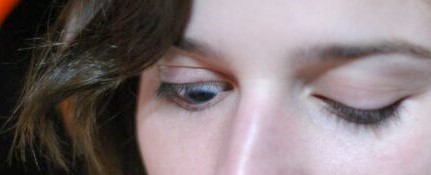
When the pterygoid muscles contract during jaw movement, most commonly on opening the mouth, chewing, or moving the jaw to the contralateral side, this aberrant connection simultaneously stimulates the levator, causing the ptotic lid to elevate, sometimes overshooting into apparent lid retraction, faster than the movement can be consciously controlled.
Clinical Presentation
Congenital ptosis, usually unilateral, is present at baseline, and the diagnostic jaw-winking movement becomes apparent, often first noticed by parents, during feeding in infancy, when sucking or chewing movements trigger visible eyelid elevation on the ptotic side.
The severity of the winking movement varies considerably between patients, from a subtle, barely perceptible lid flicker to a dramatic, wide elevation that can transiently overcorrect the ptosis and even produce lid retraction during jaw movement.
Amblyopia can develop in the affected eye, either from the baseline ptosis itself obstructing the visual axis or from associated anisometropia or strabismus, which is why visual assessment is just as important as documenting the winking phenomenon itself.
All-fit Slit-Lamp Adapter
Record and share exactly what you see at the slit lamp. One adapter fits any slit lamp or surgical microscope — and any smartphone.
From Choroida — the team behind this siteExamination
Baseline ptosis should be measured with the jaw at rest, and the degree of lid elevation documented with jaw movement, specifically noting which jaw movement, opening, lateral movement, or chewing, most reliably triggers the response, since this varies between patients and is useful for later surgical planning discussions.
Levator function should be assessed, since it is often reduced on the affected side even independent of the synkinetic movement, and this measurement is directly relevant to which surgical approach, if any, is chosen later.
A full ophthalmic examination for amblyopia risk factors, including refraction and assessment for strabismus, should be performed as in any child with congenital ptosis, independent of the presence of the winking phenomenon itself.
Differential Diagnosis
- Simple congenital ptosis without synkinesis, distinguished by the absence of any lid movement with jaw motion
- Third nerve palsy with aberrant regeneration, which produces lid and pupil synkinesis with eye movement rather than jaw movement, and typically has an acquired rather than congenital onset
- Blepharophimosis syndrome, which includes ptosis but as part of a distinct combination of eyelid anomalies without any jaw-triggered movement
- Myasthenia gravis, causing variable, fatigable ptosis unrelated to jaw movement and typically presenting later than the congenital onset of Marcus Gunn syndrome
The specific, reproducible link to jaw movement is what makes this diagnosis usually straightforward once demonstrated, and it rarely requires extensive investigation once observed clearly at the bedside.
Management
Observation
Mild cases with minimal ptosis, good levator function, and no amblyopia can be observed, since the winking phenomenon itself, while curious, is not harmful and many patients and families adapt well once the cause is explained.
Amblyopia Treatment
Standard occlusion or optical management is applied whenever amblyopia is present, following the same principles used for any other cause of childhood amblyopia, independent of whether surgery for the ptosis itself is planned.
Surgical Options
For more significant ptosis or a cosmetically bothersome winking movement, surgical options include levator resection when levator function is reasonably preserved, or bilateral levator excision combined with frontalis sling suspension, which disconnects the aberrant synkinetic movement entirely by removing reliance on the levator muscle altogether.
The choice between these approaches depends on levator function, the severity of the jaw-winking movement, and whether the surgical goal is simply to improve ptosis or specifically to eliminate the synkinetic winking, which are not always the same objective and should be discussed explicitly with the family before choosing an approach.
Prognosis
Visual outcome is generally good provided amblyopia is identified and treated appropriately, following the same principles and timelines that apply to any other cause of childhood ptosis-related amblyopia.
The winking phenomenon itself does not resolve spontaneously and persists lifelong unless specifically addressed surgically, though many patients, particularly with mild presentations, choose not to pursue surgery once the benign nature of the condition is understood.
Surgical correction, when pursued, generally achieves good cosmetic and functional results, though families should be counselled that levator resection alone may still leave some residual synkinetic movement, while frontalis sling surgery reliably eliminates the winking at the cost of relying entirely on the frontalis muscle for lid elevation going forward.
Document what you see
Two smartphone imaging tools built for everyday clinic use — one for the slit lamp, one for the fundus.
From Choroida — the team behind this siteReferences
- Pratt SG, Beyer CK, Johnson CC. The Marcus Gunn phenomenon: a review of 71 cases. Ophthalmology. 1984.
- Doucet TW, Crawford JS. The quantification, natural course, and surgical results in 57 eyes with Marcus Gunn (jaw-winking) syndrome. American Journal of Ophthalmology. 1981.
- Demirci H, Frueh BR, Nelson CC. Marcus Gunn jaw-winking synkinesis: clinical features and management. Ophthalmology. 2010.
- Marcus Gunn Jaw-Winking Syndrome. EyeWiki, American Academy of Ophthalmology.
- Congenital Ptosis. StatPearls, NCBI Bookshelf.
Test yourself
A few questions straight from this article.
-
What is Marcus Gunn jaw-winking syndrome?
It is a congenital synkinesis in which a ptotic eyelid elevates involuntarily with jaw movement, from aberrant nerve wiring rather than any structural eyelid problem. -
Which aberrant nerve connection causes Marcus Gunn jaw-winking syndrome?
The motor branch of the trigeminal nerve supplying the pterygoid muscles is aberrantly connected to the oculomotor branch supplying levator palpebrae superioris. -
Which condition shares the same congenital dysinnervation mechanism as Marcus Gunn jaw-winking syndrome?
Both arise from misdirected cranial nerve development rather than muscle or structural disease, placing them in the same category of congenital dysinnervation errors. -
Which jaw movements most commonly trigger the wink in Marcus Gunn jaw-winking syndrome?
Pterygoid contraction on mouth opening, chewing, or moving the jaw to the contralateral side simultaneously stimulates the levator and lifts the ptotic lid. -
Why can amblyopia develop in Marcus Gunn jaw-winking syndrome?
Amblyopia can follow the baseline ptosis obstructing the visual axis or associated anisometropia or strabismus, so visual assessment matters as much as documenting the wink. -
Which measurement guides the choice of surgical approach in Marcus Gunn jaw-winking syndrome?
Levator function is often reduced on the affected side independent of the synkinesis, and that measurement directly determines which surgical approach is chosen. -
Which feature distinguishes third nerve palsy with aberrant regeneration from Marcus Gunn syndrome?
Aberrant regeneration of the third nerve produces lid and pupil synkinesis with eye movement rather than jaw movement, and is typically acquired rather than congenital. -
Which patients with Marcus Gunn jaw-winking syndrome can reasonably be observed?
The wink itself is not harmful, so mild cases with good levator function and no amblyopia can be observed once the cause is explained to the family. -
Which operation reliably eliminates the synkinetic winking movement?
Excising the levator and suspending the lid from frontalis removes reliance on the levator altogether, eliminating the wink, whereas levator resection alone may leave residual synkinesis. -
What is the natural course of the winking movement in Marcus Gunn jaw-winking syndrome?
The winking phenomenon does not resolve spontaneously and persists for life unless specifically addressed surgically, though many patients choose not to operate.

Writes and reviews the clinical articles on Educate. Every post is checked against peer-reviewed sources before it goes live.