Case report
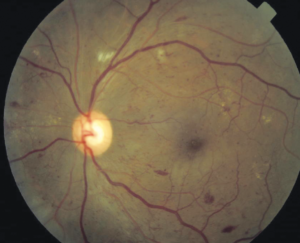
Case of Choroidal Folds 69-year-old female patient presented with a recent-onset slight decrease in visual acuity in her left eye. Her past ocular history was clear. Regarding her medical history, she had only hypertension, treated with per os medications.
The patient underwent a complete ophthalmological examination. The best-corrected visual acuity was 6/6 in the right eye and 6/7.5 in the left eye. Intraocular pressure was 16 mm Ηg in both eyes.
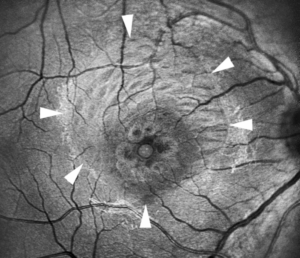
On fundoscopy, chorioretinal folds were noticed.
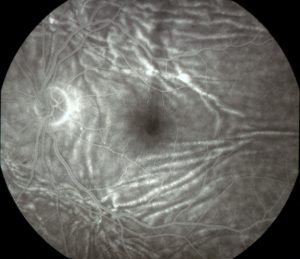
Disease of Choroidal Folds
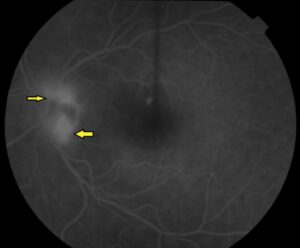
These are lines, grooves, or striae predominantly involving the posterior pole of the eye which appear as alternating light and dark lines on fluorescein angiography.
They are often arranged in a parallel and horizontal fashion but maybe vertical, oblique, or irregular.
These folds tend to vary in length and width, rarely extending beyond the equator and may extend into the neurosensory retina, in which case they can be called chorioretinal folds.
Management
There is sufficient evidence that as soon as choroidal folds are recognized, a prompt systemic investigation for a specific diagnosis or cause is mandatory in order to diagnose treatable causes or to exclude potentially serious conditions.
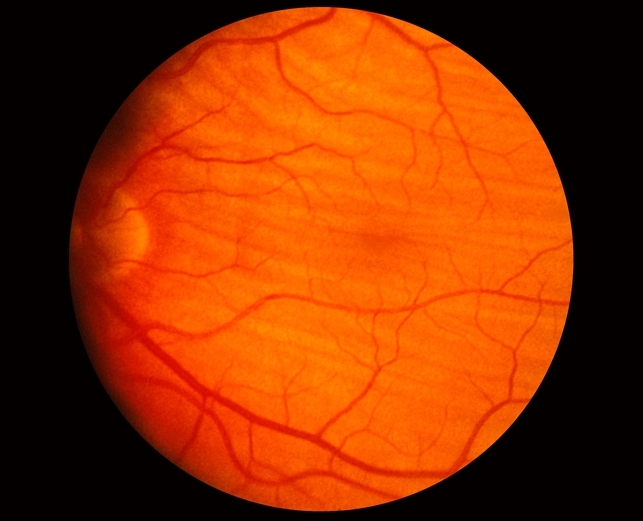
Fundus photography is superior to fundus analysis as it enables intraocular pathologies to be photo captured and encrypted information to be shared with colleagues and patients.
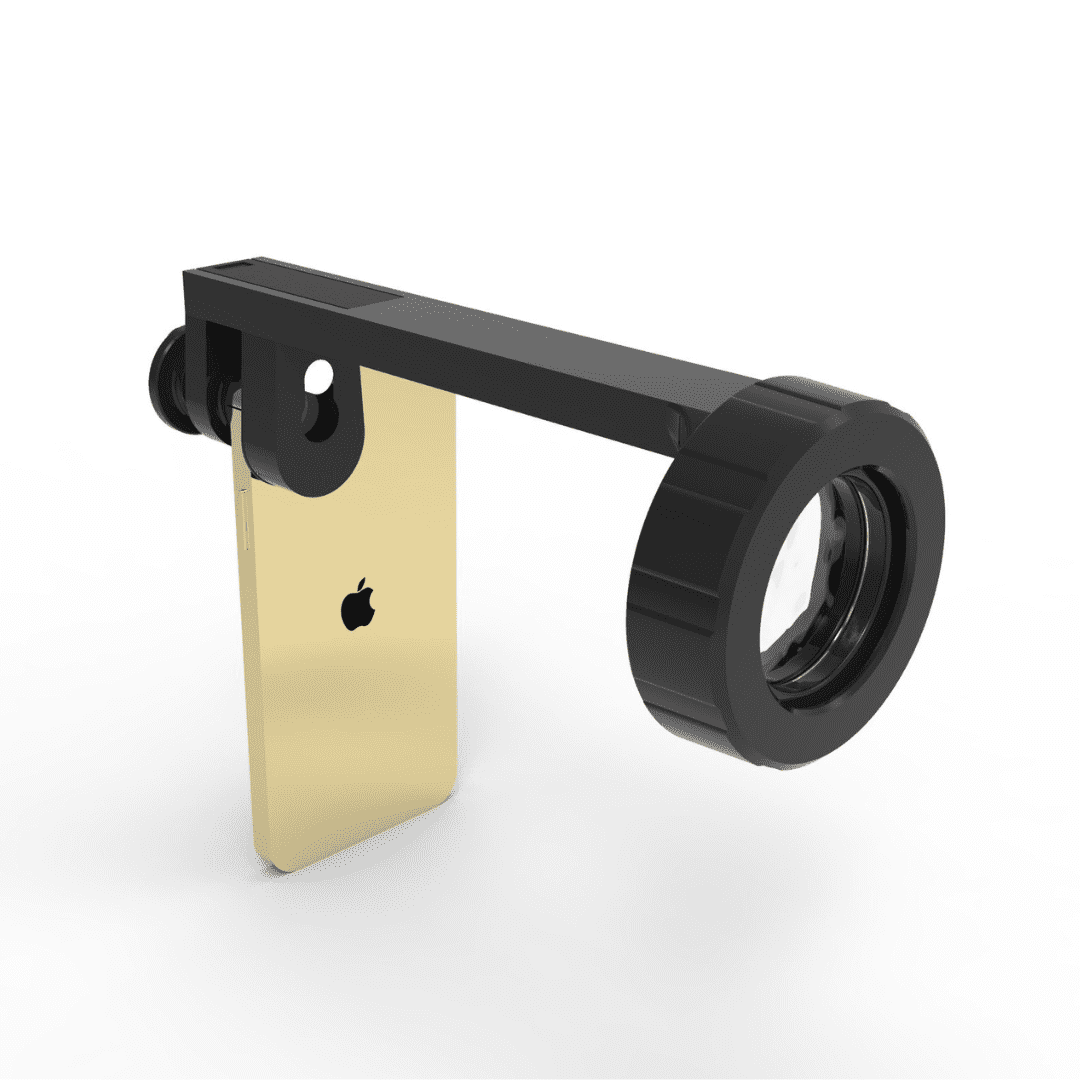
Recent technologies allow smartphone-based attachments and integrated lens adaptors to transform the smartphone into a portable fundus camera help in diagnose Choroidal Folds and others easily.
Read about Choroidal Osteoma, Birdshot Retinochoroidopathy, Optociliary Shunt Vessels, Morgagnian Cataract.
Document what you see
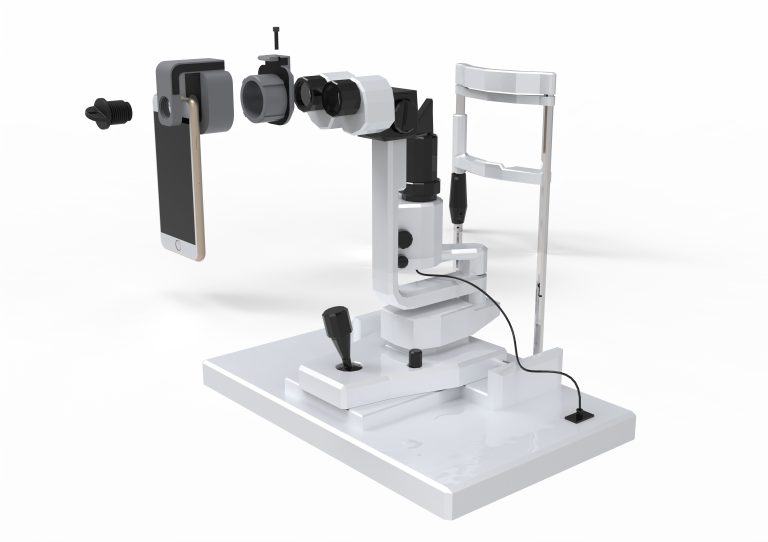
Two smartphone imaging tools built for everyday clinic use — one for the slit lamp, one for the fundus.
From Choroida — the team behind this siteFundus Explorer Pro
Photograph the retinal findings described here with the phone already in your pocket — 22 D optics and built-in illumination in one handheld unit.
From Choroida — the team behind this siteReferences
- Bowling B. Kanskiʼs Clinical Ophthalmology: A Systematic Approach. Eighth Edition. Cornea. 2016.
- Bullock JD, Egbert PR. The origin of choroidal folds a clinical, histopathological, and experimental study. Doc Ophthalmol. 1974. doi:10.1007/BF00147262
- Cangemi FE, Trempe CL, Walsh JB. Choroidal folds. Am J Ophthalmol. 1978. doi:10.1016/0002-9394(78)90243-X
- Dailey RA, Mills RP, Stimac GK, Shults WT, Kalina RE. The Natural History and CT Appearance of Acquired Hyperopia with Choroidal Folds. Ophthalmology. 1986. doi:10.1016/S0161-6420(86)33577-2
Test yourself
A few questions straight from this article.
-
Which description best fits choroidal folds on fundus examination?
Choroidal folds are lines, grooves or striae that predominantly involve the posterior pole of the eye. -
How do choroidal folds appear on fluorescein angiography?
On fluorescein angiography the folds produce a striped pattern of alternating light and dark lines across the posterior pole. -
What orientation do choroidal folds most often take?
Choroidal folds are typically arranged in a parallel, horizontal fashion, although vertical, oblique or irregular patterns also occur. -
How far into the fundus do choroidal folds usually extend?
The folds vary in length and width but rarely reach beyond the equator, remaining largely a posterior pole finding. -
What are choroidal folds called when they also involve the neurosensory retina?
When the folds extend into the neurosensory retina as well as the choroid, they are termed chorioretinal folds. -
What should follow immediately once choroidal folds are recognised in a patient?
Evidence supports mandatory prompt systemic investigation as soon as choroidal folds are seen, rather than simple observation. -
Why is systemic workup mandatory in a patient found to have choroidal folds?
The purpose of the workup is to reach a specific diagnosis, identifying causes that can be treated and ruling out potentially serious underlying disease.

Writes and reviews the clinical articles on Educate. Every post is checked against peer-reviewed sources before it goes live.