Blepharitis treatment needs patience.
The condition is chronic, and control, not cure, is the goal.
A stepwise plan keeps care simple.
Types of Blepharitis
Anterior blepharitis involves the lashes and base.
Posterior blepharitis involves the meibomian glands (see meibomian gland dysfunction).
Demodex mites contribute to many cases.
Therefore, identify the type before treatment.
Diagnosis
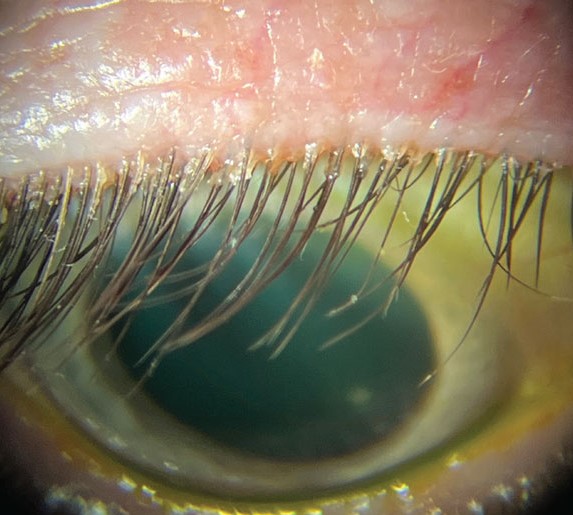
Look at the lid margin for debris, collarettes and telangiectasia.
Express the glands to check the oil quality.
Stain the cornea to assess damage.
So examine the lids carefully.
All-fit Slit-Lamp Adapter
Record and share exactly what you see at the slit lamp. One adapter fits any slit lamp or surgical microscope — and any smartphone.
From Choroida — the team behind this siteStep One of Blepharitis Treatment: Lid Hygiene
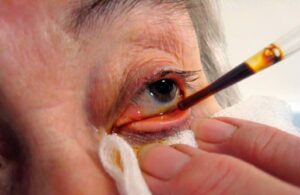
Daily warm compresses and lid cleaning are the foundation.
Use gentle cleaners and a clean cloth.
Patients need to continue long term (see blepharitis).
Also teach the technique at the first visit.
Step Two of Blepharitis Treatment: Antibiotics
Short courses of erythromycin or azithromycin ointment reduce bacterial load.
Apply to the lid margin at night.
Resistance can develop.
Therefore, use them for flares only.
Step Three of Blepharitis Treatment: Anti-Inflammatory Drops
Short courses of mild topical steroids calm severe inflammation.
Cyclosporine drops help chronic cases.
Monitor pressure and the lens during steroid use.
So avoid long steroid courses.
Oral Doxycycline for Blepharitis Treatment
Low-dose doxycycline improves meibomian gland function.
Treatment lasts weeks to months.
Avoid in pregnancy and young children.
Also warn about sun sensitivity.
Demodex in Blepharitis Treatment
Tea tree oil lid cleansers reduce mites.
Newer prescription drops target Demodex directly (see Demodex blepharitis).
Treatment lasts weeks.
So test for collarettes.
Procedures for Blepharitis Treatment
Thermal pulsation and intense pulsed light can improve gland function.
Evidence is growing but variable.
Costs are high.
Therefore, reserve them for resistant disease.
Omega-3 Supplements
Results are mixed.
Large trials did not show a clear benefit for dry eye.
Some patients still find them helpful.
Also set expectations.
Treating Associated Conditions
Treat rosacea, seborrheic dermatitis and dry eye.
Skin care improves lid disease.
Dermatology referral helps resistant skin disease.
So look at the whole face.
Contact Lens Wearers
Lens wear worsens blepharitis symptoms.
Reduce wearing time during flares.
Switch to daily disposable lenses.
Therefore, adjust the lens plan.
Children
Children get blepharitis with chalazia.
Gentle lid hygiene is first-line.
Topical antibiotic ointment helps.
Also screen for refractive error.
Follow-Up
Review after four to six weeks.
Reassess symptoms and signs.
Step up or step down treatment.
So keep a record of the plan.
Blepharitis Treatment: Practical Summary
Start with lid hygiene, add antibiotics or anti-inflammatory drops as needed and treat Demodex.
If symptoms persist, consider procedures.
Because relapse is common, keep daily care.
Finally, reassure patients about the course.
Pitfalls to Avoid
- Do not promise a cure
- Never use steroids long term
- Avoid overlooking Demodex
- Do not skip the corneal exam
Counseling for Blepharitis Treatment
Explain that treatment controls symptoms but rarely cures them.
If patients expect a quick fix, they stop early.
Because adherence is key, set realistic goals.
Therefore, give written instructions.
Time Course
Many patients improve within four to six weeks of regular care.
Maintenance continues for months.
Because relapse is common, plan for flares.
So teach patients to restart care early.
Eyelash Care
Remove makeup nightly and avoid eyelash extensions.
Extensions trap debris and mites.
Because lashes shed mites, replace pillowcases often.
Therefore, discuss cosmetic habits.
Rosacea and Blepharitis
Ocular rosacea is a frequent partner (see ocular rosacea).
Treat skin and eyelids together.
Because doxycycline helps both, it is a good choice.
So refer to dermatology when needed.
Safety of Blepharitis Treatment
Topical steroids can raise pressure and form cataract.
Oral antibiotics can upset the stomach.
Because side effects limit therapy, review them at each visit.
Therefore, use the lowest effective dose.
Blepharitis Treatment in Pregnancy
Avoid doxycycline.
Use lid hygiene and topical erythromycin.
Because treatment options are limited, focus on hygiene.
So coordinate with the obstetric team.
Referral
Refer when corneal ulcers or scarring appear.
Refer for suspected tumor if the lid margin is distorted.
Because chronic disease can hide cancer, biopsy atypical lesions.
Finally, document the course.
Blepharitis Treatment: Key Message
Chronic lid disease responds best to a steady routine.
If a flare occurs, restart the full plan.
Because patients get discouraged, praise adherence.
Finally, schedule regular reviews.
Blepharitis Treatment: Questions Patients Ask
Patients ask whether the condition is contagious.
It is not, though mites can spread between close contacts.
They ask whether makeup is allowed.
Light makeup is fine, so long as it is removed nightly.
For the latest studies, see the PubMed results for blepharitis treatment.


Document what you see
Two smartphone imaging tools built for everyday clinic use — one for the slit lamp, one for the fundus.
From Choroida — the team behind this siteReferences
- Lindsley K, Matsumura S, Hatef E, Akpek EK. Interventions for chronic blepharitis. Cochrane Database Syst Rev. 2012;5:CD005556.
- Amescua G, Akpek EK, Farid M, et al. Blepharitis preferred practice pattern. Ophthalmology. 2019;126:P56-P93.
- Lemp MA, Nichols KK. Blepharitis in the United States 2009: a survey-based perspective on prevalence and treatment. Ocul Surf. 2009;7:S1-S14.
- Gao YY, Di Pascuale MA, Li W, et al. In vitro and in vivo killing of ocular Demodex by tea tree oil. Br J Ophthalmol. 2005;89:1468-1473.

Writes and reviews the clinical articles on Educate. Every post is checked against peer-reviewed sources before it goes live.