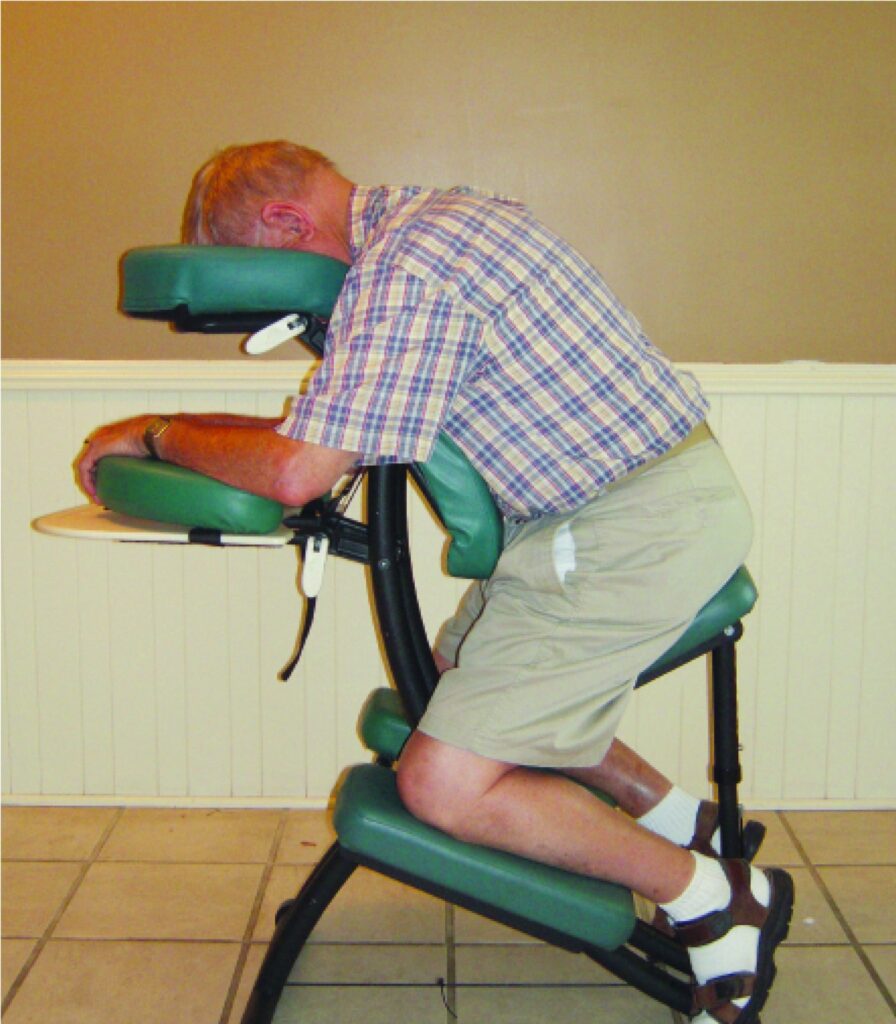
Face-down positioning after macular hole surgery asks patients to keep the head down for days so that a gas bubble presses on the macula.
It is uncomfortable and sometimes impossible, so the benefit matters.
Therefore, surgeons now tailor the instruction to the size of the hole and to the patient.
Why Face-Down Positioning Was Introduced
Kelly and Wendel reported high closure rates with gas and strict posturing in 1991.
The idea was simple: the bubble floats up and seals the hole while fluid is removed.
Also, early series asked for up to two weeks of posturing.
As a result, face-down positioning became standard in every protocol (see full-thickness macular hole).
Evidence on Face-Down Positioning
Tornambe and colleagues operated on patients without any posturing in a pilot study and found good closure.
Later trials compared posturing with none, and the results depend on hole size.
Solebo and colleagues reviewed the trials in a Cochrane analysis.
They found little evidence of benefit for small holes and a likely benefit for large ones.
Fundus Explorer Pro
Photograph the retinal findings described here with the phone already in your pocket — 22 D optics and built-in illumination in one handheld unit.
From Choroida — the team behind this siteHole Size and Face-Down Positioning
- Small holes under 250 micrometers close well without posturing
- Medium holes of 250 to 400 micrometers show mixed results
- Large holes over 400 micrometers seem to benefit from posturing
Ullrich and colleagues showed that hole size is the main predictor of success.
Therefore, measure the minimum linear diameter on OCT before advising the patient.
Role of Internal Limiting Membrane Peeling
Peeling the membrane relieves traction and raises primary closure rates.
Also, it reduces the dependence on strict posture in many studies.
As a result, many surgeons shorten positioning after a peel (see why holes reopen).
Tamponade Choice and Face-Down Positioning
Long-acting gases stay longer but can delay recovery.
Hasegawa and colleagues found that room air produced similar results to sulfur hexafluoride in selected holes.
Also, shorter-acting gases allow earlier return to normal posture (see gas tamponade).
Burden of Face-Down Positioning
Patients report neck and back pain, pressure sores, and anxiety.
Some cannot posture because of arthritis, obesity, or breathing problems.
Also, long periods face-down can cause nerve compression and, rarely, thrombosis.
Therefore, think about the patient’s ability before surgery and plan alternatives.
Practical Advice on Face-Down Positioning
- Give clear written instructions with a daily schedule
- Allow breaks for eating and for eye drops
- Suggest props such as a pillow or a rental frame
- Explain that the bubble also limits air travel and altitude
When posturing is impossible, a side or a seated head-forward position may help.
Alternatives and Adjuncts
Some surgeons advise a short period of face-down positioning of one to three days.
Others use a side-lying or a head-forward posture.
Also, air tamponade needs less posturing time because it absorbs quickly.
Therefore, individualize the plan according to hole size and the patient’s ability.
Counselling Before Surgery
Ask about neck problems, breathing difficulty, and sleeping habits.
Then explain the plan and what to expect.
Also provide written instructions and a contact number.
Because anxiety increases discomfort, reassurance helps adherence.
Complications of Prolonged Posturing
Long periods in a fixed position can cause pressure ulcers and nerve compression.
Also, patients may develop depression and sleep loss.
Because older patients are at risk of thrombosis, encourage movement during breaks.
These costs justify shorter regimens when the evidence supports them.
Selecting Patients for Short or No Posturing
Small holes and a peeled membrane favor early release from posture.
Also, a gas fill of low concentration shortens the time of effect.
However, large or chronic holes may need strict posture.
Therefore, review each patient before surgery and again at the first visit.
Confirming Closure
Perform OCT at one week to confirm closure and review the posture.
Also check the pressure, because gas expansion can raise it.
Then repeat OCT at one month to check the foveal contour.
Key Points for the Clinician
Hole size drives the need for posturing.
Also, a membrane peel improves closure.
Because the burden is real, individualize advice for each patient.
Special Groups
Patients with a single functioning eye need extra support during recovery.
Also, children and adults with disabilities may be unable to posture.
Therefore, plan help at home and consider short regimens.
Looking Ahead
Studies continue to explore which patients can skip positioning safely.
Also, newer tools such as intraoperative OCT may identify holes that need strict posture.
Therefore, expect advice to become more personal in the coming years.


Document what you see
Two smartphone imaging tools built for everyday clinic use — one for the slit lamp, one for the fundus.
From Choroida — the team behind this siteReferences
- Kelly NE, Wendel RT. Vitreous surgery for idiopathic macular holes: results of a pilot study. Arch Ophthalmol. 1991;109:654-659.
- Tornambe PE, Poliner LS, Grote K. Macular hole surgery without face-down positioning: a pilot study. Retina. 1997;17:179-185.
- Solebo AL, Lange CA, Bunce C, Bainbridge JW. Face-down positioning or posturing after macular hole surgery. Cochrane Database Syst Rev. 2014;(10):CD008228.
- Hasegawa Y, Hata Y, Mochizuki Y, et al. Equivalent tamponade by room air as compared with SF6 after macular hole surgery. Graefes Arch Clin Exp Ophthalmol. 2009;247:1455-1459.

Writes and reviews the clinical articles on Educate. Every post is checked against peer-reviewed sources before it goes live.