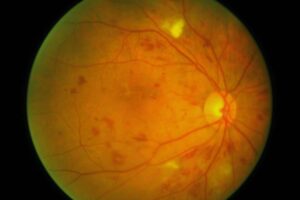
Eye emergencies are time-critical.
Some can be treated at the door, and others need urgent specialist care, so knowing the red flags speeds the right decision.
Why Eye Emergencies Need Triage
Eye problems make up a large share of emergency department visits, and most are minor, but a few threaten sight within hours. Sorting them early saves vision, so train front-line staff to triage.
Chemical Injury Among Eye Emergencies
Alkali and acid burns need immediate irrigation, so start washing at the scene and continue for at least 30 minutes (see chemical eye injury). Check pH and keep irrigating until it is neutral, and irrigate before asking questions.
Fundus Explorer Pro
Photograph the retinal findings described here with the phone already in your pocket — 22 D optics and built-in illumination in one handheld unit.
From Choroida — the team behind this siteAngle Closure in Eye Emergencies
Severe pain, halos, nausea and a red eye signal angle closure, because pressure is very high and the cornea is hazy. Treat with drops and systemic agents, then laser, and also refer at once (see acute angle closure).
Retinal Detachment in Eye Emergencies
Flashes, floaters and a curtain suggest detachment, and loss of central vision means the macula is involved. Surgery is needed within a day or two, therefore do not delay referral (see retinal detachment symptoms).
Central Retinal Artery Occlusion
Sudden painless vision loss with a pale retina is an emergency, and it is a stroke equivalent (see central retinal artery occlusion). Send the patient to a stroke center, so time matters.
Endophthalmitis in Eye Emergencies
Pain, redness and falling vision after surgery or injection signal infection, and a hypopyon may be present. Intravitreal antibiotics are required, and also treat any case within days of surgery as an emergency (see acute postoperative endophthalmitis).
Orbital Cellulitis in Eye Emergencies
Swollen lids, fever, pain on eye movement and proptosis point to orbital spread, and imaging and admission are needed. Antibiotics should start without delay, therefore treat it as an emergency (see orbital cellulitis).
Open Globe Injury
Penetrating trauma needs a shield and no pressure, so do not remove foreign bodies. Avoid topical drops and keep the patient fasting, and arrange urgent surgical repair.
Corneal Ulcer
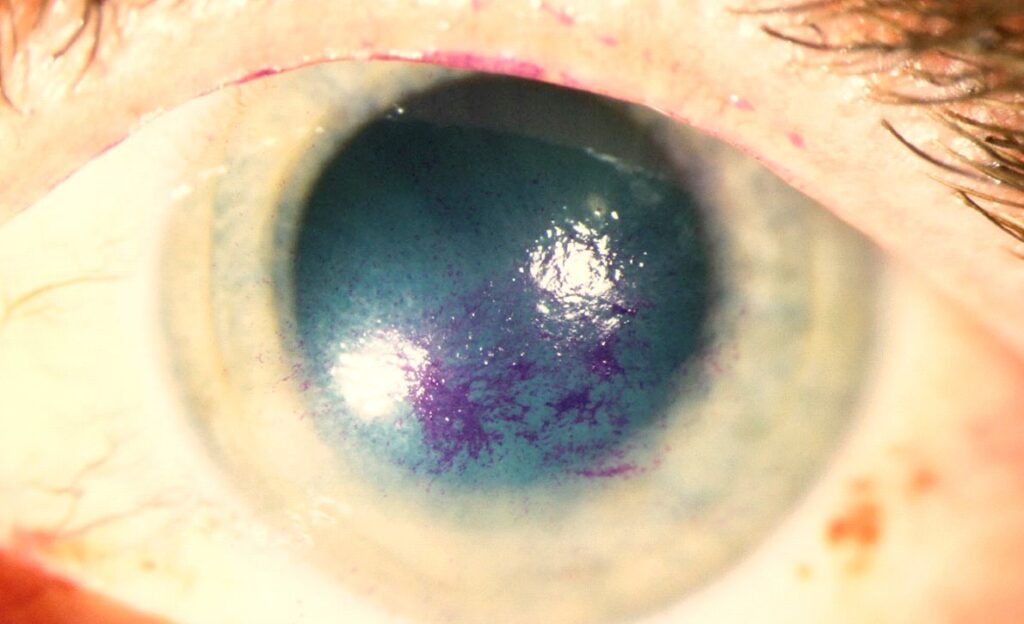
A white infiltrate with pain and redness needs same-day care, and contact lens wearers are at high risk. Scraping and intensive drops follow, and also stop lens wear.
Hyphema
Blood in the anterior chamber after trauma requires review, because raised pressure and rebleeding are risks (see hyphema). Rest, a shield and close follow-up help, so refer all cases.
Giant Cell Arteritis
Headache, jaw pain and sudden vision loss in an older adult need urgent steroids, because delay risks loss of the second eye. Blood tests support the diagnosis, therefore treat on suspicion.
Acute Optic Neuritis and Other Neurological Causes
Painful vision loss in a young adult needs prompt assessment, and MRI and steroids may be needed. New double vision or a field defect may indicate stroke, so also arrange urgent imaging.
First Aid for Eye Emergencies
Irrigate chemicals, shield the eye after trauma and do not press on a ruptured globe. Remove contact lenses if no injury is suspected and seek help quickly, so give simple instructions to patients.
Eye Emergencies: Practical Summary
Check vision, pupils and pain, then decide the urgency, and if sight is at risk, refer the same day. Because early care saves vision, keep a low threshold, and finally teach patients the warning signs.
Pitfalls to Avoid
- Do not wait for tests before irrigating a chemical injury
- Never apply pressure to a possible open globe
- Avoid reassuring painless sudden vision loss
- Do not delay steroids in suspected arteritis
Pediatric Eye Emergencies
Children with trauma or sudden squint need urgent review, and leukocoria is also an emergency. Because history is hard to get, examine thoroughly, and therefore refer when in doubt.
Eye Emergencies After Surgery
Pain, redness and falling vision after surgery need prompt action, because endophthalmitis can progress within hours. Because early treatment saves vision, call the surgeon, and provide patients with a contact number.
Preparing Clinics for Eye Emergencies
Keep irrigation fluid, a shield and fluorescein at hand, and train staff to recognize red flags. Because time matters, write clear protocols, and finally audit cases after the event.
Telephone Triage
Ask about vision loss, pain, trauma and chemical exposure, and book same-day visits for red-flag answers. Because phone advice shapes outcomes, use a script, and therefore review calls regularly.
Eye Emergencies: Key Message
Teach patients that pain, vision loss and trauma need same-day care, and if in doubt, call the clinic. Because delays harm vision, set a low threshold, and finally provide a written list of warning signs.


Document what you see
Two smartphone imaging tools built for everyday clinic use — one for the slit lamp, one for the fundus.
From Choroida — the team behind this siteReferences
- Channa R, Zafar SN, Canner JK, Haring RS, Schneider EB, Friedman DS. Epidemiology of eye-related emergency department visits. JAMA Ophthalmol. 2016;134:312-319.
- Vaziri K, Schwartz SG, Flynn HW Jr, Kishor KS, Moshfeghi AA. Eye-related emergency department visits in the United States, 2010. Ophthalmology. 2016;123:917-919.
- Haring RS, Sheffield ID, Channa R, Canner JK, Schneider EB. Epidemiologic trends of chemical ocular burns in the United States. JAMA Ophthalmol. 2016;134:1119-1124.
- Mac Grory B, Schrag M, Biousse V, et al. Management of central retinal artery occlusion: a scientific statement from the American Heart Association. Stroke. 2021;52:e282-e294.
Test yourself
A few questions straight from this article.
-
For an alkali or acid eye burn, for how long at minimum should irrigation continue?
Washing starts at the scene and continues for at least 30 minutes, with the pH checked and irrigation kept going until it is neutral. -
Which presentation signals acute angle closure as an eye emergency?
Angle closure presents with severe pain, halos, nausea and a red eye, with very high pressure and a hazy cornea. -
In a suspected retinal detachment, what does loss of central vision indicate?
Flashes, floaters and a curtain suggest detachment; loss of central vision means the macula is involved, and surgery is needed within a day or two. -
Where should a patient with suspected central retinal artery occlusion be sent?
Sudden painless vision loss with a pale retina is a stroke equivalent, so the patient goes to a stroke center because time matters. -
Pain, redness and falling vision after an intravitreal injection, with hypopyon, require which treatment?
These features after surgery or injection signal endophthalmitis, which can progress within hours and requires intravitreal antibiotics. -
Swollen lids with fever, pain on eye movement and proptosis call for which management?
These signs point to orbital spread; imaging and admission are needed and antibiotics should start without delay. -
What is the correct first aid for a suspected open globe injury?
Penetrating trauma needs a shield and no pressure; foreign bodies are left in place, topical drops avoided and the patient kept fasting for repair. -
A contact lens wearer has a painful red eye with a white corneal infiltrate. What is the correct urgency?
A corneal ulcer needs same-day care; contact lens wearers are at high risk, scraping and intensive drops follow, and lens wear stops. -
An older adult has headache, jaw pain and sudden vision loss. Why should steroids start on suspicion of giant cell arteritis?
Giant cell arteritis needs urgent steroids because delay risks loss of the second eye; blood tests support the diagnosis but should not hold up treatment. -
Among pediatric eye presentations, which finding is treated as an emergency alongside trauma and sudden squint?
Children with trauma or sudden squint need urgent review, and leukocoria is also an emergency; because history is hard to get, examine thoroughly.

Writes and reviews the clinical articles on Educate. Every post is checked against peer-reviewed sources before it goes live.