
CASE REPORT
A 28-year-old female presented with a sudden and painless loss of central vision in both eyes, accompanied by a significant decline in visual acuity, color vision impairment, and central scotomas, with symptoms manifesting rapidly over a few weeks.

With no notable personal medical history, an investigation revealed a family history of vision problems on the maternal side, indicating a potential genetic link.
Ophthalmologic examination showed bilateral optic disc swelling and decreased visual acuity.
Genetic testing was then conducted, confirming a pathogenic mutation in the mitochondrial DNA (mtDNA), specifically affecting the ND4 gene.
The amalgamation of clinical presentation, family history, and genetic findings culminated in the diagnosis of Leber Hereditary Optic Neuropathy (LHON).
DISEASE
Leber Hereditary Optic Neuropathy (LHON) is the most common inherited mitochondrial disorder and typically affects young males.
It typically begins as a unilateral progressive optic neuropathy with sequential involvement of the fellow eye months to years later.
Individuals eventually diagnosed with LHON may initially be asymptomatic, or experience mild blurring of the central visual field of one eye.
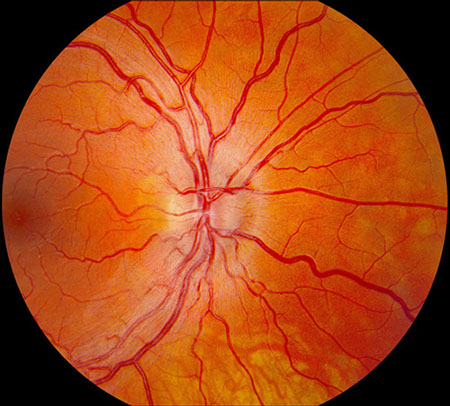
Males are more likely to be affected than females, with some reported ratios as high as 9:1. Age of onset is typically between 10-30 years, though onset in the seventh or eighth decade has been reported.
Symptoms may progress from mild unilateral visual loss to severe bilateral visual loss, usually worse than 20/200. Visual field testing typically shows a worsening central or cecocentral scotoma.
The examination may initially reveal normal or pseudo-edematous optic nerves, with optic nerve pallor and atrophy appearing subsequently.
Individuals may harbor concurrent disease including cardiac conduction abnormalities, dystonia, and multiple sclerosis-like illness.
This is considered an “LHON Plus” disease. Few individuals recover vision once lost, but visual loss rarely progresses to no light perception.
Individuals may report a history of progressive visual loss in maternal family members. Males are affected in 80% of cases. Otherwise, neither age nor lifestyle choices have been shown to increase disease incidence.
Late-onset-LHON patients had significantly higher cumulative tobacco and alcohol consumption as compared with unaffected carriers, suggesting that these factors may worsen disease severity once an individual has the disease.
Fundus Explorer Pro
Photograph the retinal findings described here with the phone already in your pocket — 22 D optics and built-in illumination in one handheld unit.
From Choroida — the team behind this siteMANAGEMENT
Management of this condition is primarily supportive, with an early introduction to visual aids and occupational therapy.
Medical Therapy
There is no established medical treatment for Leber Hereditary Optic Neuropathy (LHON), though there is a theoretical benefit from using antioxidants to help reduce the neurotoxic stress due to reactive oxygen species.
Multiple supplements such as vitamins B12 and C, Coenzyme-Q10, brimonidine, and lutein have shown minimal benefit but may be recommended.
Patients are cautioned to avoid neurotoxins such as tobacco and alcohol, as these may increase oxidative stress.
Idebenone, a short-chain synthetic benzoquinone, has undergone testing as an agent in the treatment of several neurologic diseases.
A double-blind, randomized placebo-controlled trial of idebenone in the treatment of LHON (RHODOS – Rescue of Hereditary Optic Disease Outpatient Study) was recently completed.

Eighty-five patients with one of the three primary Leber Hereditary Optic Neuropathy (LHON) mutations and the onset of symptoms within the last five years were randomized to receive 300mg of idebenone three times a day for 24 weeks, or a placebo.
Though the study did not reach its primary endpoint, best recovery in visual acuity, post hoc analysis revealed improvement in visual acuity seen particularly in those individuals with discordant vision between eyes.
Those with the G11778A and G3460A seemed to benefit more; this was attributed to the high spontaneous rate of those with T14484C negating the treatment effect. Most patients tolerated the medication well. The results have been deemed promising but limited at this time.
EPI-743 may have more potency than idebenone, but no clinical trials have been performed. Gene therapy techniques have advanced, including allotopic expression and nuclear transfer.
Also, the rescue of animal models of LHON with both of these therapies has been demonstrated.
The introduction of exogenous DNA into the mitochondrial genome with mitochondrial targeting of viral vectors is another promising technique.
Recently, researchers conducted a Phase I trial using intravitreal injection to deliver genetically modified adeno-associated viral vectors (AAV2) with the ND4 gene to affected eyes in individuals with the 11778A mutation.
In the 15 patients, this therapy appeared to be safe and well-tolerated with mostly mild intraocular inflammation.
Another study of five participants with the 11778A mutation demonstrated similar results with respect to safety as well as some improvement in certain patients. However, it should be noted that these are the preliminary results of an ongoing study.
Medical Follow-Up & Genetic Considerations
Patients may be followed with serial visual acuity, visual field, contrast sensitivity, and color testing. Low-vision aids should be provided early.

Genetic counseling is recommended for affected individuals and maternal family members. Male patients may be reassured that they cannot transmit the disease to their offspring.
The mother of an affected individual likely harbors the mitochondrial DNA mutation but may or may not have developed symptoms.
Female patients will transmit the mutation to all offspring. Those who exhibit heteroplasmy, however, may transmit a low mutation load.
Therefore, offspring may have a low risk of disease. De novo mutations are rare but may be present in individuals whose maternal relatives do not have a history of visual loss.
Document what you see
Two smartphone imaging tools built for everyday clinic use — one for the slit lamp, one for the fundus.
From Choroida — the team behind this siteREFERENCES
- Lam BL, Feuer WJ, Abukhalil F, Porciatti V, Hauswirth WW, Guy J. Leber hereditary optic neuropathy gene therapy clinical trial recruitment: year 1. Arch Ophthalmol. 2010 Sep;128(9):1129-35.
- Klopstock T, Yu-Wai-Man P, Dimitriadis K, Rouleau J, Heck S, Bailie M, Atawan A, Chattopadhyay S, Schubert M, Garip A, Kernt M, Petraki D, Rummey C, Leinonen M, Metz G, Griffiths PG, Meier T, Chinnery PF. A randomized placebo-controlled trial of idebenone in Leber’s hereditary optic neuropathy. Brain. 2011 Sep;134(Pt 9):2677-86. Epub 2011 Jul 25.
- Ohden KL, Tang PH, Lilley CC, Lee MS. Atypical Leber Hereditary Optic Neuropathy: 18 Year Interval Between Eyes.J Neuroophthalmol. 2016 Jan 27. [Epub ahead of print].
- Newman NJ. Treatment of Leber hereditary optic neuropathy. Brain. 2011 Sep;134(Pt 9):2447-50. Epub 2011 Aug 22
- Palace J. Multiple sclerosis associated with Leber’s Hereditary Optic Neuropathy. J Neurol Sci. 2009 Nov 15;286(1-2):24-7. Epub 2009 Oct 1.
- Peragallo JH, Newman NJ. Is there treatment for Leber hereditary optic neuropathy?Curr Opin Ophthalmol. 2015;26(6):450-7.
