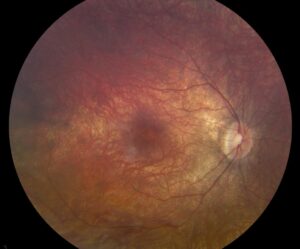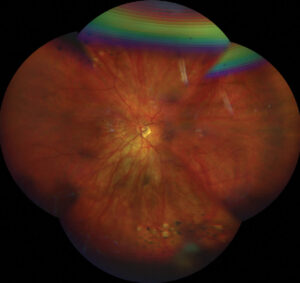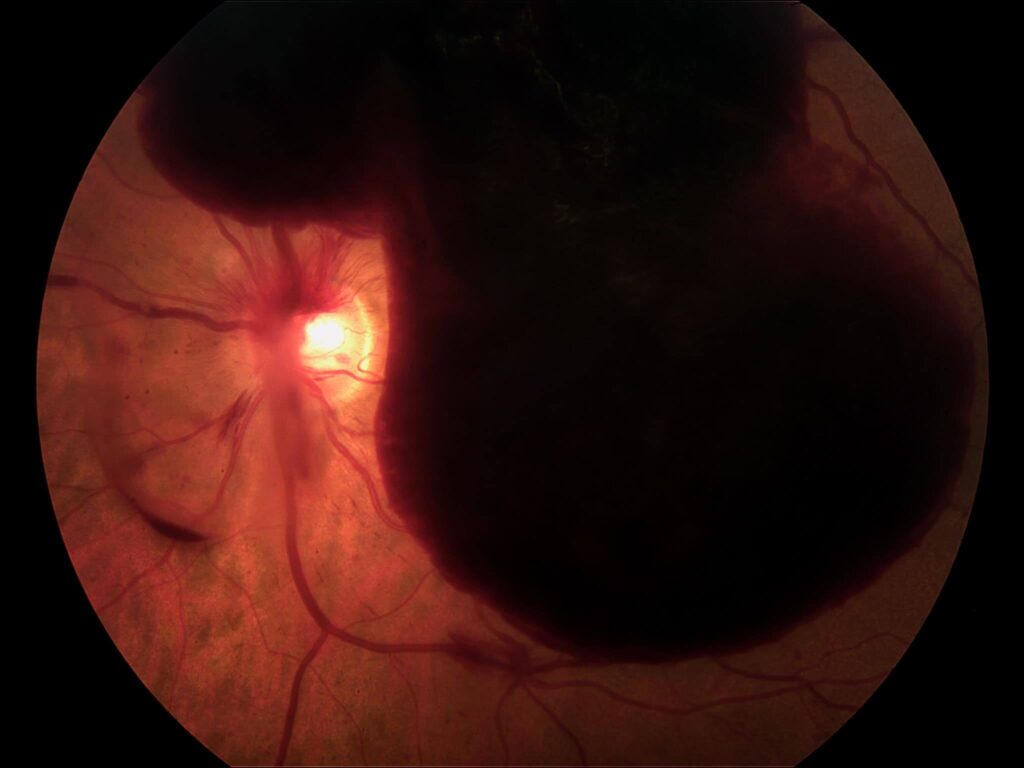
DRCR Protocol AB tested the best first step for an eye with proliferative diabetic retinopathy and a vitreous hemorrhage that blocks the view.
Surgeons often chose vitrectomy, while others waited and injected an anti-VEGF drug.
The trial showed that both strategies gave similar vision at six months, with different paths to get there.
Why DRCR Protocol AB Was Needed
Vitreous hemorrhage in diabetes may clear on its own, and anti-VEGF drugs make new vessels regress, so injections might spare an operation (see vitreous hemorrhage).
Vitrectomy clears the blood at once and allows laser, but it carries surgical risk, and costs more.
No randomized trial had compared them.
DRCR Protocol AB: The Design
- 205 eyes with vitreous hemorrhage from proliferative diabetic retinopathy, causing vision loss and preventing PRP
- Investigators randomized eyes to intravitreal aflibercept 2 milligrams, given at baseline and as needed, or to prompt vitrectomy with PRP at surgery
- Aflibercept eyes could have vitrectomy if the hemorrhage did not clear or complications developed
- The primary outcome was the mean visual acuity change at 24 weeks (see the references)
Fundus Explorer Pro
Photograph the retinal findings described here with the phone already in your pocket — 22 D optics and built-in illumination in one handheld unit.
From Choroida — the team behind this siteThe Results
- Visual acuity at 24 weeks did not differ significantly between the groups
- Vitrectomy gave faster visual recovery in the first weeks
- About a third of eyes in the aflibercept group needed vitrectomy during the study, mostly for persistent hemorrhage or traction
- Complications such as retinal detachment were uncommon in both groups
At two years, results were similar, and many aflibercept eyes had cleared without surgery.
DRCR Protocol AB: What Changed in Practice
- Observation with anti-VEGF injection is a reasonable first step in many eyes with vitreous hemorrhage, especially when there is no traction detachment
- Clinicians prefer early vitrectomy when there is a tractional retinal detachment involving the macula, a combined rhegmatogenous element, or a dense hemorrhage with a need for rapid recovery
- Clinicians can add laser after clearing of the blood (see panretinal photocoagulation)
Choosing for the Patient
- Prefer injection: good surgical risk, patients who do not need rapid recovery, a view that is partly present
- Prefer vitrectomy: traction that threatens the macula, patients who need quick recovery, or those who may not return for repeated injections
- Plan for both: inject while waiting for surgery, which may lower bleeding at the time of operation (see vitrectomy for diabetic retinopathy)
DRCR Protocol AB: Limits
The trial excluded eyes with traction detachment threatening the center, and patients had a limited follow-up.
It used aflibercept, and other drugs were not tested.
Counselling
Explain that both options give similar vision at six months, and that the choice depends on timing, risk, and ability to attend.
Warn about the risk of rebleeding and the need for repeat treatment.
DRCR Protocol AB: What the Trial Teaches About Timing
Early vitrectomy gave a faster recovery of vision in the first weeks, since surgery removed blood at once. Aflibercept, however, needed time to work and some eyes cleared slowly.
By 24 weeks, the difference had narrowed, and the aflibercept strategy spared many patients an operation.
How to Manage an Eye While Waiting
- Examine with ultrasound if there is no view of the retina, to exclude traction detachment
- Keep the patient with the head raised, and avoid blood thinners if possible
- Inject aflibercept and review in 2 to 4 weeks, with repeat injection if needed
- Plan vitrectomy if the hemorrhage persists, if traction develops, or if the retina cannot be seen
Clinicians can add laser when the view allows, since scatter treatment protects against rebleeding (see vitreous hemorrhage).
Surgical Considerations
Preoperative anti-VEGF injection, given a few days before surgery, may reduce intraoperative bleeding and make dissection easier. It can, though, accelerate contraction of fibrovascular tissue, so timing should be within a week.
Patient Perspective
Some patients prefer a single operation with faster recovery, and others prefer to try injections first, and both are reasonable choices after a clear discussion.
A Short Example
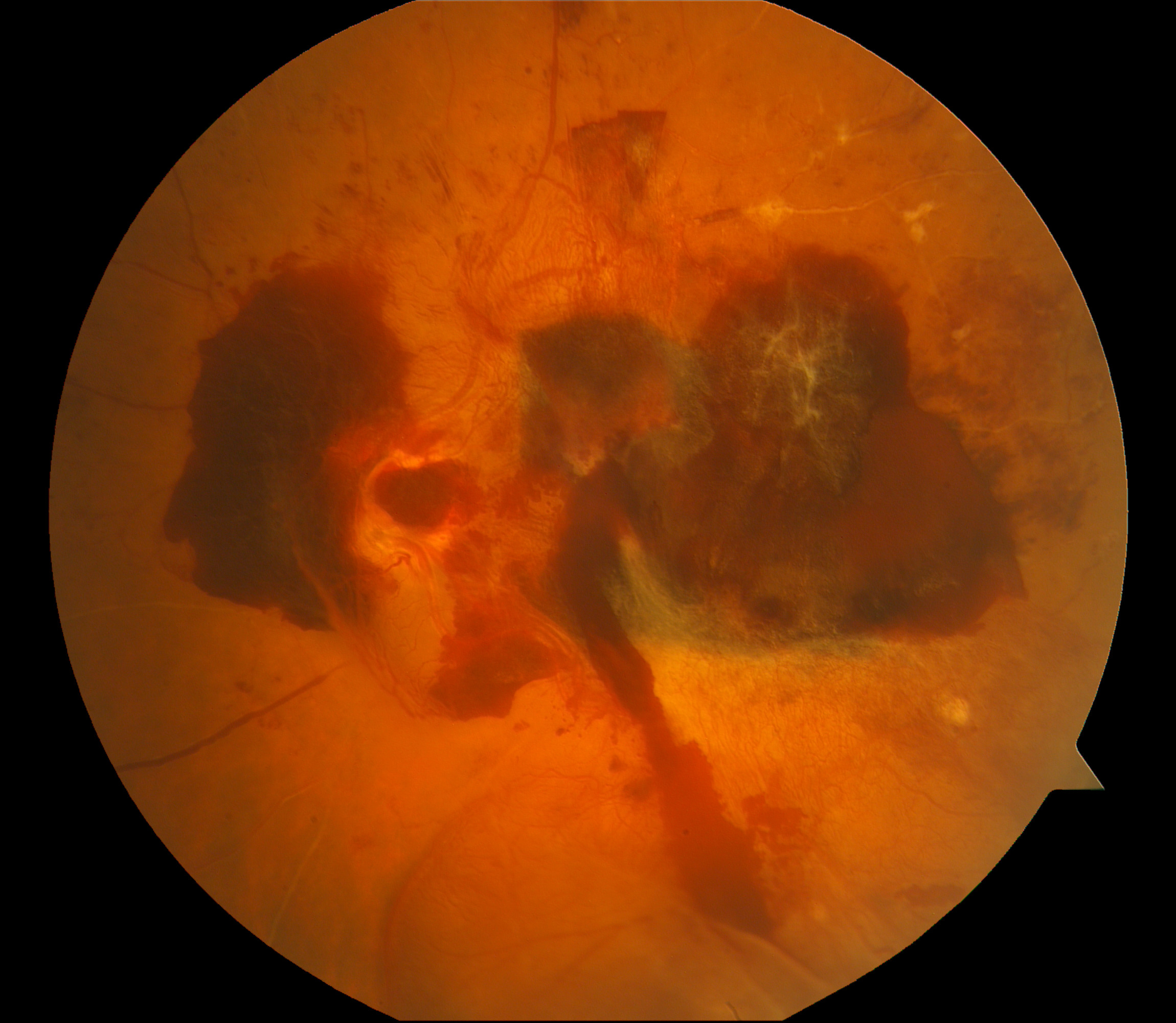
A 49-year-old man with proliferative retinopathy and a dense vitreous hemorrhage has no view of the retina, and ultrasound shows an attached retina.
He receives aflibercept, and at two weeks the blood is clearing and scatter laser can be placed.
Another patient with a similar bleed and a tractional detachment near the macula goes straight to vitrectomy, which shows that the choice depends on the findings.
Ask the patient to report any sudden new floaters, a curtain, or loss of vision, since rebleeding and traction can appear at any point after the first injection. Prompt review lets the team change course early.
Record the date of each injection and the clarity of the view at each visit.
For the latest studies, see the PubMed results for DRCR Protocol AB.


Document what you see
Two smartphone imaging tools built for everyday clinic use — one for the slit lamp, one for the fundus.
From Choroida — the team behind this siteReferences
- Antoszyk AN, Glassman AR, Beaulieu WT, et al. Effect of intravitreous aflibercept vs vitrectomy with panretinal photocoagulation on visual acuity in patients with vitreous hemorrhage from proliferative diabetic retinopathy: a randomized clinical trial. JAMA. 2020;324:2383-2395.
- Diabetic Retinopathy Clinical Research Network. Panretinal photocoagulation vs intravitreous ranibizumab for proliferative diabetic retinopathy: a randomized clinical trial. JAMA. 2015;314:2137-2146.
- Ryan SJ, Schachat AP, Wilkinson CP, et al, eds. Retina. 6th ed. Elsevier; 2018.
- American Academy of Ophthalmology. Basic and Clinical Science Course, Section 12: Retina and Vitreous. AAO; current edition.

Writes and reviews the clinical articles on Educate. Every post is checked against peer-reviewed sources before it goes live.