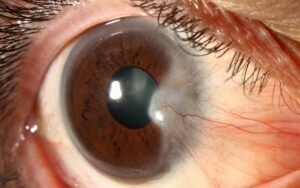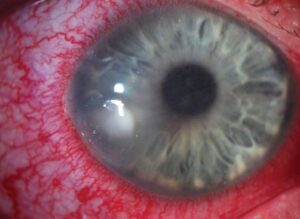
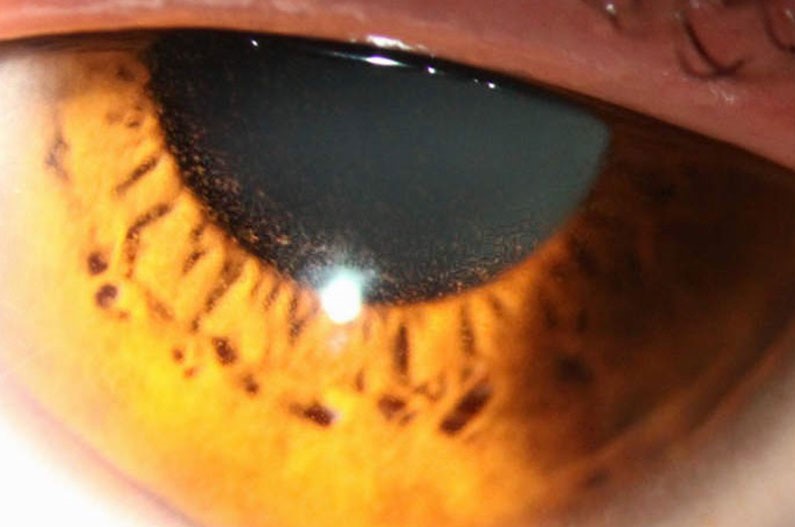
Preservative-induced toxic epitheliopathy develops gradually, often over months to years, in patients using preserved topical medications on a chronic basis, and it deserves its own recognition, distinct from acute keratitis medicamentosa, because it represents a specific, well-documented, slow-building form of surface damage most classically encountered in glaucoma patients using multiple, indefinite-duration topical medications.
Why Chronic Use Is a Distinct Problem
While any topical medication can cause acute toxicity with frequent short-term use, as seen in keratitis medicamentosa, a different and arguably more insidious pattern occurs in patients using preserved medications chronically, often for years, at a relatively low daily frequency, such as once or twice daily glaucoma drops.
The cumulative effect of years of even modest preservative exposure, particularly with benzalkonium chloride, the most commonly used and most extensively studied preservative in ophthalmic formulations, can progressively damage the ocular surface, producing chronic ocular surface disease that is easy to overlook or attribute to age-related dry eye rather than to the treatment itself.
Mechanism
Benzalkonium chloride and other preservatives act, in part, through a detergent-like disruption of cell membranes to achieve their antimicrobial preservative effect, but this same mechanism can, with chronic exposure, damage corneal and conjunctival epithelial cells, disrupt the tear film’s lipid layer, and reduce conjunctival goblet cell density, compounding into a chronic, multifactorial ocular surface disease picture over time.
All-fit Slit-Lamp Adapter
Record and share exactly what you see at the slit lamp. One adapter fits any slit lamp or surgical microscope — and any smartphone.
From Choroida — the team behind this siteWho Is Most Affected
- Glaucoma patients, particularly those using multiple topical medications for prolonged periods, represent the population in whom this condition has been most extensively studied and documented, given the typically lifelong, daily nature of glaucoma treatment
- Patients with chronic dry eye or other ocular surface disease who are also using preserved medications, where the underlying surface vulnerability compounds the medication-related toxicity
- Any patient on long-term preserved topical treatment for a chronic condition, including chronic allergic conjunctivitis or other conditions requiring sustained topical therapy
Clinical Features
- Chronic ocular surface symptoms, including irritation, foreign body sensation, burning, and tearing, often with a gradual onset that patients may attribute to their underlying eye condition rather than to their treatment
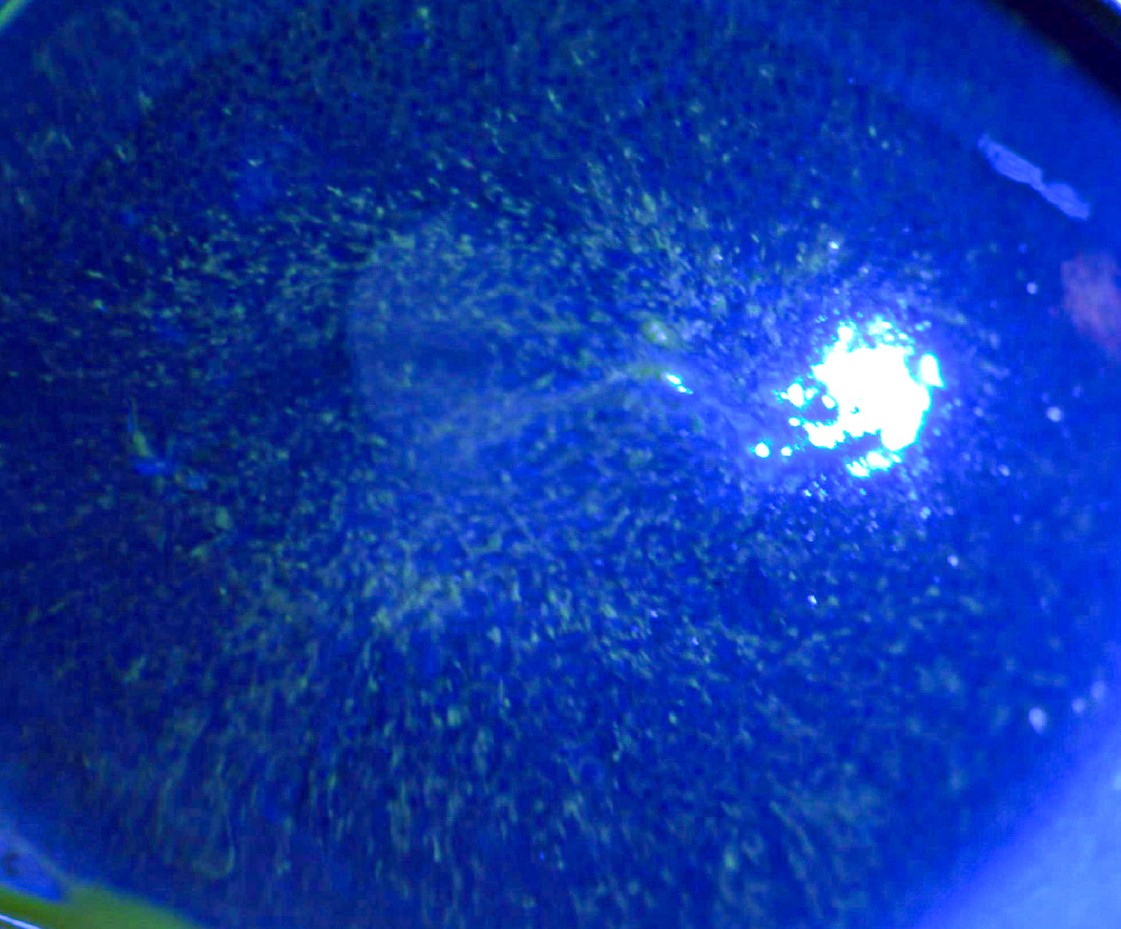
- Punctate epithelial erosions, often diffuse, along with reduced tear breakup time and other signs of tear film instability
- Conjunctival hyperemia and, with more prolonged exposure, subclinical conjunctival inflammatory changes detectable on impression cytology or conjunctival biopsy in research settings
- Symptoms and signs that correlate, in general population studies, with the number of preserved medications used and the duration of use, though individual susceptibility varies
Diagnostic Considerations
Recognizing this condition requires actively considering medication-related toxicity as a contributor to ocular surface symptoms in any patient on chronic topical therapy, rather than assuming that persistent surface symptoms in a glaucoma patient, for example, necessarily reflect an unrelated, coincidental dry eye process.
A history quantifying the number of topical medications, their preservative content, and duration of use is an important, sometimes underemphasized, part of evaluating chronic ocular surface complaints in these patients.
Management
Switching to Preservative-Free Formulations
Where available, switching to preservative-free formulations of needed medications is the most direct way to reduce ongoing toxic exposure while continuing necessary treatment, and preservative-free options now exist for a growing number of glaucoma medications and other chronic topical treatments.
Minimizing Medication Burden
When multiple medications are used, considering combination formulations that reduce the total number of separate bottles and preservative exposures, or reassessing whether all current medications remain necessary, can help reduce cumulative toxic burden.
Supportive Ocular Surface Treatment
Preservative-free lubrication and other standard ocular surface disease treatments support recovery and comfort alongside efforts to reduce the underlying preservative exposure driving the problem.
Considering Alternative Treatment Modalities
For glaucoma specifically, alternative treatment approaches that reduce reliance on chronic topical medication, including selective laser trabeculoplasty or, in appropriate candidates, surgical options, can be considered partly with an eye toward reducing long-term preservative exposure, alongside their primary role in intraocular pressure control (see selective laser trabeculoplasty).
Prognosis
Ocular surface findings related to chronic preservative exposure generally improve, though not always completely, with reduction in preservative exposure, and the degree of recovery can depend on the duration and severity of prior exposure.
Because this condition builds gradually and can be mistaken for an unrelated, coincidental dry eye process, proactive consideration of medication-related contribution in any patient with chronic topical treatment and ocular surface symptoms supports more accurate diagnosis and more effective long-term management.

Document what you see
Two smartphone imaging tools built for everyday clinic use — one for the slit lamp, one for the fundus.
From Choroida — the team behind this siteReferences
- Baudouin C, Labbe A, Liang H, Pauly A, Brignole-Baudouin F. Preservatives in eyedrops: the good, the bad and the ugly. Prog Retin Eye Res. 2010;29:312-334.
- Jaenen N, Baudouin C, Pouliquen P, Manni G, Figueiredo A, Zeyen T. Ocular symptoms and signs with preserved and preservative-free glaucoma medications. Eur J Ophthalmol. 2007;17:341-349.
- Rossi GC, Tinelli C, Pasinetti GM, Milano G, Bianchi PE. Dry eye syndrome-related quality of life in glaucoma patients. Eur J Ophthalmol. 2009;19:572-579.
- Pisella PJ, Pouliquen P, Baudouin C. Prevalence of ocular symptoms and signs with preserved and preservative free glaucoma medication. Br J Ophthalmol. 2002;86:418-423.
Test yourself
A few questions straight from this article.
-
Over what timescale does preservative-induced toxic epitheliopathy typically develop?
The condition builds gradually, often over months to years, in patients on preserved topical medication long term, which is what distinguishes it from acute keratitis medicamentosa. -
Which preservative is the most commonly used and most extensively studied in ophthalmic formulations?
Benzalkonium chloride is the most commonly used and most extensively studied preservative in ophthalmic formulations, and cumulative exposure to it progressively damages the ocular surface. -
By what mechanism do benzalkonium chloride and similar preservatives damage the ocular surface?
Preservatives achieve their antimicrobial effect partly through detergent-like disruption of cell membranes, and this same action damages corneal and conjunctival epithelium with chronic exposure. -
Chronic preservative exposure reduces the density of which conjunctival cell population?
Chronic exposure damages epithelial cells, disrupts the tear film lipid layer and reduces conjunctival goblet cell density, compounding into chronic ocular surface disease. -
In which patient group has preservative-induced toxic epitheliopathy been most extensively documented?
Glaucoma patients using several topical medications for prolonged periods are the population in whom the condition is best studied, given the lifelong daily nature of glaucoma treatment. -
Which corneal and tear film findings characterise preservative-induced toxic epitheliopathy?
Typical findings are often diffuse punctate epithelial erosions with reduced tear breakup time and other signs of tear film instability, alongside conjunctival hyperaemia. -
A glaucoma patient on long-term preserved drops reports chronic surface symptoms. Which diagnostic error is easiest to make?
The gradual build-up makes it easy to overlook treatment-related toxicity and assume persistent surface symptoms reflect an unrelated, coincidental dry eye process. -
What is the most direct way to cut ongoing preservative exposure while continuing necessary treatment?
Where available, preservative-free formulations are the most direct way to reduce toxic exposure while keeping necessary treatment going, and exist for a growing number of glaucoma medications. -
Which glaucoma treatment can reduce reliance on chronic topical medication, and so preservative exposure?
Approaches that reduce reliance on chronic drops, including selective laser trabeculoplasty or surgery in suitable candidates, can be considered partly to limit long-term preservative exposure. -
What recovery can be expected after preservative exposure is reduced?
Surface findings generally improve with reduced preservative exposure, though not always completely, and the degree of recovery depends on the duration and severity of prior exposure.

Writes and reviews the clinical articles on Educate. Every post is checked against peer-reviewed sources before it goes live.