
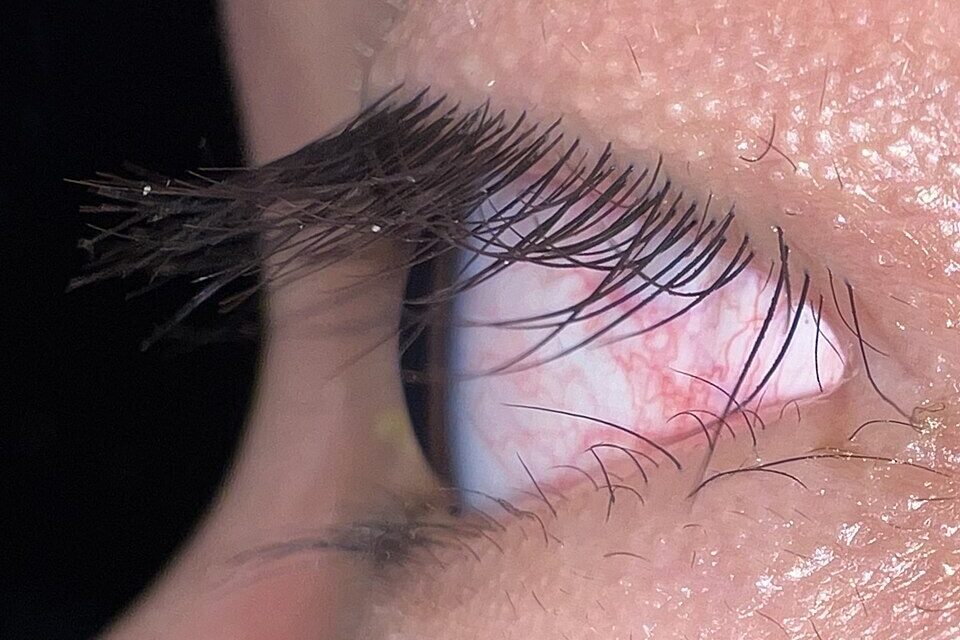
Trichomegaly is abnormal overgrowth of the eyelashes, in length, thickness, curling, or pigmentation, and it sits at the opposite end of the spectrum from madarosis, the lash-loss condition discussed in its own dedicated article on this site.
It is usually a cosmetic curiosity, but in certain contexts it functions as a genuine clinical sign, either of a specific medication effect or, more rarely, of an underlying genetic or systemic condition.
Distinguishing an incidental, benign variant from a medication-induced or syndromic cause is really the entire diagnostic task once trichomegaly is noticed.
The term is applied loosely in everyday practice, but formally it refers specifically to a measurable increase in lash length beyond the normal range, generally regarded as roughly 8 to 12 millimeters.
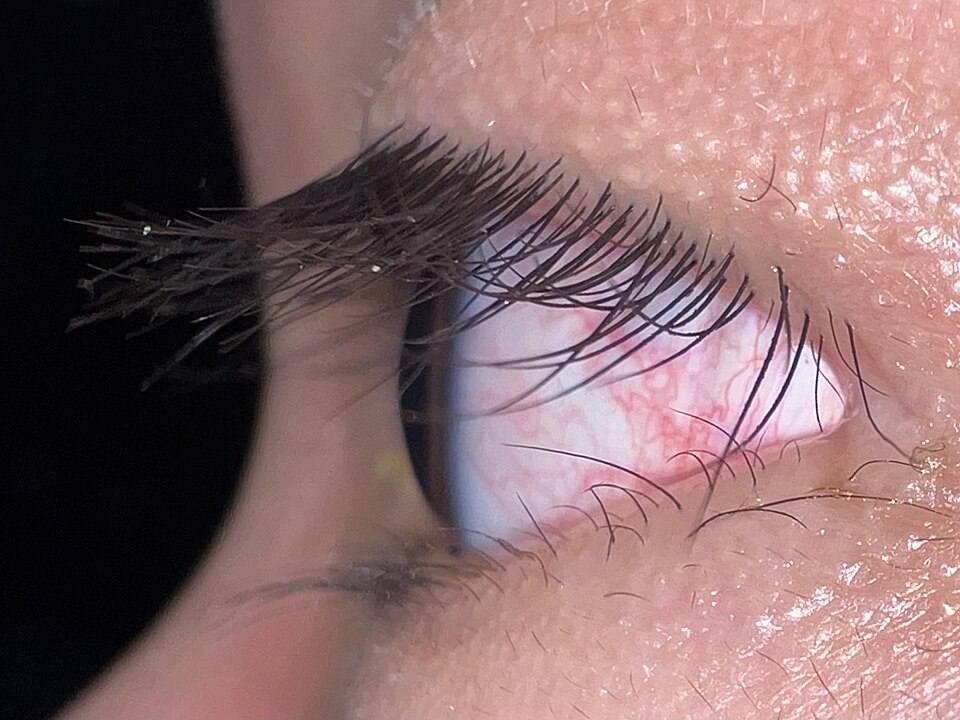
Medication-Induced Trichomegaly
Prostaglandin analog eye drops, used widely for glaucoma, are the most familiar cause encountered in ophthalmic practice, producing longer, thicker, and sometimes darker lashes on the treated eye as a well-documented side effect rather than a toxicity.
Epidermal growth factor receptor inhibitors, a class of systemic cancer chemotherapy drugs, are also strongly associated with trichomegaly, sometimes severe enough that overgrown lashes curl backward and irritate the cornea.
Interferon therapy and certain other systemic medications have been reported to cause trichomegaly as well, though less consistently and less severely than the two categories above.
The exact mechanism for both major drug classes appears to involve prolonging the anagen, or active growth, phase of the lash follicle cycle, allowing individual lashes to grow longer than they normally would before shedding.
Congenital and Syndromic Causes
- Oliver-McFarlane syndrome, a rare condition combining trichomegaly with retinal pigmentary degeneration, pituitary dwarfism, and intellectual disability
- Cornelia de Lange syndrome, where long, prominent eyelashes are one of several characteristic facial features alongside synophrys and other dysmorphic findings
- Congenital trichomegaly occurring as an isolated finding, without other syndromic features, in some otherwise healthy individuals
Recognizing these syndromic associations matters because trichomegaly can be one of the more visually obvious clues that prompts a broader systemic and developmental evaluation in an affected child.
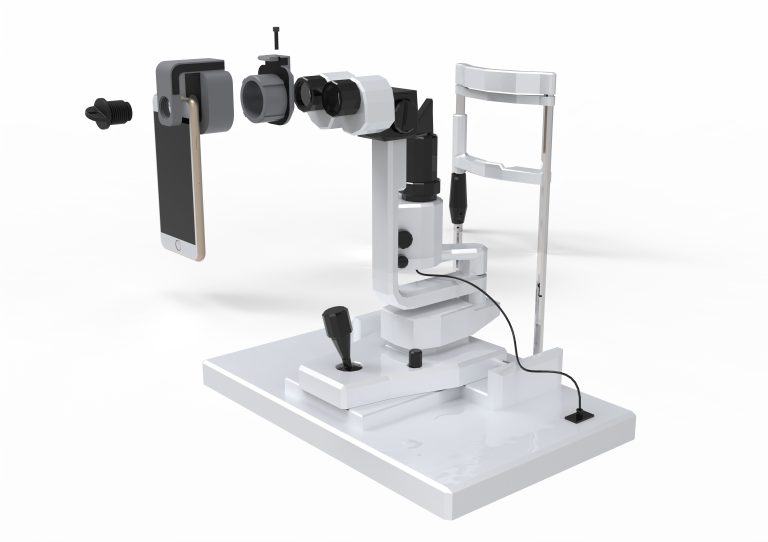
All-fit Slit-Lamp Adapter
Record and share exactly what you see at the slit lamp. One adapter fits any slit lamp or surgical microscope — and any smartphone.
From Choroida — the team behind this siteClinical Significance
When medication-induced, trichomegaly is a benign, expected, and often reversible effect rather than a sign of toxicity, and patients on prostaglandin analogs benefit from being warned about it in advance so an asymmetric or unusual lash appearance does not cause alarm.
When overgrowth is severe enough that lashes curl and contact the cornea, mechanical irritation and even corneal abrasion can result, mirroring the irritation caused by misdirected lashes in trichiasis, though the underlying mechanism here is excess growth rather than abnormal direction.
In a child, particularly one with other dysmorphic features, developmental delay, or visual symptoms suggesting a retinal dystrophy, trichomegaly should prompt consideration of an underlying syndrome rather than being dismissed as purely cosmetic.
Evaluation
A focused medication history, specifically asking about prostaglandin analog eye drops or systemic chemotherapy, usually identifies the cause quickly in an adult with new or asymmetric trichomegaly.
In a child or in an adult without an obvious medication cause, a broader history and examination looking for other dysmorphic features, developmental concerns, or visual symptoms is warranted, given the associated syndromes described above.
A dilated fundus exam is worth including when a syndromic cause is suspected, since some of the associated conditions, such as Oliver-McFarlane syndrome, include a retinal pigmentary degeneration that would otherwise be missed.
Management
Medication-induced trichomegaly rarely requires treatment beyond reassurance, and simple trimming can address any mechanical irritation from overly long lashes without needing to discontinue an otherwise effective and necessary medication.
Severe cases with genuine corneal irritation from curling, overgrown lashes may need more definitive lash-shortening or occasional epilation, similar in principle to the mechanical management used for trichiasis.
Syndromic trichomegaly is managed as part of the broader multidisciplinary care for the underlying condition, with the ophthalmologist’s role focused on monitoring for and managing any associated ocular findings such as a retinal dystrophy.
For prostaglandin-associated trichomegaly specifically, the change typically develops gradually over weeks to months of treatment and is not, on its own, a reason to switch glaucoma medications unless it is genuinely bothering the patient.
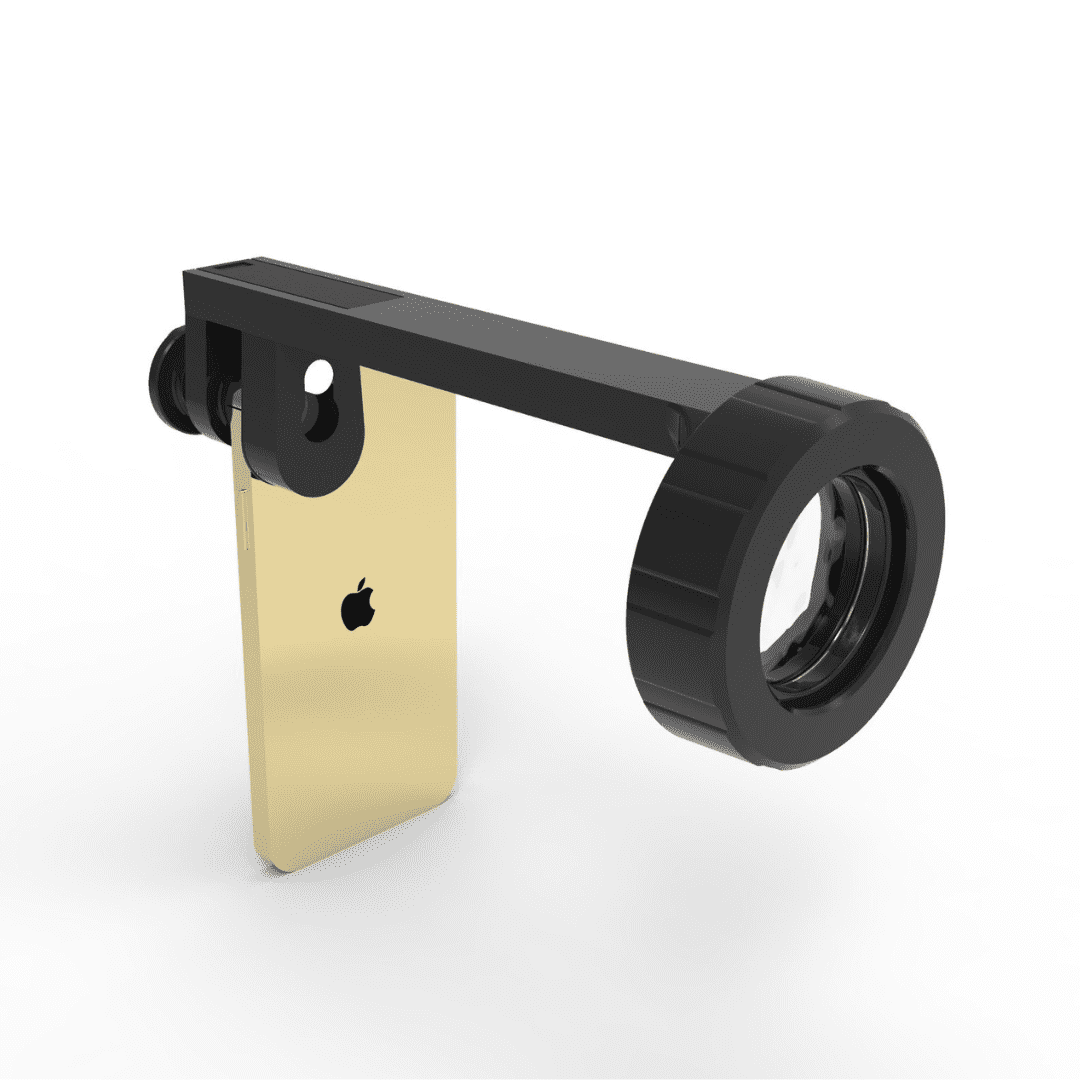
Document what you see
Two smartphone imaging tools built for everyday clinic use — one for the slit lamp, one for the fundus.
From Choroida — the team behind this siteReferences
- Kadakia P, Chorich LJ, Layman LC. Prostaglandin analog-induced trichomegaly. Journal of Glaucoma.
- Nguyen KP, Weiss J. Trichomegaly and epidermal growth factor receptor inhibitors. Journal of the American Academy of Dermatology.
- American Academy of Ophthalmology. Basic and Clinical Science Course, Section 7: Oculofacial Plastic and Orbital Surgery.
