Pediatric cataract surgery removes the cloudy lens to give a developing visual system its best chance, but the operation raises a question that does not arise in adult cataract surgery: whether to implant an intraocular lens at the same time or leave the eye aphakic and correct it with a contact lens instead.
The answer has shifted with trial evidence and now depends heavily on the child’s age at surgery.
Why Timing and Optical Correction Both Matter
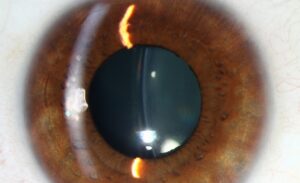
Congenital and infantile cataracts must be removed promptly to avoid irreversible deprivation amblyopia, since the visual system is most sensitive to form deprivation in the first months of life.
Once the cataract is removed, the eye needs some form of optical correction to focus light on the retina, and the choice between an intraocular lens (IOL) and a contact lens or aphakic glasses is where the real controversy lies, particularly in the youngest infants.
The Infant Aphakia Treatment Study
The Infant Aphakia Treatment Study randomized infants younger than seven months with a unilateral congenital cataract to primary IOL implantation or aphakia corrected with a contact lens.
Visual acuity outcomes at multiple years of follow-up were similar between the two groups, but the IOL group had significantly more additional surgeries, mostly for visual axis opacification and glaucoma-related complications.
This finding shifted practice toward favoring contact lens correction, rather than primary IOL implantation, in the youngest infants, since the visual outcome was not better with an IOL but the complication burden was higher.
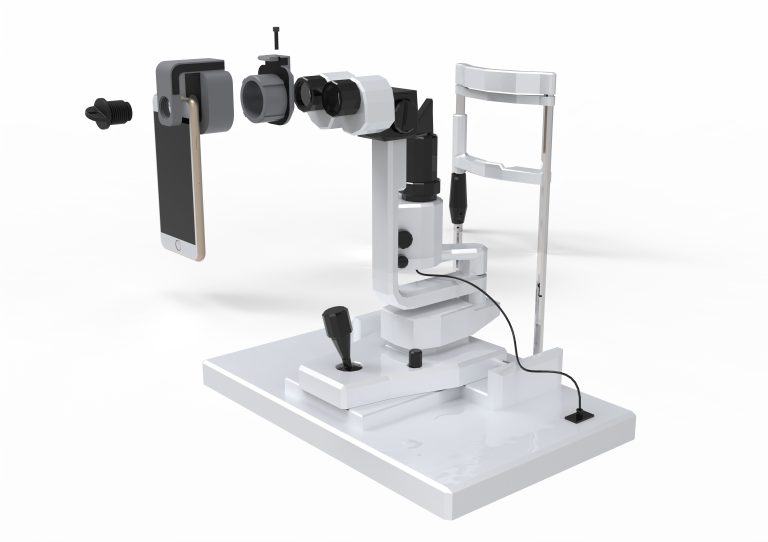
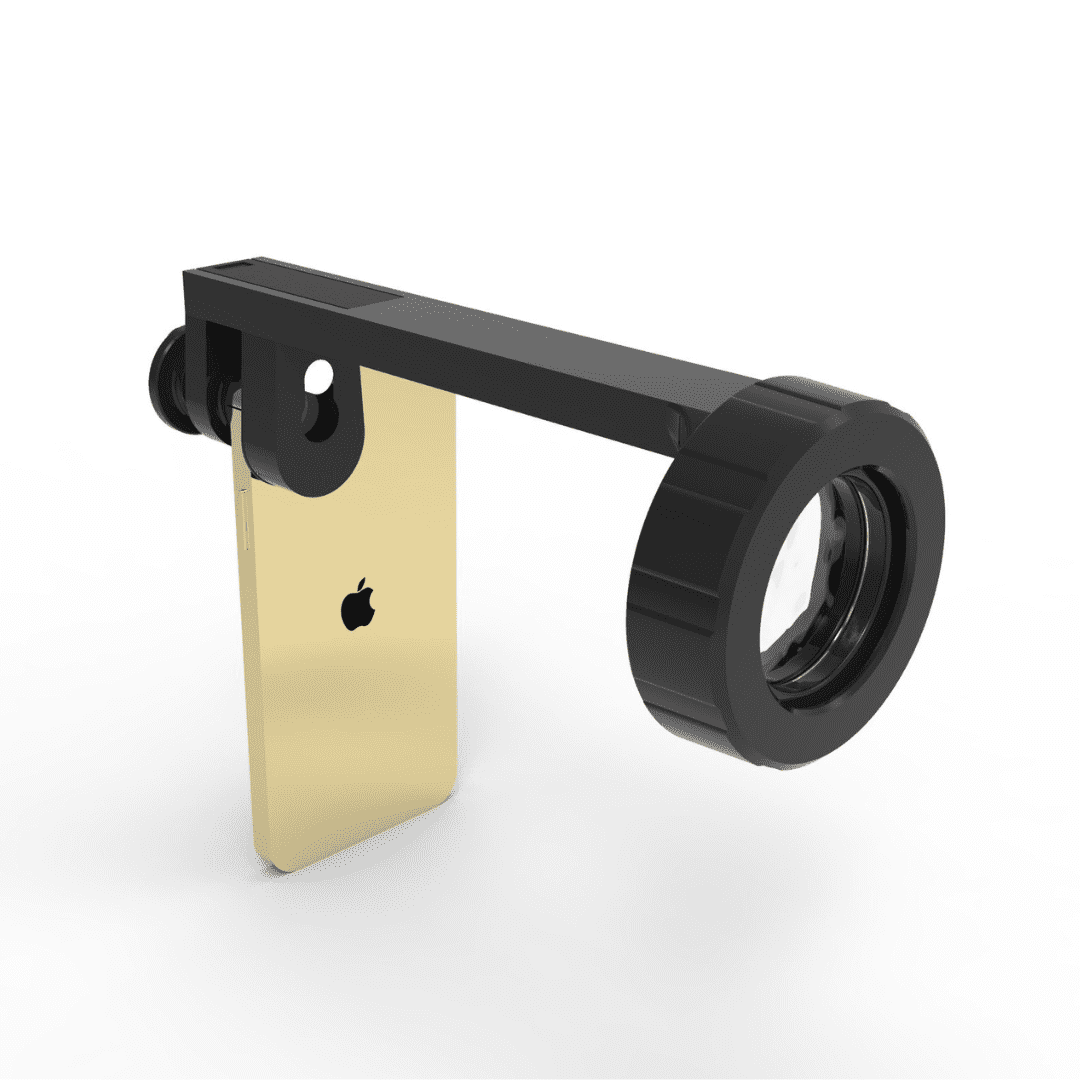
All-fit Slit-Lamp Adapter
Record and share exactly what you see at the slit lamp. One adapter fits any slit lamp or surgical microscope — and any smartphone.
From Choroida — the team behind this siteAge-Based Approach in Current Practice
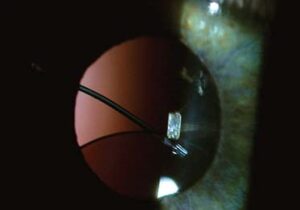
- Under about 6 to 12 months of age: primary IOL implantation is generally avoided in favor of aphakia with contact lens correction, based on the trial evidence of similar vision but more complications with an IOL at this age
- Older infants and children: primary IOL implantation is more commonly performed, since the eye is closer to adult size and the relative complication profile shifts
- Bilateral cataracts: timing is somewhat less urgent than for unilateral cataracts, since there is no competing normal eye driving amblyopia, though prompt surgery still matters
- Unilateral cataracts: amblyopia risk is higher because the good eye competes for visual dominance, making both prompt surgery and aggressive amblyopia therapy essential regardless of the IOL decision
Power Calculation Challenges
Choosing IOL power in a growing eye is more difficult than in an adult, since the eye will continue to elongate and its refractive power will change for years after surgery.
Surgeons typically undercorrect relative to the calculated emmetropic power, deliberately leaving the child myopic in infancy with the expectation that axial growth will move the refraction toward emmetropia over time, a strategy guided by published age-based nomograms.
This means a child who receives an IOL in infancy is expected to need glasses for a period afterward and often another correction later as growth outpaces the initial undercorrection strategy.
Complications Specific to Pediatric Cataract Surgery
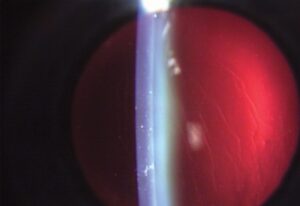
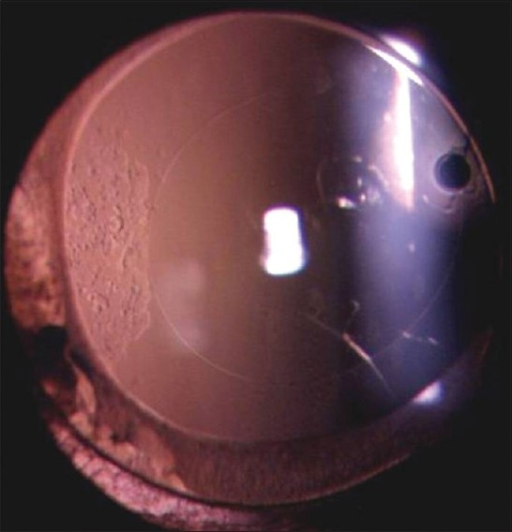
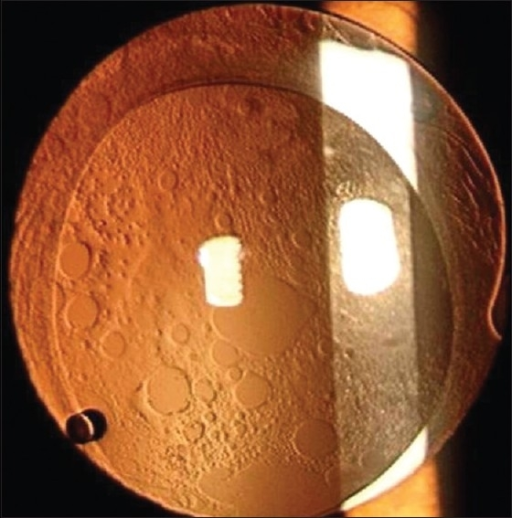
- Visual axis opacification, from proliferation of residual lens epithelial cells, more frequent in younger children and one of the main drivers of reoperation
- Glaucoma, which can develop years after surgery and requires lifelong monitoring regardless of whether an IOL was placed
- Posterior capsule opacification, managed differently in children than adults because a posterior capsulotomy with anterior vitrectomy is often performed primarily at the time of cataract surgery in young children, since YAG capsulotomy is difficult to perform cooperatively in an infant
- Amblyopia, which requires aggressive patching or optical penalization therapy regardless of the surgical technique chosen
Amblyopia Management
Surgery alone does not restore vision; the child needs full-time optical correction and, particularly for unilateral cataracts, patching therapy of the better eye to force use of the operated eye during the critical period of visual development.
Compliance with patching is often the single largest determinant of final visual outcome, more so than the surgical technique or IOL decision itself.
Long-Term Follow-Up
Children who have had cataract surgery need lifelong monitoring for glaucoma, even many years after apparently successful surgery, along with ongoing refraction and amblyopia management through childhood.
Prognosis
Visual outcomes have improved considerably with earlier detection and surgery, though unilateral congenital cataracts still carry a real risk of residual amblyopia even with excellent surgical and optical management.
The decision of when to implant an IOL versus correct aphakia with a contact lens is now guided by age-based evidence rather than a uniform approach, and it is a decision made jointly with the family, balancing visual outcome against the burden of contact lens wear versus the reoperation risk of an early IOL.
Document what you see
Two smartphone imaging tools built for everyday clinic use — one for the slit lamp, one for the fundus.
From Choroida — the team behind this siteReferences
- Infant Aphakia Treatment Study Group. Comparison of contact lens and intraocular lens correction of monocular aphakia during infancy. Arch Ophthalmol. 2010;128:810-818.
- Lambert SR, Lynn MJ, Hartmann EE, et al. Comparison of contact lens versus intraocular lens correction for unilateral aphakia in infants: visual acuity at 10.5 years. JAMA Ophthalmol. 2020;138:365-372.
- Vasavada AR, Vasavada V, Shah SK, et al. Postoperative outcomes of intraocular lens implantation in children younger than 2 years. J Cataract Refract Surg. 2016;42:1477-1484.
- Trivedi RH, Wilson ME, Golub RL. Incidence and risk factors for glaucoma after pediatric cataract surgery with and without intraocular lens implantation. J AAPOS. 2006;10:117-123.
Test yourself
A few questions straight from this article.
-
Why must congenital cataracts be removed promptly in the first months of life?
The developing visual system is most sensitive to form deprivation in the first months of life, so delay risks permanent deprivation amblyopia. -
The Infant Aphakia Treatment Study enrolled unilateral congenital cataract infants below which age?
The trial randomized infants younger than seven months with a unilateral congenital cataract to primary IOL implantation or aphakia corrected by contact lens. -
What did the Infant Aphakia Treatment Study find comparing primary IOL with contact-lens aphakia?
Visual acuity was similar across years of follow-up, but the IOL group needed significantly more additional surgeries, mainly for visual axis opacification and glaucoma. -
In congenital cataract surgery under about 6 to 12 months, which correction is generally preferred?
Trial evidence showed similar vision but more complications with an IOL at this age, so primary implantation is generally avoided in favour of contact lens correction. -
Why is amblyopia risk higher in unilateral than in bilateral congenital cataract?
With a normal fellow eye driving visual dominance the operated eye is suppressed, making prompt surgery and aggressive amblyopia therapy essential. -
Why is intraocular lens power selection harder in an infant than in an adult?
A growing eye continues to elongate for years after surgery, so its refractive power changes well beyond the day of implantation. -
Visual axis opacification after pediatric cataract surgery arises from proliferation of which cells?
Residual lens epithelial cells proliferate across the visual axis; this is commoner in younger children and a main driver of reoperation. -
Why is primary posterior capsulotomy with anterior vitrectomy often done in young children?
Cooperative YAG capsulotomy is impractical in an infant, so the posterior capsule is opened at the time of cataract surgery instead. -
What must lifelong follow-up after pediatric cataract surgery specifically screen for?
Glaucoma can appear many years after apparently successful surgery, whether or not an IOL was implanted, so monitoring continues for life. -
After pediatric cataract surgery, which factor most often determines final visual outcome?
Adherence to patching often outweighs both the surgical technique and the IOL decision in shaping the child's final acuity.

Writes and reviews the clinical articles on Educate. Every post is checked against peer-reviewed sources before it goes live.