Brolucizumab is a small single-chain antibody fragment that blocks VEGF-A and allows high drug concentrations in a small injection volume.
The drug gave strong drying and long intervals in the main trials, but postmarketing reports soon linked it to intraocular inflammation and retinal vasculitis.
Knowing these events helps you counsel patients and act quickly when they occur.
How Brolucizumab Works
The molecule weighs about 26 kDa, which is much smaller than aflibercept or ranibizumab.
Because of its size, one injection delivers more molecules, and the effect may last longer.
HAWK and HARRIER compared brolucizumab with aflibercept in neovascular AMD, and brolucizumab matched aflibercept for vision.
Many brolucizumab eyes held a 12-week interval after loading, and fluid at OCT was often lower (see anti-VEGF therapy).
Brolucizumab and Intraocular Inflammation
After approval, retrospective reports described inflammation, vasculitis, and vascular occlusion in some eyes.
A review of HAWK and HARRIER later found more inflammation events with brolucizumab than with aflibercept, including some cases of retinal vasculitis with occlusion.
Most eyes recovered, but some patients lost vision permanently.
The exact mechanism is still uncertain, and a delayed immune reaction to the drug is one proposed explanation.
Fundus Explorer Pro
Photograph the retinal findings described here with the phone already in your pocket — 22 D optics and built-in illumination in one handheld unit.
From Choroida — the team behind this siteRecognizing Brolucizumab Inflammation
Symptoms usually start weeks to months after an injection.
Patients report blurred vision, floaters, redness, or pain, although some have no symptoms.
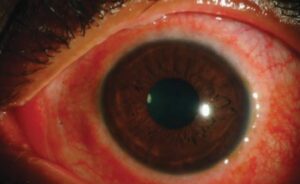
Examination may show anterior chamber cells, vitritis, and vascular sheathing or occlusion.
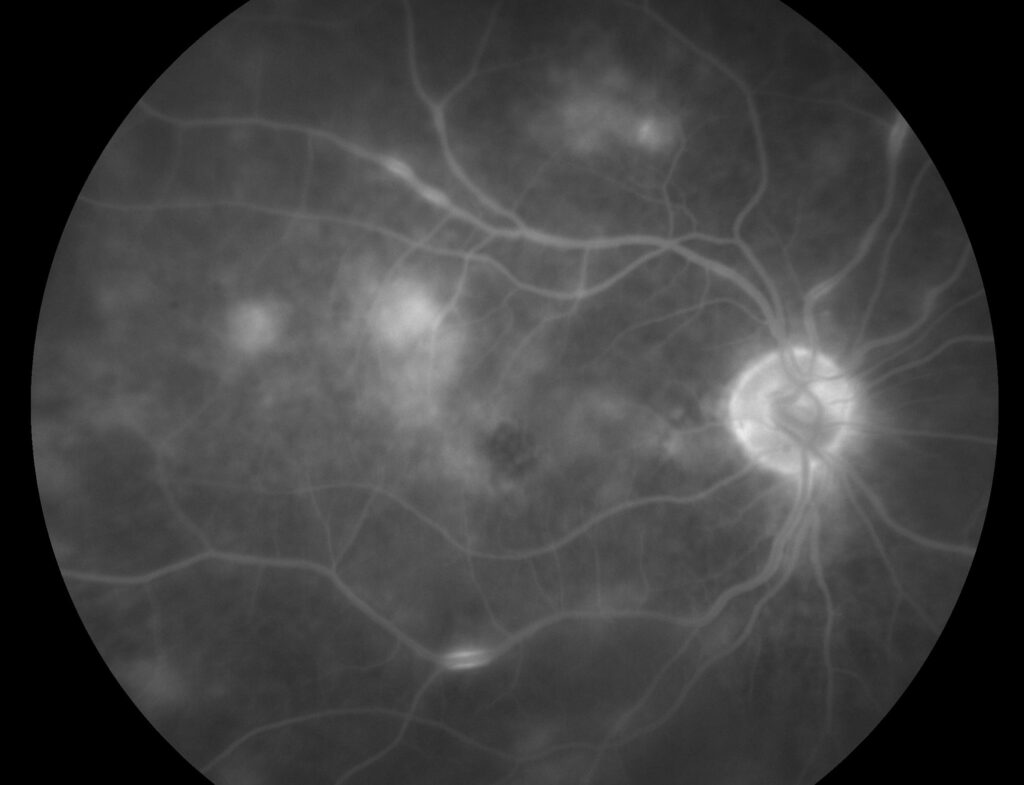
Fluorescein angiography helps to map the vasculitis and any areas of nonperfusion (see retinal vasculitis diagnostic approach).
Managing Brolucizumab Inflammation
Stop brolucizumab at once if inflammation appears.
Start topical or periocular steroids, or systemic steroids when the vasculitis is severe or sight threatening.
Switch to another anti-VEGF agent only after the inflammation has settled and the retina specialist has judged the risk.
Report the event according to local pharmacovigilance rules.
Who Is at Higher Risk
Reports suggest that prior intraocular inflammation, recent injections of the same drug, and female sex may raise the risk.
Because these links come from observational data, they remain tentative.
Many events appeared in the first months of treatment, so early injections need the closest watch.
If the history suggests prior uveitis, record the baseline vascular status before the first dose.
Share the plan with the patient’s primary physician when systemic steroids are needed.
Practical Advice
- Take a careful history of uveitis before starting brolucizumab
- Warn patients about warning symptoms in advance
- Examine the eye at each visit for cells and vascular sheathing
- Avoid starting the drug in an eye that has had inflammation after brolucizumab before
Many clinicians now choose other agents first and keep brolucizumab as a later option.
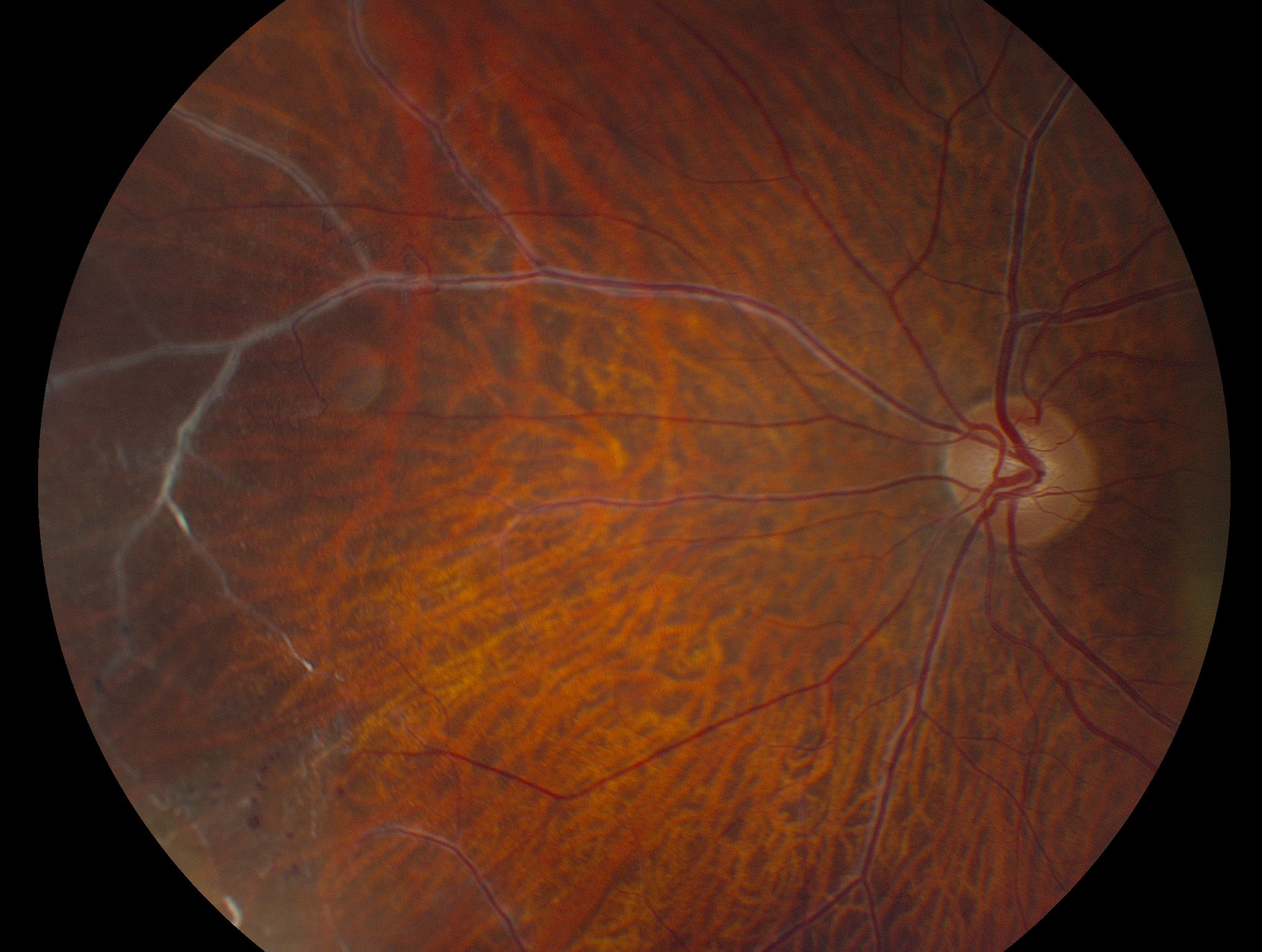
An Example Case
A 78-year-old man with neovascular AMD receives his fourth brolucizumab injection with a dry macula and 20/40 vision.
Six weeks later he reports new floaters and a blurry spot in the same eye.
The eye shows anterior chamber cells, vitreous cells, and sheathing of an inferior retinal vein.
Fluorescein angiography confirms occlusive vasculitis with a patch of nonperfusion.
He stops brolucizumab, starts oral prednisone with close follow-up, and keeps 20/60 vision after the inflammation settles.
Brolucizumab Versus Other Agents
Brolucizumab gives longer intervals than aflibercept in many eyes, and it dries the macula quickly.
However, the inflammation risk limits its use as a first choice.
Because no other agent shows the same pattern at this frequency, many clinicians keep brolucizumab for eyes that fail other drugs.
Pitfalls to Avoid
- Treat new floaters after an injection as a warning sign until proven otherwise
- Stop the drug when the eye shows cells or vascular sheathing
- Start steroids early when the vasculitis threatens the macula
- Warn about the fellow eye, which carries the same risk
Questions Patients Ask
Patients ask whether the drug is safe, and the honest answer is that most eyes do well.
They also ask whether they should stop the drug, and the best step is to discuss their history and alternatives with the retina specialist.
Provide a written list of warning symptoms and a phone number for urgent review.
Key Points
Brolucizumab is effective and allows long intervals, yet it carries a real risk of inflammation and vasculitis.
Recognize the signs early, stop the drug, and treat with steroids.
Choose the agent with the history of the eye in mind.


Document what you see
Two smartphone imaging tools built for everyday clinic use — one for the slit lamp, one for the fundus.
From Choroida — the team behind this siteReferences
- Dugel PU, Koh A, Ogura Y, et al. HAWK and HARRIER: phase 3, multicenter, randomized, double-masked trials of brolucizumab for neovascular age-related macular degeneration. Ophthalmology. 2020;127:72-84.
- Baumal CR, Spaide RF, Vajzovic L, et al. Retinal vasculitis and intraocular inflammation after intravitreal injection of brolucizumab. Ophthalmology. 2020;127:1345-1359.
- Monés J, Srivastava SK, Jaffe GJ, et al. Risk of inflammation, retinal vasculitis, and retinal occlusion-related events with brolucizumab: post hoc review of HAWK and HARRIER. Ophthalmology. 2021;128:1050-1059.
- American Academy of Ophthalmology. Basic and Clinical Science Course, Section 12: Retina and Vitreous. AAO; current edition.

Writes and reviews the clinical articles on Educate. Every post is checked against peer-reviewed sources before it goes live.