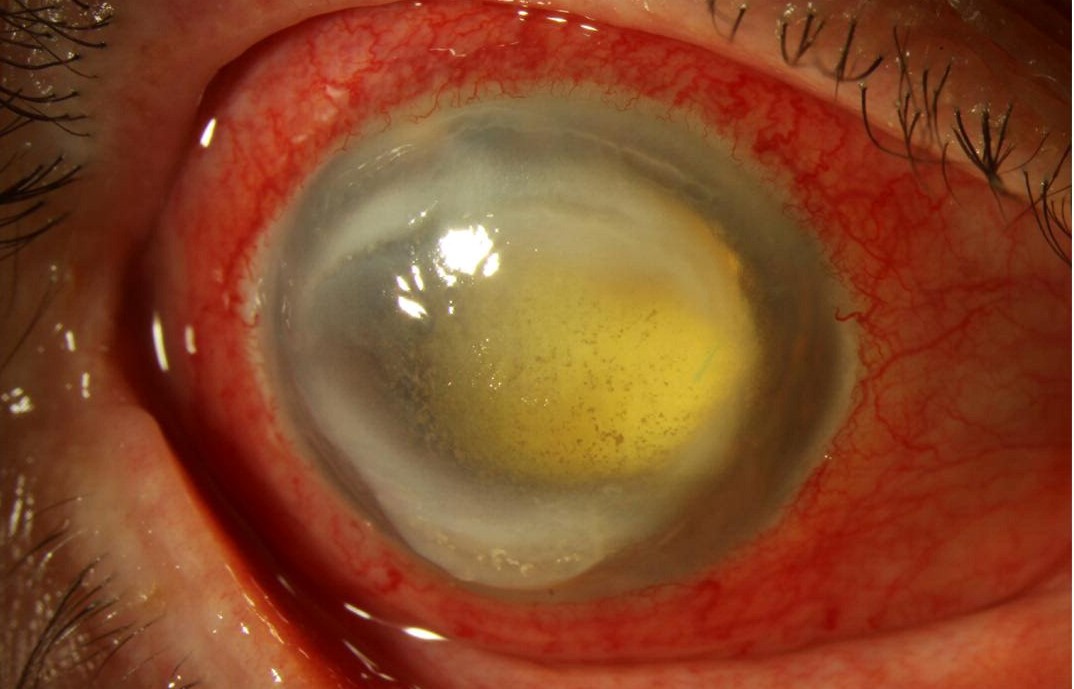
Post-injection endophthalmitis is an infection of the vitreous that develops after an intravitreal injection.
It is also the most feared complication of anti-VEGF therapy.
It is rare, with reported rates of a few cases per ten thousand injections, but the number of injections performed each year is so large that every retina clinic will see cases.
Early recognition and rapid treatment decide whether the eye keeps useful vision.
How Often Post-Injection Endophthalmitis Occurs
Large series and meta-analyses report rates between about 0.02 and 0.06 percent per injection, which is roughly one case for every 2,000 to 5,000 injections.
The risk applies to each injection, so a patient on monthly treatment is exposed repeatedly over the years.
Most cases occur after an injection that seemed routine, which is why every injection needs the same level of care (see intravitreal injection technique).
Organisms
- Coagulase-negative staphylococci, the commonest cause, from the skin and lids
- Streptococcus species, particularly viridans streptococci from the mouth, linked to talking or breathing over the field without a mask, and often more severe
- Staphylococcus aureus, and other bacteria in a minority
- Fungi, rarely
Streptococcal infections tend to progress fast and have a poor visual outcome, so they deserve particular urgency.
Fundus Explorer Pro
Photograph the retinal findings described here with the phone already in your pocket — 22 D optics and built-in illumination in one handheld unit.
From Choroida — the team behind this sitePresentation
The usual onset is within two to seven days of the injection, and often at three to five days.
- Increasing pain and redness
- Blurred vision or a sudden drop in acuity
- Light sensitivity
- Lid swelling and discharge in some patients
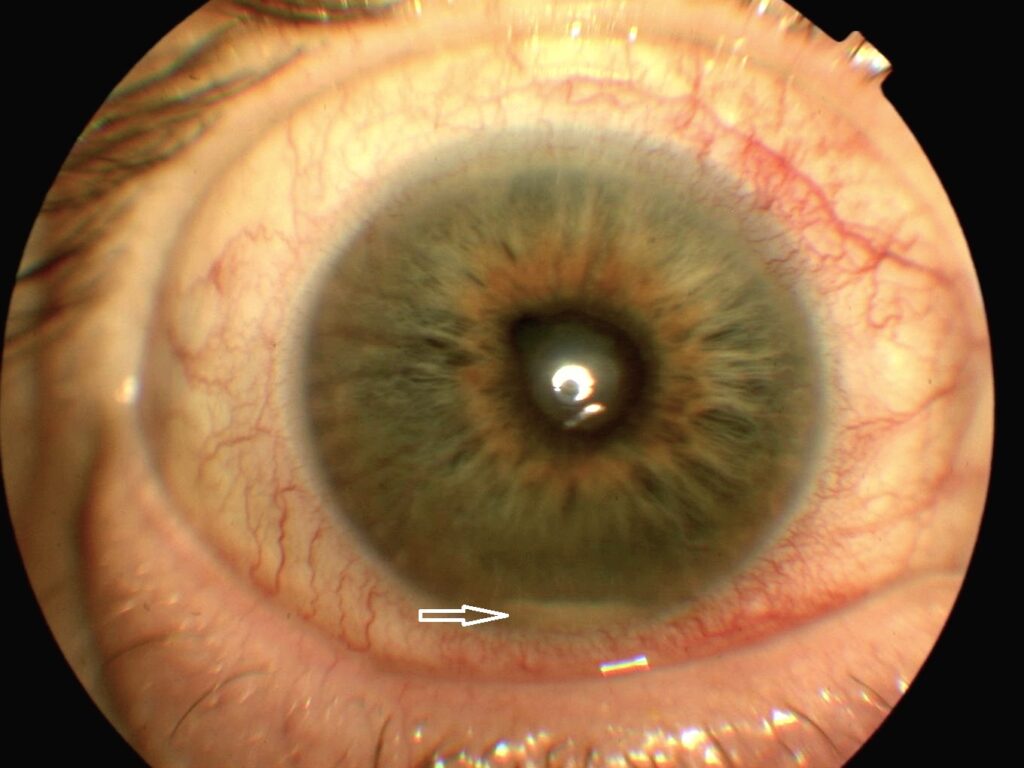
- Hypopyon, which is less common in the early stage than after cataract surgery
- Cells in the vitreous, with haze that hides the retina
Mild discomfort and a few cells in the anterior chamber can occur after injection and may be sterile inflammation, but increasing pain and loss of vision call for urgent assessment.
Differential Diagnosis of Post-Injection Endophthalmitis
- Sterile intraocular inflammation: a noninfectious reaction to the drug, with less pain and a better vision, and often a white eye (see anti-VEGF therapy)
- Postoperative or endogenous endophthalmitis in a patient with other risk factors (see acute postoperative endophthalmitis and endogenous endophthalmitis)
- Vitreous hemorrhage and retinal tear
- Retinal detachment, retinal vein occlusion, and neovascular glaucoma
When in doubt, treat as infection, because the cost of delay is high.
Management for Post-Injection Endophthalmitis
- Same-day referral to a retina service, and avoid delay for tests
- Vitreous tap or biopsy for Gram stain, culture, and PCR
- Intravitreal antibiotics, commonly vancomycin 1 milligram and ceftazidime 2.25 milligrams, with the choice adapted to local guidance
- Pars plana vitrectomy in eyes with severe disease, particularly those with light perception vision or a poor response
- Topical steroids and cycloplegics as supportive treatment, and consider intravitreal steroids in selected cases
- Repeat injections at 48 to 72 hours if there is no improvement
The Endophthalmitis Vitrectomy Study, which examined post-cataract cases, found that immediate vitrectomy benefited eyes presenting with light perception vision.
Many surgeons apply this approach to post-injection disease (see the reference below).
Prevention
- Povidone-iodine 5 percent on the conjunctiva and lashes, left to dry
- A speculum to hold the lids, and avoidance of contact with the lashes
- A mask for the operator and the patient, or silence during the procedure, to reduce oral flora
- Sterile gloves and instruments, and single-dose vials
- Avoidance of topical antibiotics, which studies have not shown to reduce the infection rate
- Careful teaching of patients about the symptoms and a clear route for urgent contact
Clusters of cases should lead to an investigation of the drug supply, the compounding pharmacy, and the technique.
Counselling
Explain to every patient on injection therapy that pain, redness, and falling vision in the week after injection are an emergency and must not wait until the next appointment.
Also, give a telephone number that is answered, and make sure the patient has access to rapid care at weekends.
After a Case: What to Review
When endophthalmitis occurs after an injection, look at the technique used on that day, the lot of the drug, the number of injections done in the session, and the person who performed the procedure.
Review whether staff masked the patient, whether the antisepsis was complete, and whether staff handled the speculum and instruments properly.
Report the case to the local infection control team and, if the clinic used a compounded drug, to the pharmacy and the regulator, since clusters can reveal contamination.
Post-Injection Endophthalmitis: Follow-Up of Treated Eyes
Review the patient daily in the early days, with acuity, pressure, and the view of the fundus.
Many eyes with coagulase-negative staphylococci recover useful vision with prompt treatment, while streptococcal infections more often end with poor vision despite aggressive treatment.
Plan retinal detachment surveillance after infection, and discuss with the patient whether to continue the injection program and under what changes.
For the latest studies, see the PubMed results for post-injection endophthalmitis.


Document what you see
Two smartphone imaging tools built for everyday clinic use — one for the slit lamp, one for the fundus.
From Choroida — the team behind this siteReferences
- McCannel CA. Meta-analysis of endophthalmitis after intravitreal injection of anti-vascular endothelial growth factor agents: causative organisms and possible prevention strategies. Retina. 2011;31:654-661.
- Endophthalmitis Vitrectomy Study Group. Results of the Endophthalmitis Vitrectomy Study: a randomized trial of immediate vitrectomy and of intravenous antibiotics for the treatment of postoperative bacterial endophthalmitis. Arch Ophthalmol. 1995;113:1479-1496.
- Avery RL, Bakri SJ, Blumenkranz MS, et al. Intravitreal injection technique and monitoring: updated guidelines of an expert panel. Retina. 2014;34(Suppl 12):S1-S18.
- American Academy of Ophthalmology. Basic and Clinical Science Course, Section 12: Retina and Vitreous. AAO; current edition.
Test yourself
A few questions straight from this article.
-
What per-injection rate of endophthalmitis after intravitreal injection do large series and meta-analyses report?
Reported rates are about 0.02 to 0.06 percent per injection; the risk applies to every injection, so patients on monthly treatment are exposed repeatedly. -
Which organisms are the commonest cause of post-injection endophthalmitis?
Coagulase-negative staphylococci from the skin and lids are the commonest cause; S. aureus and other bacteria are a minority and fungi are rare. -
Where do the viridans streptococci causing post-injection endophthalmitis usually come from?
Viridans streptococci come from the mouth and are linked to talking or breathing over the field without a mask; these infections progress fast and often end with poor vision. -
When does post-injection endophthalmitis usually present after the injection?
Onset is usually within two to seven days of injection, often at three to five days, with increasing pain, redness and falling vision. -
Which presentation favors sterile intraocular inflammation over infectious post-injection endophthalmitis?
Sterile inflammation is a noninfectious drug reaction with less pain, better vision and often a white eye; when in doubt, treat as infection because delay is costly. -
Which intravitreal antibiotic doses are commonly used for post-injection endophthalmitis?
After a vitreous tap for Gram stain, culture and PCR, vancomycin 1 mg and ceftazidime 2.25 mg are commonly injected, adapted to local guidance. -
In endophthalmitis after intravitreal injection, which presenting vision favors immediate pars plana vitrectomy?
The Endophthalmitis Vitrectomy Study found immediate vitrectomy benefited post-cataract eyes presenting with light perception vision, and many surgeons apply this to post-injection disease. -
What povidone-iodine concentration is applied to the conjunctiva and lashes before intravitreal injection to prevent endophthalmitis?
Povidone-iodine 5 percent is applied to the conjunctiva and lashes and left to dry, with a speculum keeping the lashes away from the field. -
What is the role of topical antibiotics in preventing post-injection endophthalmitis?
Topical antibiotics are avoided because studies have not shown that they reduce the infection rate; antisepsis, masking and sterile technique matter instead. -
A cluster of post-injection endophthalmitis cases should prompt investigation of what?
Clusters can reveal contamination, so investigate the drug supply, the compounding pharmacy and the technique, and report to infection control and, for compounded drugs, the regulator.

Writes and reviews the clinical articles on Educate. Every post is checked against peer-reviewed sources before it goes live.