Pharyngoconjunctival fever is an adenoviral illness that combines fever, sore throat and follicular conjunctivitis.
It mostly affects children and clusters in schools and swimming pools.
Therefore, recognize it early to limit spread and to avoid unnecessary antibiotics.
Cause and Spread of Pharyngoconjunctival Fever
Adenovirus types 3, 4 and 7 are the usual agents.
The virus spreads through respiratory droplets, hands and contaminated water.
The incubation period is about five to twelve days.
Also, patients stay infectious while they have discharge.
The Clinical Triad
Fever, pharyngitis and conjunctivitis form the classic triad.
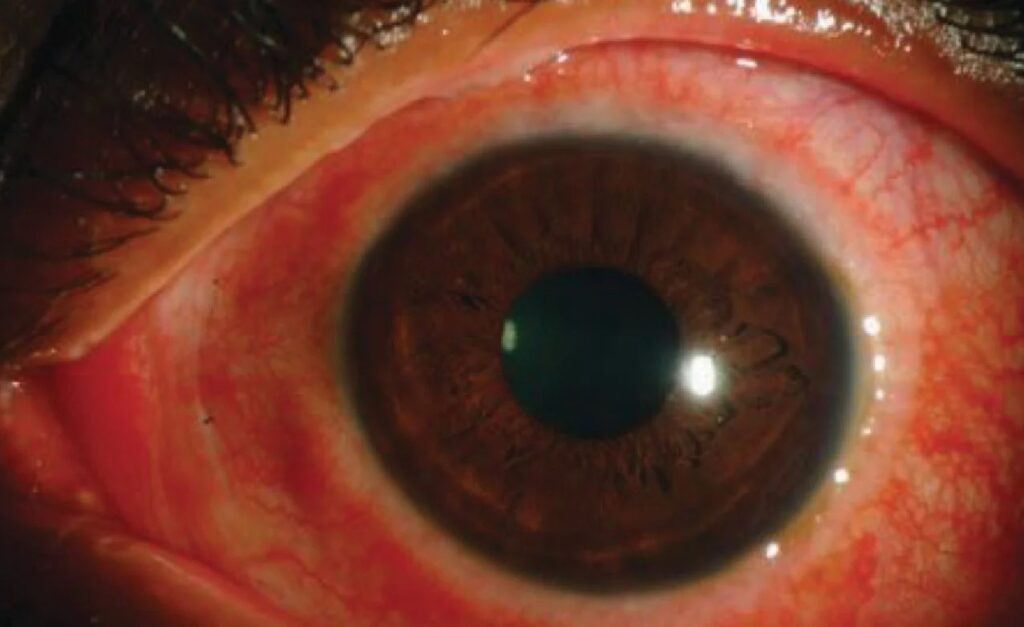
The conjunctiva is red and watery with follicles, and a tender preauricular node is common.
Subconjunctival hemorrhage and mild punctate keratitis may appear.
Because not every patient shows all three features, accept an incomplete picture.
All-fit Slit-Lamp Adapter
Record and share exactly what you see at the slit lamp. One adapter fits any slit lamp or surgical microscope — and any smartphone.
From Choroida — the team behind this sitePharyngoconjunctival Fever Versus Epidemic Keratoconjunctivitis
Epidemic keratoconjunctivitis comes from types 8, 19 and 37 and mostly affects adults.
It produces more severe keratitis with subepithelial infiltrates that reduce vision (see epidemic keratoconjunctivitis).
In contrast, pharyngoconjunctival fever is milder and includes systemic signs.
Diagnosing Pharyngoconjunctival Fever
The diagnosis is clinical in most cases.
Rapid antigen tests have limited sensitivity, so a negative test does not exclude disease.
Polymerase chain reaction confirms the virus in outbreaks or in atypical cases.
Also, culture takes days and is rarely used.
Natural Course of Pharyngoconjunctival Fever
Symptoms peak in the first week and settle within one to two weeks.
Some patients develop subepithelial infiltrates after the acute phase.
Therefore, warn them about glare and blur that can persist for weeks.
Treatment of Pharyngoconjunctival Fever
Supportive care is the mainstay.
Cold compresses and lubricants ease discomfort, and antihistamines help itch.
Topical steroids are reserved for membranes or for infiltrates that reduce vision.
Because antibiotics do not treat the virus, use them only for secondary infection.
Infection Control
Advise hand washing and no sharing of towels or pillows.
Also, clean examination equipment carefully, since adenovirus survives on surfaces for a long time.
Alcohol wipes alone are not reliable, so follow local disinfection policy for tonometer tips.
When to Refer
Refer when pain, photophobia or vision loss develops, or when membranes form.
Also refer immunocompromised patients and infants.
Because corneal involvement can persist, review patients with symptoms beyond two weeks.
Age Groups and Seasonality
Children aged five to fifteen years account for most cases.
Outbreaks follow summer camps and swimming pools, and they also occur in schools in winter.
Therefore, ask about recent swimming and contact with similar illness.
Systemic Features
Fever usually lasts three to five days and may be high.
Also, headache, malaise and gastrointestinal upset may accompany it.
Because the throat may be only mildly red, the eye signs often draw the attention.
Subepithelial Infiltrates
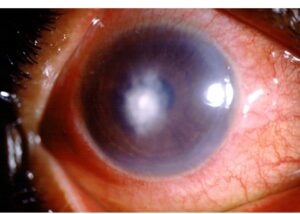
Some patients develop small subepithelial opacities after one to two weeks.
They reflect an immune response to viral antigen in the superficial stroma.
Also, they cause glare and blurred vision that can last for months.
Treat with a short steroid course when symptoms are bothersome, and monitor the pressure.
Membranes and Pseudomembranes
Pseudomembranes of fibrin appear on the tarsal conjunctiva in severe cases.
They cause pain and photophobia.
Therefore, peel them gently under topical anesthesia when comfort and healing demand it.
Povidone-Iodine
Povidone-iodine drops have antiviral activity in vitro and in small trials.
Also, some centers use them with dexamethasone, although the evidence is limited.
Therefore, treat this option as an adjunct.
Counselling on Return to School
Advise that children stay home while discharge persists.
Also, stress hand washing, separate towels and no swimming until the eyes are clear.
Why Antibiotics Do Not Help
Adenovirus is not sensitive to antibacterial drops.
Also, repeated antibiotic use increases toxicity and cost.
Therefore, explain the viral cause and the expected course at the first visit.
Return Precautions
Ask the patient to return for a severe headache, neck stiffness or worsening vision.
Also, review any child with a very high fever or poor feeding.
Because the systemic illness can mimic other infections, a pediatric review may be needed.
Pharyngoconjunctival Fever in Swimming Pool Outbreaks
Outbreaks have followed poorly chlorinated swimming pools and shared towels.
Public health teams check chlorine levels and advise on cleaning when cases cluster.
Also, patients should avoid pools until symptoms resolve.
Because the virus survives on surfaces and in water, hygiene measures protect others.
Distinguishing the Illness From Other Causes of Fever and Red Eye
Kawasaki disease causes fever and nonpurulent conjunctivitis in young children.
It also causes rash, lip changes and lymphadenopathy, which adenovirus does not.
Therefore, consider it in a child with prolonged fever and conjunctival injection without discharge.
Refer urgently when the picture fits.


Document what you see
Two smartphone imaging tools built for everyday clinic use — one for the slit lamp, one for the fundus.
From Choroida — the team behind this siteReferences
- Jhanji V, Chan TC, Li EY, Agarwal K, Vajpayee RB. Adenoviral keratoconjunctivitis. Surv Ophthalmol. 2015;60:435-443.
- Kaufman HE. Adenovirus advances: new diagnostic and therapeutic options. Curr Opin Ophthalmol. 2011;22:290-293.
- Gordon YJ, Gordon RY, Romanowski E, Araullo-Cruz TP. Prolonged recovery of desiccated adenoviral serotypes 5, 8, and 19 from plastic and metal surfaces in vitro. Ophthalmology. 1993;100:1835-1839.
- Pihos AM. Epidemic keratoconjunctivitis: a review of current concepts in management. J Optom. 2013;6:69-74.

Writes and reviews the clinical articles on Educate. Every post is checked against peer-reviewed sources before it goes live.