Dry eye after LASIK affects the majority of patients in the first weeks, and a smaller group has symptoms for months.
Also, the cause is damage to the corneal nerves that the flap and the laser cause, with effects on the whole tear system.
Preparing the patient and the ocular surface before surgery is the most effective way to reduce it.
Why Dry Eye After LASIK Happens
- The flap cuts the subbasal nerve plexus, and the laser ablation removes more nerve endings in the central cornea
- Corneal sensation falls, and the reflex drive for tear production and blinking decreases
- The cornea heals and the nerves regrow slowly, over months to a year or more
- Goblet cell loss and inflammation add to the problem
- Changes in the corneal shape may alter tear film stability
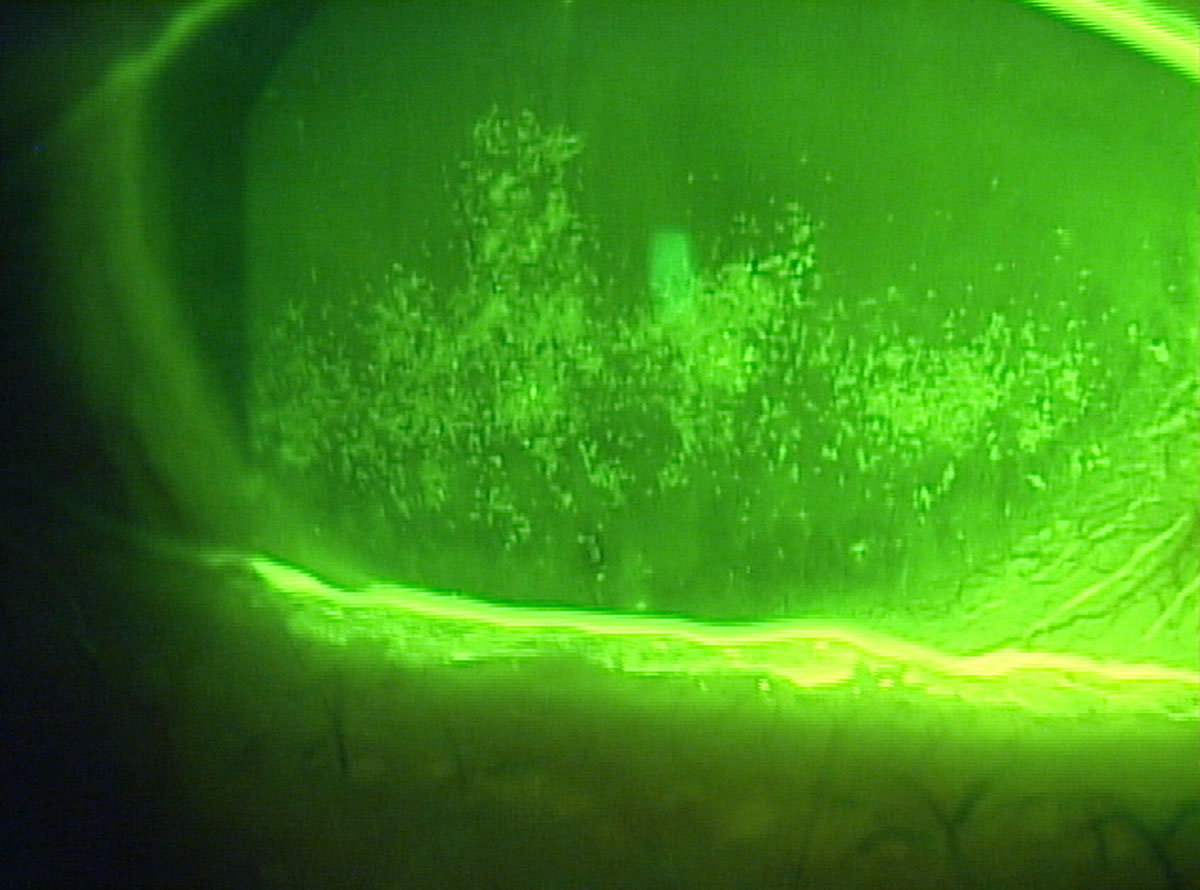
The result is a neurotrophic epitheliopathy with a dry, fragile surface in the interpalpebral zone (see the references and neurotrophic keratitis).
Dry Eye After LASIK: How Common and How Long?
Dry eye symptoms are present in up to half or more of patients at one month, and they peak at one to three months.
Most improve by six months, and the majority recover by twelve months, though a minority have longer-lasting symptoms (see the references).
Sensation recovers slowly, and an eye can look normal while still having reduced sensitivity.
All-fit Slit-Lamp Adapter
Record and share exactly what you see at the slit lamp. One adapter fits any slit lamp or surgical microscope — and any smartphone.
From Choroida — the team behind this siteWho Is at Risk?
- Preoperative dry eye or meibomian gland disease (see meibomian gland dysfunction)
- Older age and female sex
- Contact lens wear, which may mask an underlying surface problem
- High myopia and deep ablation
- Autoimmune disease, such as Sjögren disease, and use of drugs that dry the eye
- Asian ethnicity, in several series
- A superior hinge, in some studies, as compared with a nasal one
Small incision lenticule extraction may cause less dry eye, since the laser cuts fewer nerves.
Symptoms and Signs of Dry Eye After LASIK
Patients complain of dryness, burning, fluctuating vision, and a gritty feeling, and some have little pain because of the reduced sensation.
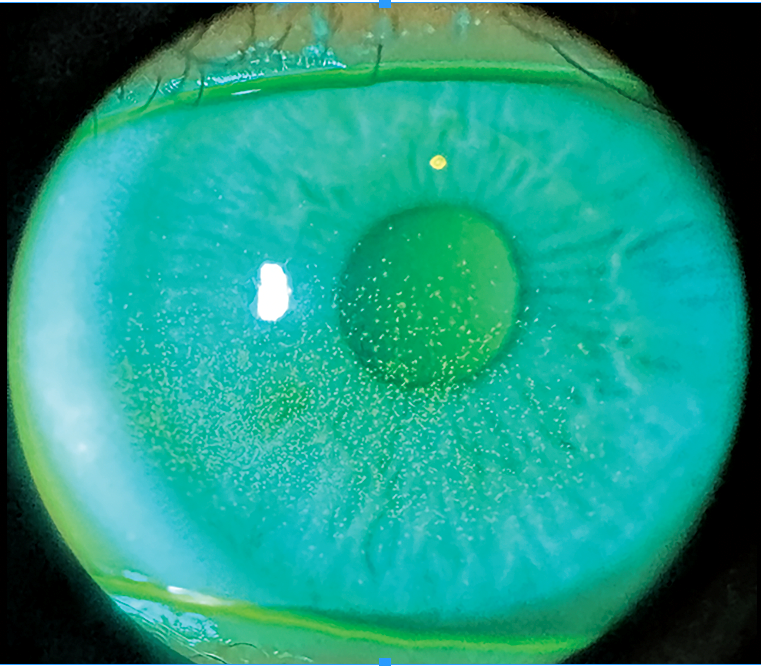
In addition, the examination shows punctate staining, a short break-up time, and a low tear volume, and corneal sensation may be reduced (see corneal fluorescein staining patterns).
Before Surgery
- Assess the ocular surface in every candidate, with break-up time, staining, and meibomian gland examination
- Treat blepharitis and meibomian gland disease first
- Stop contact lenses in the weeks before the measurements
- Set expectations, and explain that dryness is common after surgery
- Consider surface ablation or another technique in high-risk patients
Dry Eye After LASIK: Treatment After Surgery
- Preservative-free artificial tears, regularly, even when symptoms are absent
- Punctal plugs, which keep tears on the surface (see dry eye disease)
- Topical cyclosporine or lifitegrast for inflammation
- Autologous serum or other biologic drops in severe cases
- Warm compresses and lid hygiene for meibomian gland disease
- Oral omega-3 fatty acids, which have mixed evidence
- Short courses of low-dose topical steroid, with care
Doctors continue treatment until sensation and the surface recover.
When to Worry
Persistent epithelial defects, severe pain, or loss of vision need prompt review.
Signs of infection, such as a white spot, are an emergency in a postoperative eye.
Comparing Techniques
Surface ablation and small incision lenticule extraction cut fewer nerves than LASIK, and studies show less dry eye in the first months with these methods, though the difference narrows over time.
A flap with a nasal hinge preserves more of the nerve supply to the central cornea than a superior hinge, and some studies show quicker recovery of sensation.
The choice of technique should consider the baseline surface, the patient’s occupation and screen use, and the refractive error.
Practical Advice for the Weeks After Surgery
- Use preservative-free lubricants at least four to six times a day, and more at the start
- Take breaks from screens, and blink fully, since blinking falls during concentrated work
- Avoid fans and air conditioning blowing on the face, and use a humidifier where the air is dry
- Keep the eyelids clean, and use warm compresses if the glands are blocked
- Review the patient at one week, one month, three months, and six months, with a surface check at each
Distinguishing From Other Problems
Persistent blur or fluctuating vision after surgery may be caused by dry eye, but it can also come from residual refractive error, epithelial ingrowth, or ectasia (see epithelial ingrowth after LASIK and post-LASIK ectasia).
A stable topography and a refraction after the surface is treated help to find the cause.
Patients with a mild course often need only lubricants for a few weeks, and they should be reassured that most improve with time.
For the latest studies, see the PubMed results for dry eye after LASIK.


Document what you see
Two smartphone imaging tools built for everyday clinic use — one for the slit lamp, one for the fundus.
From Choroida — the team behind this siteReferences
- Toda I. Dry eye after LASIK. Invest Ophthalmol Vis Sci. 2018;59:DES109-DES115.
- Ambrosio R Jr, Tervo T, Wilson SE. LASIK-associated dry eye and neurotrophic epitheliopathy: pathophysiology and strategies for prevention and treatment. J Refract Surg. 2008;24:396-407.
- Shtein RM. Post-LASIK dry eye. Expert Rev Ophthalmol. 2011;6:575-582.
- American Academy of Ophthalmology. Basic and Clinical Science Course, Section 13: Refractive Surgery. AAO; current edition.

Writes and reviews the clinical articles on Educate. Every post is checked against peer-reviewed sources before it goes live.