Fenofibrate and diabetic retinopathy have become linked through trials that investigators designed for cardiovascular outcomes, and that found an unexpected benefit on the eye.
Also, the drug is an oral lipid-lowering agent.
It appears to slow the progression of retinopathy through effects that are not simply a matter of lowering lipids.
Ophthalmologists increasingly meet patients who ask about it, and a clear view of the evidence helps to advise them.
Fenofibrate and Diabetic Retinopathy: The Evidence
The Fenofibrate Intervention and Event Lowering in Diabetes study enrolled more than 9,000 patients with type 2 diabetes.
Fenofibrate reduced the need for first laser treatment for diabetic retinopathy. The relative reduction was about 30 percent, in this primary outcome of the ophthalmic analysis.
In a smaller substudy with retinal photographs, fenofibrate reduced the progression of retinopathy in patients who already had retinopathy at baseline.
In addition, the ACCORD Eye study randomized patients already taking simvastatin to fenofibrate or placebo.
The rate of progression of retinopathy over four years was lower in the fenofibrate group, with a relative reduction of about 40 percent.
Mechanism of Fenofibrate and Diabetic Retinopathy
Fenofibrate activates the nuclear receptor PPAR alpha, which regulates lipid metabolism.
Experimental work suggests that it also has anti-inflammatory, antioxidant, and anti-angiogenic effects, and that it may protect the blood-retinal barrier.
The benefit in the trials did not correlate closely with the change in lipid levels, which supports a direct retinal effect.
The exact mechanism in humans remains under study.
Fundus Explorer Pro
Photograph the retinal findings described here with the phone already in your pocket — 22 D optics and built-in illumination in one handheld unit.
From Choroida — the team behind this siteFenofibrate and Diabetic Retinopathy: Who May Benefit
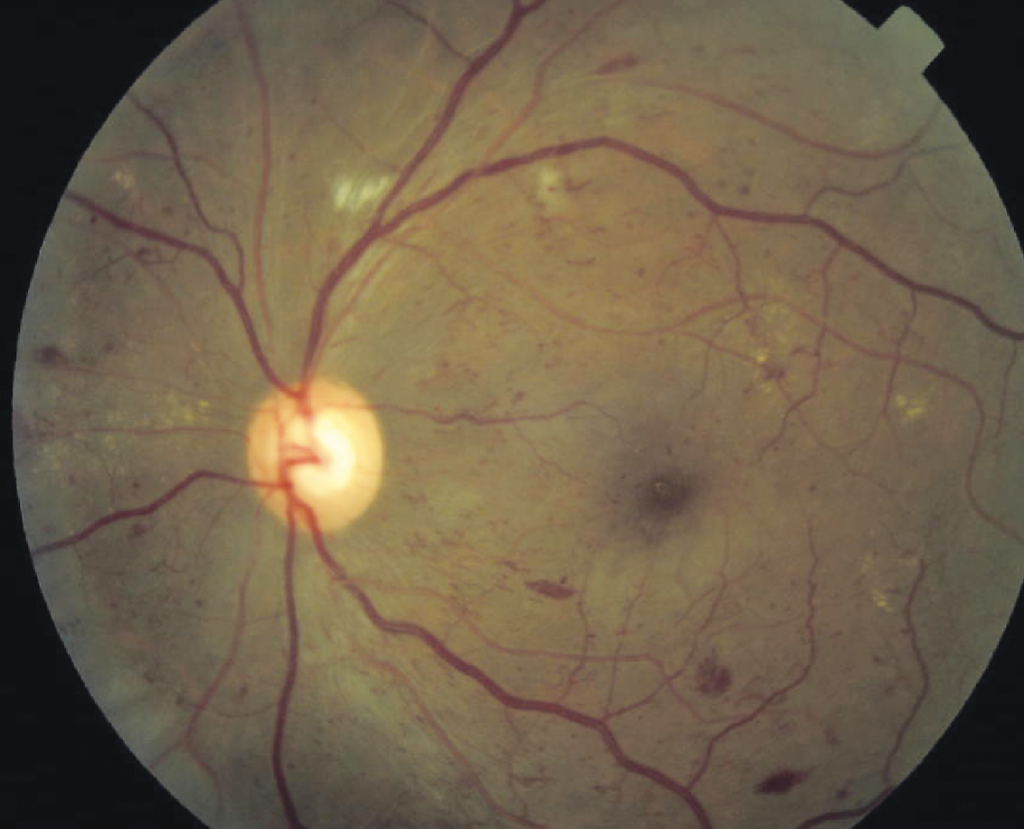
- Patients with type 2 diabetes and nonproliferative retinopathy, particularly with progression despite good control
- Patients with diabetic macular edema, as a supplement to ocular therapy
- Those who already have an indication for a lipid-lowering agent, such as high triglycerides
Also, the effect on proliferative disease and the effect for patients with type 1 diabetes are less well studied, although some data suggest benefit.
Some regulatory agencies have approved the drug for slowing the progression of retinopathy in selected patients, and recommendations vary from country to country.
Practical Use
Doctors make the decision to prescribe with the patient’s physician, because the drug is a systemic medication with its own risks.
Typical doses in the trials, used in patients with diabetes (see diabetic retinopathy), were 160 milligrams daily of a nanocrystal formulation, and 145 milligrams in some markets, with adjustment according to renal function.
Doctors also combine fenofibrate with a statin in many patients, and ACCORD used the combination.
Check liver enzymes, creatinine, and a lipid profile before and after starting.
Fenofibrate and Diabetic Retinopathy: Safety
- Increase in serum creatinine, which is usually reversible
- Liver enzyme elevation, and gallstones
- Myopathy, particularly when combined with other lipid drugs, though fenofibrate has a lower risk with statins than gemfibrozil
- Pancreatitis, rarely
- A need for dose reduction or avoidance in severe renal impairment
Patients who are pregnant or planning pregnancy should discuss alternatives with their physician.
What Fenofibrate Does Not Replace
It does not replace tight control of glucose, blood pressure, and lipids, nor does it replace screening and treatment of retinopathy.
It does not treat established macular edema or neovascularization on its own.
Patients should not delay laser or anti-VEGF treatment while waiting for an effect.
Present it as a reasonable systemic adjunct that may reduce the pace of the disease, with a modest absolute effect.
Counselling
Explain that patients take the drug for years and that the benefit is gradual. Also review it with the primary care physician or diabetologist.
Reinforce the importance of regular eye examinations whether or not the drug is started.
Where Fenofibrate Fits in the Care Pathway
For a patient with nonproliferative retinopathy, the main interventions are glycemic control, blood pressure control, and regular screening (see diabetic retinopathy).
When the retinopathy is progressing or is already at a severe stage, treat the eye first. Laser or injections take priority (see proliferative diabetic retinopathy and diabetic macular edema).
The team then discusses fenofibrate as a supplement.
The ophthalmologist can write to the patient’s physician to describe the finding and the reason for the suggestion.
Patient Questions
Patients often ask whether the drug can replace injections or laser, and the answer is no.
They may also ask whether it works for macular edema.
The answer is that the evidence is stronger for slowing progression of retinopathy than for treating edema that is already present.
Be open about uncertainty, since the benefit seen in trials was moderate and researchers are still studying the long-term effect on vision.
Remind them to continue other lipid medication as directed, and to report muscle pain or dark urine.
For the latest studies, see the PubMed results for fenofibrate and diabetic retinopathy.
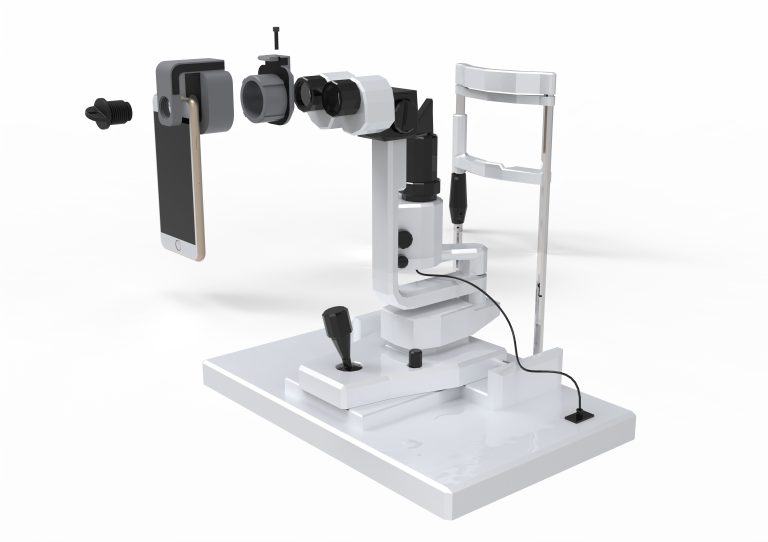

Document what you see
Two smartphone imaging tools built for everyday clinic use — one for the slit lamp, one for the fundus.
From Choroida — the team behind this siteReferences
- Keech AC, Mitchell P, Summanen PA, et al. Effect of fenofibrate on the need for laser treatment for diabetic retinopathy (FIELD study): a randomised controlled trial. Lancet. 2007;370:1687-1697.
- ACCORD Study Group, ACCORD Eye Study Group. Effects of medical therapies on retinopathy progression in type 2 diabetes. N Engl J Med. 2010;363:233-244.
- Wong TY, Simó R, Mitchell P. Fenofibrate: a potential systemic treatment for diabetic retinopathy? Am J Ophthalmol. 2012;154:6-12.
- American Academy of Ophthalmology. Basic and Clinical Science Course, Section 12: Retina and Vitreous. AAO; current edition.

Writes and reviews the clinical articles on Educate. Every post is checked against peer-reviewed sources before it goes live.