
Ocular graft-versus-host disease occurs in a patient population that has already been through a great deal, survivors of allogeneic hematopoietic stem cell transplantation, and its significance lies in how common and how quietly debilitating it can become: severe, often relentless dry eye and ocular surface disease that, without proactive monitoring and treatment, can substantially erode quality of life in patients otherwise successfully treated for their underlying hematologic condition.
The Underlying Mechanism
Graft-versus-host disease occurs when donor immune cells within a transplanted hematopoietic stem cell graft recognize the recipient’s own tissues as foreign and mount an immune response against them, and the eye, along with skin, mouth, liver, and gastrointestinal tract, is one of the tissues most commonly and significantly affected by this process, particularly in its chronic form.
Why the Ocular Surface Is So Vulnerable
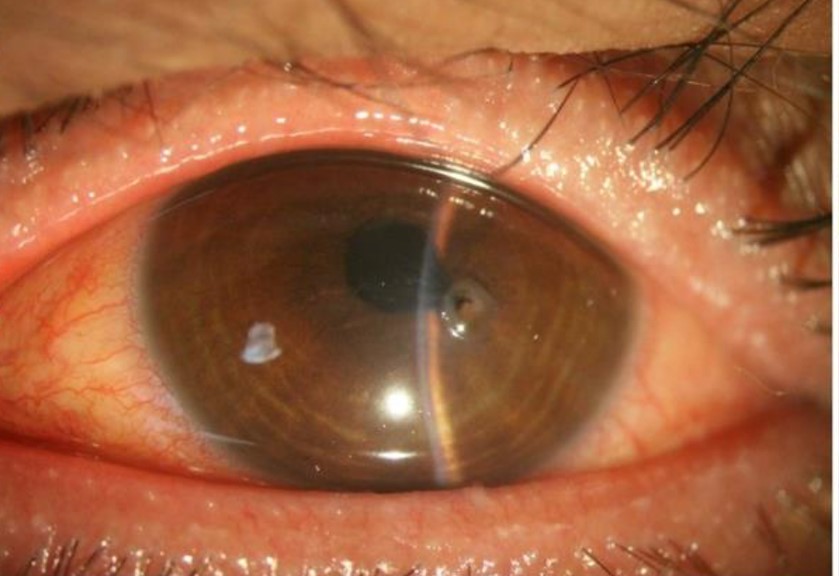
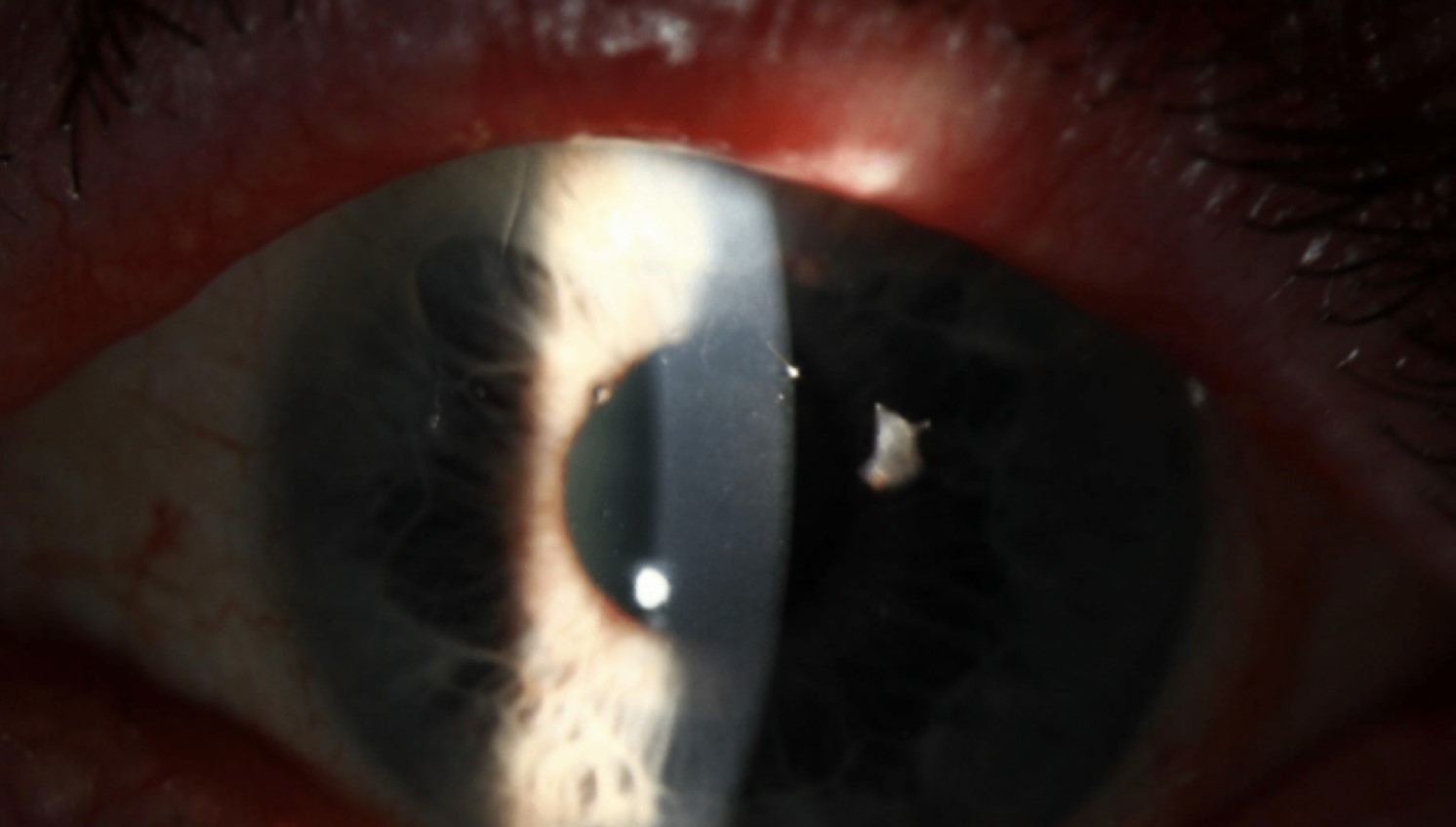
Chronic ocular graft-versus-host disease preferentially affects the lacrimal gland, meibomian glands, and conjunctiva, producing a combination of aqueous tear deficiency, meibomian gland dysfunction, and conjunctival inflammation and scarring that together produce a severe, multifactorial dry eye and ocular surface disease, often considerably more severe than typical age-related or environmental dry eye.
All-fit Slit-Lamp Adapter
Record and share exactly what you see at the slit lamp. One adapter fits any slit lamp or surgical microscope — and any smartphone.
From Choroida — the team behind this siteClinical Features
- Severe dry eye symptoms, including burning, foreign body sensation, and photophobia, often out of proportion to what might be expected based on tear film testing alone, reflecting the multifactorial and inflammatory nature of the underlying process
- Conjunctival injection, and in more severe cases, conjunctival scarring and fibrosis, following a course that shares some features with other cicatricial conjunctival conditions
- Meibomian gland dysfunction and associated evaporative dry eye component, compounding the aqueous deficiency also typically present
- Corneal complications, including punctate epitheliopathy, filamentary keratitis, and, in severe cases, persistent epithelial defects or corneal ulceration, reflecting the cumulative impact of severe, chronic ocular surface compromise
- Symptoms often begin or significantly worsen in the setting of broader chronic graft-versus-host disease affecting other organ systems, though ocular involvement can occasionally occur somewhat independently of the overall systemic disease course
Why Proactive Monitoring Matters
Because ocular graft-versus-host disease can develop gradually and its early symptoms can overlap with more common, milder forms of post-transplant dry eye, proactive, scheduled ophthalmologic monitoring in patients who have undergone allogeneic stem cell transplantation, rather than waiting for symptoms to become severe before referral, supports earlier recognition and treatment, potentially reducing the cumulative ocular surface damage that can accumulate with delayed or reactive-only management.
Diagnostic Evaluation
- Comprehensive dry eye and ocular surface evaluation, including tear film assessment, ocular surface staining, and meibomian gland evaluation, in the context of a known history of allogeneic hematopoietic stem cell transplantation
- Assessment for conjunctival scarring and fornix changes, given the recognized cicatricial potential of chronic ocular graft-versus-host disease
- Coordination with the patient’s transplant medicine and hematology team regarding the overall status and activity of systemic chronic graft-versus-host disease, since ocular findings are often correlated with, though not perfectly predicted by, overall systemic disease activity
Management
Aggressive Ocular Surface Support
- Preservative-free artificial tears, used frequently given the severity typical of this condition, form the foundation of symptomatic management
- Punctal occlusion helps retain the limited natural tear volume these patients often produce, providing meaningful symptomatic benefit in appropriately selected patients
- Topical anti-inflammatory treatment, including topical corticosteroids for flares and longer-term agents such as cyclosporine, addresses the significant inflammatory component of this condition
- Autologous or allogeneic serum tears provide a biologically supportive option for more severe, treatment-resistant cases, given their content of growth factors and other components beneficial to ocular surface health
Scleral Contact Lenses
Scleral lenses, providing a fluid reservoir over the ocular surface and protecting the cornea from direct eyelid contact, offer substantial benefit for many patients with severe ocular graft-versus-host disease, often providing both symptomatic relief and improved visual function beyond what supportive drops alone can achieve.
Coordinating Systemic Treatment
Given that ocular graft-versus-host disease occurs within the broader context of systemic chronic graft-versus-host disease, coordination with the patient’s transplant team regarding systemic immunosuppressive treatment is an important part of comprehensive management, since better systemic disease control can translate to improved ocular findings as well.
Prognosis
Ocular graft-versus-host disease is typically a chronic condition requiring sustained, long-term management, though with proactive monitoring and a comprehensive, often multimodal treatment approach, many patients achieve meaningful symptomatic control and preservation of visual function.
The combination of early, proactive ophthalmologic involvement after transplantation and a willingness to escalate through the full range of available ocular surface support measures, rather than relying on standard dry eye treatment alone, generally offers the best outcomes for this often underrecognized but genuinely significant post-transplant complication.

Document what you see
Two smartphone imaging tools built for everyday clinic use — one for the slit lamp, one for the fundus.
From Choroida — the team behind this siteReferences
- Ogawa Y, Kim SK, Dana R, et al. International Chronic Ocular Graft-vs-Host-Disease (GVHD) Consensus Group: proposed diagnostic criteria for chronic GVHD (Part I). Sci Rep. 2013;3:3419.
- Inamoto Y, Valdes-Sanz N, Ogawa Y, et al. Ocular graft-versus-host disease after hematopoietic cell transplantation: expert review from the Late Effects and Quality of Life Working Committee of the CIBMTR. Bone Marrow Transplant. 2019;54:662-673.
- Riemens A, Stoyanova E, Rothova A, Kuiper J. Treatment of ocular graft-versus-host disease. Acta Ophthalmol. 2010;88:4-10.
- Jacobs R, Tran U, Chen H, et al. Prevalence and risk factors associated with development of ocular GVHD defined by NIH consensus criteria. Bone Marrow Transplant. 2012;47:1470-1473.
