Juvenile open-angle glaucoma is a genetically distinct form of open-angle glaucoma presenting in older children, adolescents, or young adults, typically between roughly three and thirty-five years of age, occupying a genuinely separate category from both the primary congenital glaucoma of infancy and the adult-onset primary open-angle glaucoma discussed in their own dedicated articles on this site.
Because it shares its open-angle mechanism and clinical presentation with adult glaucoma, but its early age of onset and often more aggressive course with the developmental glaucomas of infancy, juvenile open-angle glaucoma sits somewhat awkwardly between these two more familiar categories, and it is easy to misclassify or underestimate its severity without specifically considering it as its own distinct entity.
Understanding its typically more aggressive trajectory and strong genetic basis is central to managing it with the appropriate urgency, rather than treating it as simply an unusually early presentation of ordinary adult-onset glaucoma.
What Distinguishes It From Other Glaucomas
Unlike primary congenital glaucoma, juvenile open-angle glaucoma presents after the eye’s growth phase has largely completed, meaning it typically lacks the corneal enlargement, buphthalmos, and other globe-expansion signs characteristic of glaucoma affecting the eye during its early, still-elastic growth period.
Unlike typical adult-onset primary open-angle glaucoma, juvenile open-angle glaucoma often presents with markedly higher intraocular pressures and can progress considerably more rapidly if not identified and treated promptly, reflecting a more aggressive underlying disease process in a younger, otherwise healthy eye.
A specific genetic basis, most classically mutations in the MYOC gene encoding myocilin, is identified in a meaningful proportion of cases, distinguishing the genetic architecture of this condition from the more polygenic, multifactorial basis of typical adult-onset primary open-angle glaucoma.
Clinical Presentation
- Often asymptomatic in early stages, similar to adult open-angle glaucoma, meaning the diagnosis is frequently made incidentally on a routine exam or when a family history prompts specific screening
- Markedly elevated intraocular pressure at diagnosis in many cases, sometimes considerably higher than typically seen at diagnosis in adult primary open-angle glaucoma
- A family history of early-onset glaucoma in a parent or sibling, given the condition’s genetic basis, an important and specific clue worth actively asking about
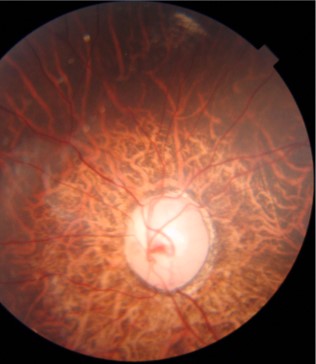
- Progressive optic nerve cupping and visual field loss that, without treatment, can progress more rapidly than the typically slower course of adult-onset disease
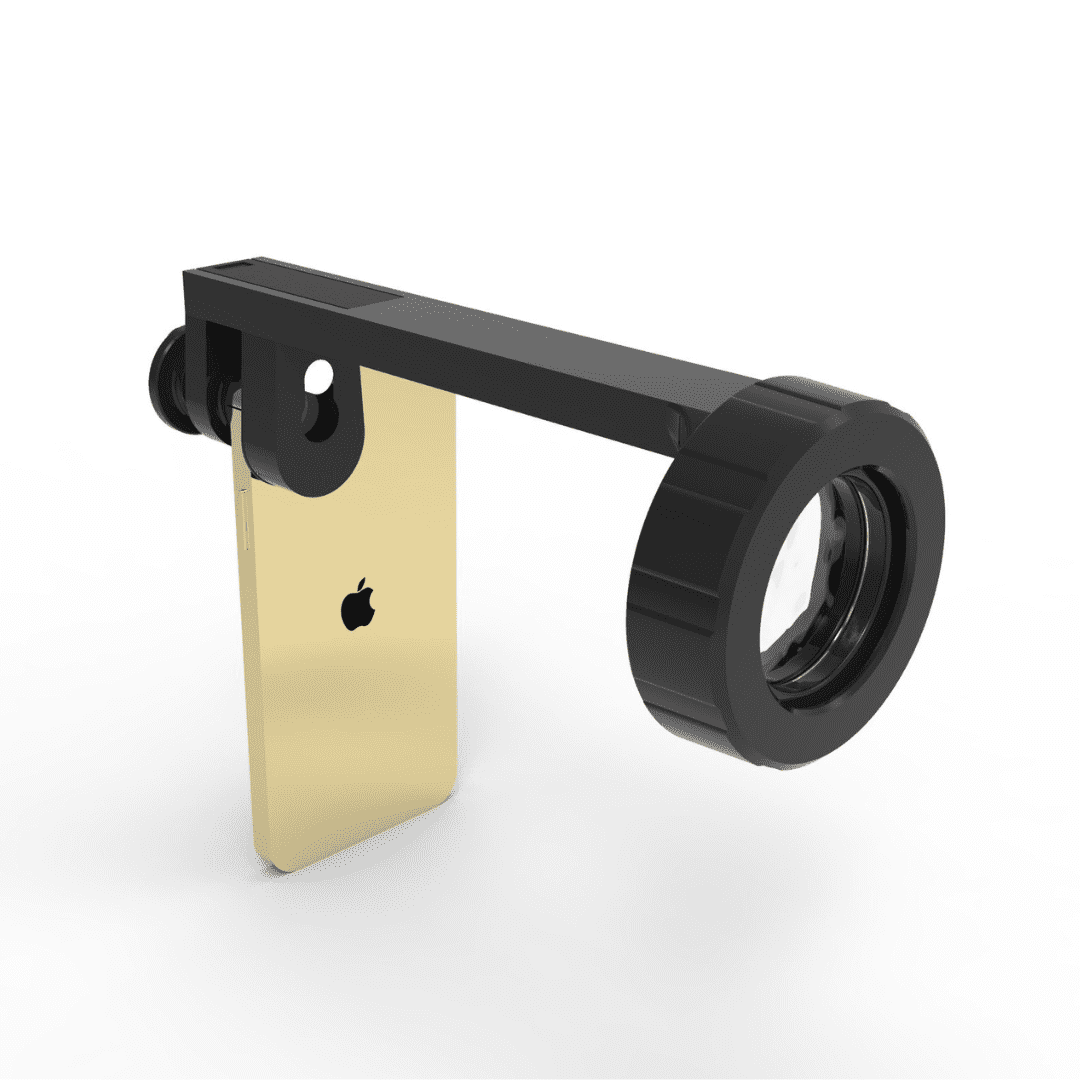
All-fit Slit-Lamp Adapter
Record and share exactly what you see at the slit lamp. One adapter fits any slit lamp or surgical microscope — and any smartphone.
From Choroida — the team behind this siteGenetics
Mutations in the MYOC gene are identified in a substantial proportion of juvenile open-angle glaucoma cases, following an autosomal dominant inheritance pattern with variable penetrance among family members carrying the mutation.
Genetic testing can be useful both for confirming the diagnosis in an individual patient and for identifying and screening at-risk family members before they develop symptomatic disease themselves.
Because of this strong genetic component, first-degree relatives of a patient with confirmed juvenile open-angle glaucoma warrant their own dedicated ophthalmic screening, even in the absence of any symptoms, given the meaningful chance of carrying the same predisposing mutation.
Evaluation
A complete glaucoma workup, including intraocular pressure measurement, gonioscopy, discussed in its own dedicated article on this site, to confirm a genuinely open angle, optic nerve assessment, and visual field testing, discussed in its own dedicated article on this site, forms the basis of diagnosis, adapted as needed for the patient’s age and ability to cooperate with testing.
Distinguishing juvenile open-angle glaucoma from other causes of elevated pressure in a young patient, including secondary glaucomas from trauma, inflammation, or steroid use, discussed in its own dedicated article on this site, requires a careful history and exam to identify or exclude these alternate explanations.
Management
Topical medical therapy is often used initially, following similar principles to adult glaucoma management, though the frequently higher presenting pressures and more aggressive course mean many patients ultimately require surgical intervention to achieve adequate long-term control.
Surgical options, including trabeculectomy, a glaucoma drainage device, or MIGS procedures, all discussed in their own dedicated articles on this site, are selected based on the severity of disease, the target pressure needed, and individual patient factors, similar in principle to the surgical decision-making used in adult glaucoma.
Given the young age at diagnosis and correspondingly long remaining lifetime during which vision needs to be preserved, lifelong monitoring and a willingness to escalate treatment promptly when needed are essential parts of managing this condition well over what will likely be many decades of follow-up.
Document what you see
Two smartphone imaging tools built for everyday clinic use — one for the slit lamp, one for the fundus.
From Choroida — the team behind this siteReferences
- American Academy of Ophthalmology. Basic and Clinical Science Course, Section 6: Pediatric Ophthalmology and Strabismus.
- Turalba AV, Chen TC. Clinical and genetic characteristics of primary juvenile-onset open-angle glaucoma (JOAG). Seminars in Ophthalmology.
- Kubota R, Noda S, Wax MB, et al. Genetics of juvenile-onset open-angle glaucoma. Journal of Glaucoma.
Test yourself
A few questions straight from this article.
-
Juvenile open-angle glaucoma typically presents within which age range?
Juvenile open-angle glaucoma presents in older children, adolescents and young adults, typically between roughly three and thirty-five years of age. -
Why does juvenile open-angle glaucoma lack buphthalmos and corneal enlargement?
Because onset follows the eye's elastic growth period, globe-expansion signs typical of primary congenital glaucoma are absent. -
Compared with adult-onset primary open-angle glaucoma, juvenile open-angle glaucoma typically shows what?
Juvenile open-angle glaucoma often presents with markedly higher intraocular pressures and can progress considerably more rapidly than typical adult-onset disease. -
Which gene is most classically implicated in juvenile open-angle glaucoma?
Mutations in MYOC, the gene encoding myocilin, are identified in a substantial proportion of juvenile open-angle glaucoma cases. -
Which history should be sought to exclude a secondary glaucoma in a young patient with raised pressure?
Secondary glaucomas from trauma, inflammation or steroid use must be identified or excluded by careful history and examination before settling on this diagnosis. -
What inheritance pattern do MYOC mutations in juvenile open-angle glaucoma follow?
MYOC mutations are inherited in an autosomal dominant pattern, with variable penetrance among family members who carry the mutation. -
What is advised for first-degree relatives of a patient with confirmed juvenile open-angle glaucoma?
The strong genetic component means first-degree relatives warrant their own ophthalmic screening regardless of symptoms, given the chance of carrying the same mutation. -
How is juvenile open-angle glaucoma most often brought to attention?
Early disease is often asymptomatic, so the diagnosis is frequently made incidentally on routine examination or when a family history prompts screening. -
What does gonioscopy establish during evaluation of suspected juvenile open-angle glaucoma?
Gonioscopy forms part of the complete workup and confirms that the angle is genuinely open, as required by the diagnosis. -
Why do many patients with juvenile open-angle glaucoma ultimately require surgery?
Although topical therapy is often started first, the frequently higher presenting pressures and more aggressive course mean many eyes need surgery for adequate long-term control.

Writes and reviews the clinical articles on Educate. Every post is checked against peer-reviewed sources before it goes live.