
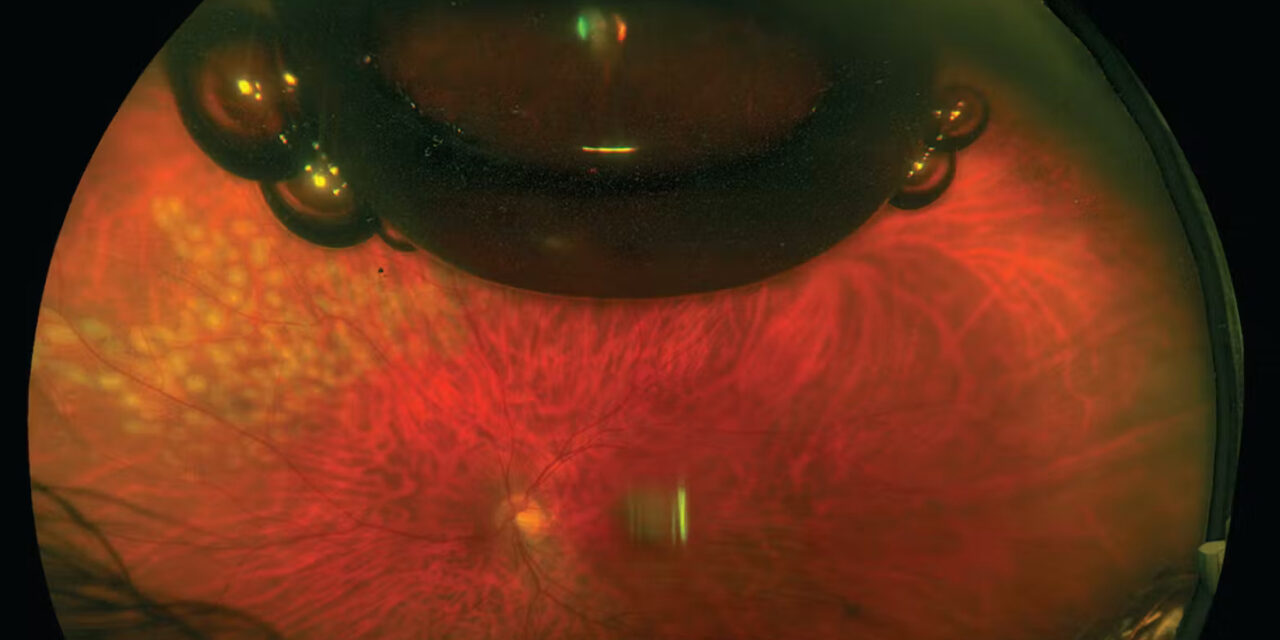
Vitreous substitutes, most commonly expansile gases and silicone oil, replace the vitreous cavity’s normal fluid content after pars plana vitrectomy, discussed in its own dedicated article on this site, providing internal tamponade that holds the retina in position while healing occurs.
The choice between the available gases and silicone oil is not interchangeable: each has genuinely different physical properties, duration of effect, and postoperative implications, and matching the right agent to the specific clinical situation is a deliberate part of surgical planning rather than a matter of simple preference.
Understanding these differences explains both why a surgeon selects one tamponade agent over another for a given case, and why patients are given such specific, sometimes demanding, postoperative positioning instructions depending on which agent was used.
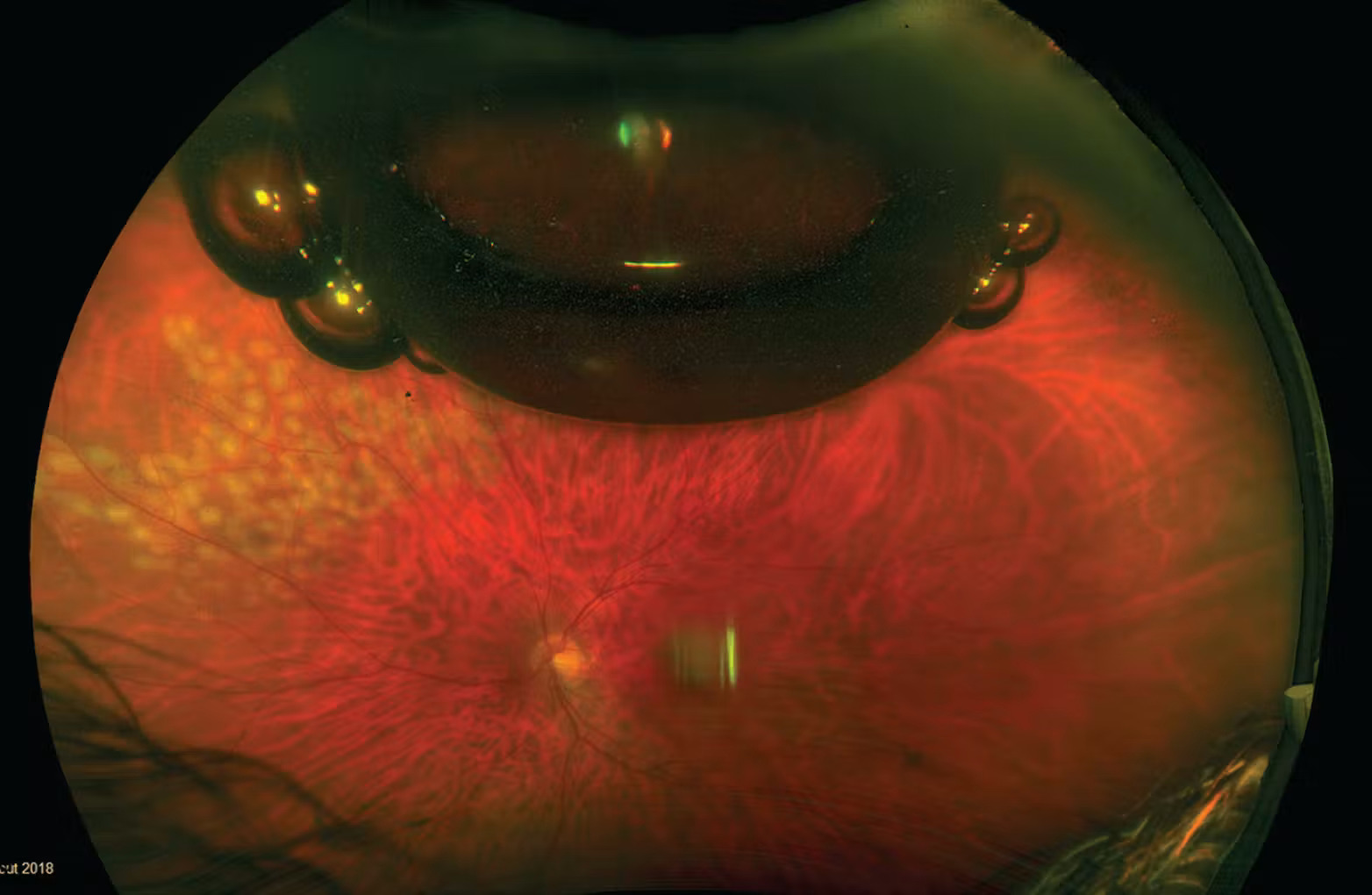
Why Tamponade Is Needed
After vitrectomy addresses the mechanical or membrane-related cause of a retinal problem, whether a break, traction, or a macular hole, discussed in its own dedicated article on this site, something is often needed to hold the retina in its correct position against the retinal pigment epithelium while the underlying treated area heals and forms a durable seal.
A tamponade agent, less dense than the surrounding aqueous and vitreous fluid it replaces, applies gentle, sustained pressure against the retina from the inside, serving this mechanical holding function during the critical early healing period.
Not every vitrectomy requires a tamponade agent; many cases, particularly epiretinal membrane peeling without an associated break, are completed with a standard balanced salt solution fill instead, reserving gas or oil specifically for cases with an associated break, hole, or significant traction risk.
Expansile Gases
- Air, the shortest-acting option, typically resorbing within days, used when only brief tamponade is needed or as a component diluted with a longer-acting gas
- Sulfur hexafluoride (SF6), providing tamponade for roughly one to two weeks, a common choice for straightforward retinal detachment repair and macular hole surgery
- Perfluoropropane (C3F8), providing the longest gas tamponade duration among commonly used agents, roughly six to eight weeks, reserved for cases judged to need more prolonged support
These gases are typically injected in a specific expansile concentration calculated to avoid a dangerous, uncontrolled pressure spike from the gas expanding within the closed eye as it mixes with existing intraocular gas or air.
Fundus Explorer Pro
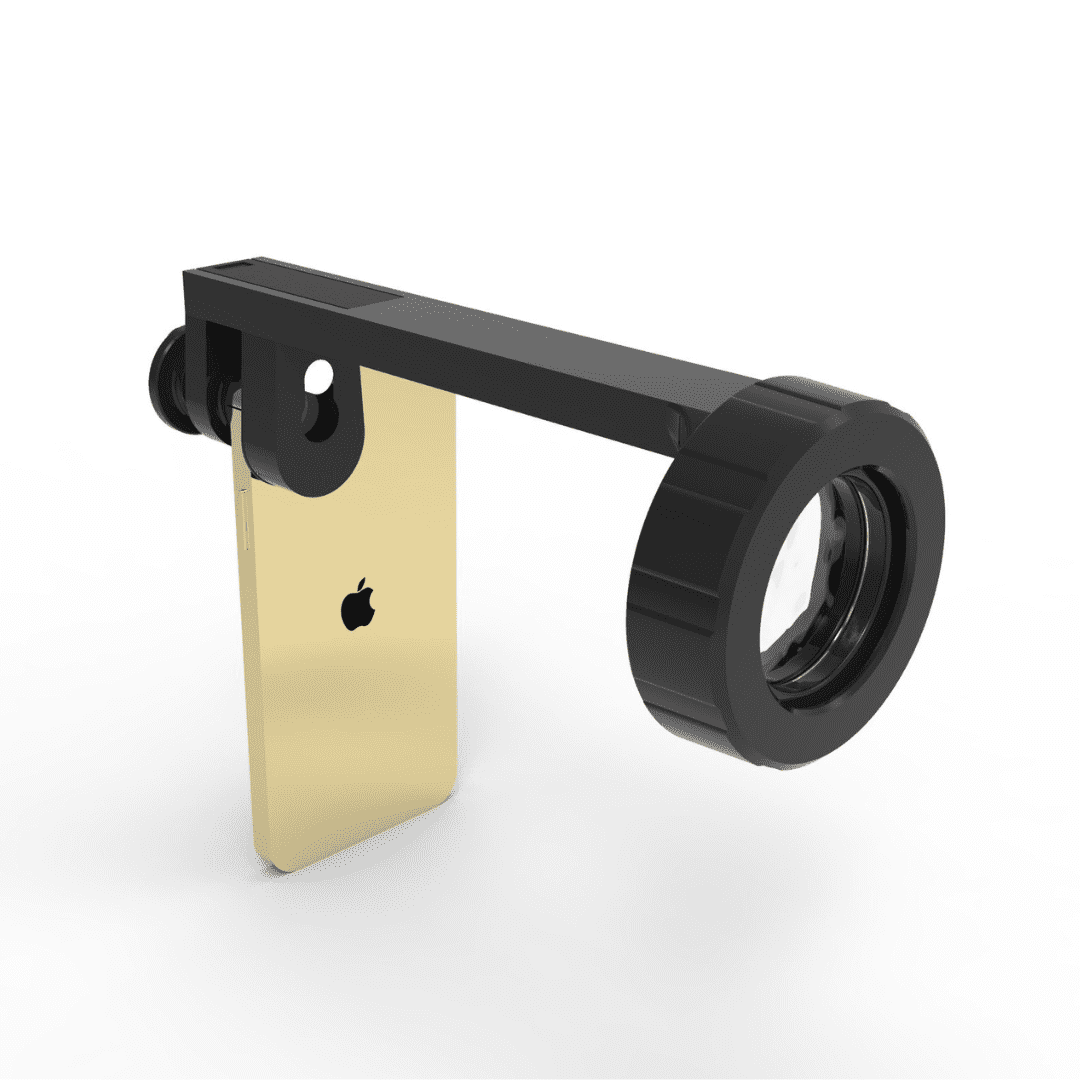
Photograph the retinal findings described here with the phone already in your pocket — 22 D optics and built-in illumination in one handheld unit.
From Choroida — the team behind this siteSilicone Oil
Silicone oil provides indefinite tamponade, unlike gas, which is intentionally designed to resorb over a defined period, making it the tamponade of choice when very prolonged support is needed, such as in complex retinal detachment with significant proliferative vitreoretinopathy.
Because silicone oil does not resorb on its own, it requires a separate, planned removal procedure at a later date, typically months after the original surgery, once the retina has stabilized enough that ongoing tamponade support is no longer needed.
Silicone oil is also generally considered safer than gas for patients who may need air travel or need to undergo an MRI scan during the tamponade period, since it does not expand with altitude or barometric pressure change the way a gas bubble can.
Postoperative Positioning
Because tamponade agents are less dense than the surrounding fluid and rise to the highest point of the eye, positioning the head so that the bubble or oil covers the specific area needing support is essential to the tamponade actually working as intended.
Face-down positioning is classically required after macular hole surgery, since it places the tamponade directly over the macula at the back of the eye, while a different position is used when a peripheral break needs coverage instead.
Positioning compliance, sometimes required for the majority of waking hours over several days to weeks, is genuinely demanding for patients, and clear, realistic counseling about this burden before surgery helps set appropriate expectations.
Practical Implications for Patients
A patient with intraocular gas must avoid air travel and certain other activities involving rapid altitude or pressure change until the gas has fully resorbed, since gas expansion under reduced ambient pressure can cause a dangerous pressure spike within the eye.
Vision is significantly blurred while gas or oil fills the eye, since neither transmits light the way the eye’s normal fluid does, and patients need to understand this expected, temporary visual limitation as part of the recovery course.
Nitrous oxide, sometimes used during general anesthesia for an unrelated later procedure, must be avoided or specifically modified in any patient with retained intraocular gas, since it can diffuse into the gas bubble and cause a dangerous pressure rise.
Document what you see
Two smartphone imaging tools built for everyday clinic use — one for the slit lamp, one for the fundus.
From Choroida — the team behind this siteReferences
- American Academy of Ophthalmology. Basic and Clinical Science Course, Section 12: Retina and Vitreous.
- Chang S. Low viscosity liquid fluorochemicals in vitreous surgery. American Journal of Ophthalmology.
- Thompson JT. The safety of intraocular gas after glaucoma filtering or aqueous shunt surgery. American Journal of Ophthalmology.
