
Introduction
When ophthalmologists hear the term tractional maculopathy, diabetic retinopathy is often the first condition that comes to mind.
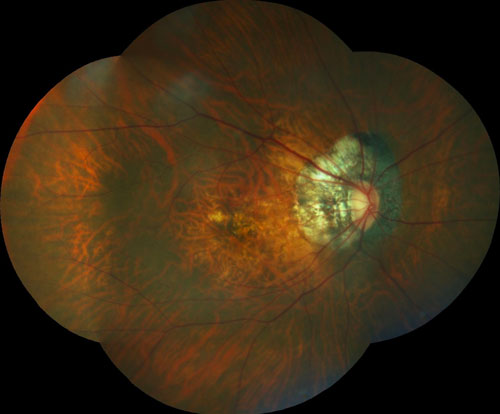
Indeed, proliferative diabetic retinopathy remains one of the most common causes of traction-induced macular distortion, edema, and visual loss worldwide.
However, tractional maculopathy encompasses a much broader spectrum of diseases.
Various vitreoretinal interface disorders, myopic degeneration, inflammatory conditions, and retinal vascular diseases can generate tractional forces that alter macular architecture and compromise visual function.
With the widespread use of optical coherence tomography (OCT), subtle forms of tractional maculopathy are being recognized more frequently than ever before.
Understanding these non-diabetic causes is essential for accurate diagnosis, timely intervention, and optimal visual outcomes.
For retina specialists, identifying the source of traction is often more important than simply recognizing its presence.
What Is Tractional Maculopathy?
Tractional maculopathy refers to structural and functional abnormalities of the macula caused by mechanical traction exerted on retinal tissue.
The traction may originate from:
- The vitreous
- Epiretinal membranes
- Internal limiting membrane abnormalities
- Fibrovascular tissue
- Retinal schisis-related forces
The resulting effects may include:
- Retinal thickening
- Macular edema
- Retinal distortion
- Foveal detachment
- Macular hole formation
- Progressive visual decline
👉 The common denominator is mechanical stress on the macula rather than primary retinal degeneration.
Fundus Explorer Pro
Photograph the retinal findings described here with the phone already in your pocket — 22 D optics and built-in illumination in one handheld unit.
From Choroida — the team behind this siteWhy Understanding Non-Diabetic Traction Matters
Many tractional disorders initially resemble other retinal diseases.
Patients may present with:
- Blurred vision
- Metamorphopsia
- Micropsia
- Reduced reading ability
Without careful OCT evaluation, the underlying tractional component may be overlooked.
👉 Treating presumed edema without addressing traction often leads to suboptimal outcomes.
1. Vitreomacular Traction Syndrome (VMT)
VMT is one of the most common non-diabetic tractional disorders.
Pathophysiology
During posterior vitreous detachment, incomplete separation of the vitreous may leave persistent adhesion at the macula.
This adhesion creates:
- Anteroposterior traction
- Foveal distortion
- Intraretinal cystic changes
OCT Findings
Typical features include:
- Persistent vitreomacular attachment
- Foveal tenting
- Intraretinal cysts
- Retinal thickening
Clinical Symptoms
Patients frequently report:
- Metamorphopsia
- Blurred central vision
- Difficulty reading
👉 VMT may progress to full-thickness macular hole formation if traction persists.
2. Epiretinal Membrane-Associated Maculopathy
Epiretinal membranes (ERMs) are among the most frequent causes of tractional macular changes.
Mechanism
Contractile fibrocellular tissue develops on the retinal surface and exerts tangential traction.
Consequences include:
- Retinal wrinkling
- Macular thickening
- Foveal distortion
- Loss of normal retinal architecture
OCT Features
- Hyperreflective membrane on the retinal surface
- Retinal folds
- Ectopic inner foveal layers
- Increased central retinal thickness
👉 The severity of symptoms often correlates more closely with retinal distortion than with retinal thickness alone.
3. Myopic Traction Maculopathy
Highly myopic eyes present a unique form of tractional disease.
Why It Occurs
Multiple factors contribute:
- Posterior staphyloma
- Vitreoretinal adhesion
- Internal limiting membrane rigidity
- Retinal stretching
Clinical Spectrum
The condition may include:
- Myopic foveoschisis
- Lamellar macular holes
- Foveal detachment
- Full-thickness macular holes
OCT Findings
- Retinal layer splitting
- Schisis cavities
- Progressive foveal changes
👉 Myopic traction maculopathy is a leading cause of visual loss in pathologic myopia.
4. Macular Pucker Following Retinal Detachment Repair
Tractional changes frequently develop after successful retinal detachment surgery.
Risk Factors
- Extensive retinal breaks
- Proliferative vitreoretinopathy
- Silicone oil use
- Postoperative inflammation
Consequences
- Epiretinal membrane formation
- Foveal distortion
- Persistent visual limitation
Even anatomically successful retinal reattachment may result in reduced visual quality because of secondary traction.
5. Tractional Maculopathy in Retinal Vein Occlusion
Retinal vein occlusions are typically associated with macular edema, but traction may also contribute to visual impairment.
Mechanisms
- Secondary epiretinal membrane formation
- Chronic inflammation
- Fibrocellular proliferation
Clinical Importance
Persistent edema despite anti-VEGF therapy should prompt evaluation for an underlying tractional component.
👉 OCT is invaluable for distinguishing edema-driven disease from traction-driven disease.
6. Inflammatory Tractional Maculopathy
Chronic intraocular inflammation can trigger fibrocellular proliferation at the vitreoretinal interface.
Common causes include:
- Intermediate uveitis
- Posterior uveitis
- Sarcoidosis
- Behçet disease
Resulting Changes
- Epiretinal membranes
- Vitreomacular traction
- Macular distortion
Inflammatory control is often necessary in addition to surgical management.
7. Traction Following Ocular Trauma
Blunt or penetrating ocular injuries may alter vitreoretinal relationships.
Potential consequences include:
- Epiretinal membrane formation
- Vitreomacular traction
- Macular hole development
These changes may appear months after the initial injury.
OCT: The Cornerstone of Diagnosis
Optical coherence tomography has revolutionized the diagnosis of tractional maculopathy.
Key Findings
Depending on the cause, OCT may demonstrate:
- Vitreomacular adhesion
- Retinal folds
- Intraretinal cysts
- Foveoschisis
- Foveal detachment
- Macular holes
👉 OCT not only confirms traction but also helps identify its exact source.
Distinguishing Tractional From Exudative Disease
One of the most important diagnostic challenges is differentiating traction-induced changes from fluid-driven pathology.
Features Favoring Traction
- Surface wrinkling
- Vitreomacular attachment
- Epiretinal membranes
- Retinal distortion
Features Favoring Exudation
- Diffuse edema without traction
- Leakage-driven fluid accumulation
- Absence of interface abnormalities
In some patients, both mechanisms coexist.

Management Strategies
Treatment depends on the underlying cause and severity.
Observation
Appropriate for:
- Mild symptoms
- Stable OCT findings
- Minimal visual impairment
Pharmacologic Treatment
May be useful when inflammation or vascular disease contributes.
Examples include:
- Anti-VEGF therapy
- Corticosteroids
- Immunomodulatory treatment
Surgical Management
Pars plana vitrectomy remains the primary treatment for significant traction.
Procedures may include:
- Posterior hyaloid removal
- Epiretinal membrane peeling
- Internal limiting membrane peeling
👉 Successful treatment often requires removing the tractional source rather than simply treating secondary edema.
Prognostic Factors
Visual outcomes depend on:
- Duration of traction
- Baseline visual acuity
- Integrity of outer retinal layers
- Presence of photoreceptor damage
- Underlying disease
Earlier intervention generally produces better anatomical and functional results.
Future Perspectives
Advances in retinal imaging and surgical technology continue to improve the management of tractional disorders.
Emerging developments include:
- Ultra-high-resolution OCT
- OCT angiography integration
- Artificial intelligence-based traction analysis
- Improved vitreoretinal surgical instrumentation
These innovations may allow earlier detection and more personalized treatment strategies.

Document what you see
Two smartphone imaging tools built for everyday clinic use — one for the slit lamp, one for the fundus.
From Choroida — the team behind this siteReferences
- Johnson MW. “Posterior vitreous detachment: evolution and complications.” Prog Retin Eye Res. 2010.
- Govetto A, et al. “Tractional abnormalities of the vitreomacular interface.” Prog Retin Eye Res. 2023.
- Panozzo G, Mercanti A. “Optical coherence tomography findings in vitreomacular traction syndrome.” Ophthalmology. 2004.
- Ikuno Y. “Overview of the complications of high myopia.” Retina. 2017.
- Gaucher D, et al. “Macular foveoschisis in highly myopic eyes.” Am J Ophthalmol. 2007.
- Steel DHW, Lotery AJ. “Idiopathic epiretinal membrane management.” Eye (Lond). 2013.
Test yourself
A few questions straight from this article.
-
Tractional maculopathy is best defined by which underlying process?
The article defines tractional maculopathy as structural and functional macular abnormality caused by mechanical traction, with mechanical stress rather than primary retinal degeneration as the common denominator. -
Which mechanism produces vitreomacular traction syndrome?
During posterior vitreous detachment, incomplete separation may leave persistent adhesion at the macula, generating anteroposterior traction, foveal distortion and intraretinal cystic change. -
Which OCT appearance is typical of vitreomacular traction syndrome?
Typical OCT features are persistent vitreomacular attachment, foveal tenting, intraretinal cysts and retinal thickening. -
How do epiretinal membranes distort the macula?
Contractile fibrocellular tissue on the retinal surface exerts tangential traction, causing retinal wrinkling, macular thickening and foveal distortion. -
Which OCT feature is described in epiretinal membrane-associated maculopathy?
OCT shows a hyperreflective membrane on the retinal surface, retinal folds, ectopic inner foveal layers and increased central retinal thickness. -
Which factor contributes to myopic traction maculopathy in highly myopic eyes?
Posterior staphyloma, vitreoretinal adhesion, internal limiting membrane rigidity and retinal stretching together drive myopic traction maculopathy. -
Which entity belongs to the clinical spectrum of myopic traction maculopathy?
The myopic traction spectrum includes foveoschisis, lamellar macular holes, foveal detachment and full-thickness macular holes, with OCT showing retinal layer splitting and schisis cavities. -
In retinal vein occlusion, what should oedema persisting despite anti-VEGF therapy prompt?
Persistent oedema despite anti-VEGF therapy should prompt evaluation for a tractional component, since OCT distinguishes edema-driven from traction-driven disease. -
Which factor predisposes to macular pucker after retinal detachment repair?
Extensive retinal breaks, proliferative vitreoretinopathy, silicone oil use and postoperative inflammation are the listed risk factors for post-repair tractional change. -
What is the primary treatment for significant traction in tractional maculopathy?
Pars plana vitrectomy remains the primary treatment, and may include posterior hyaloid removal, epiretinal membrane peeling and internal limiting membrane peeling.
