
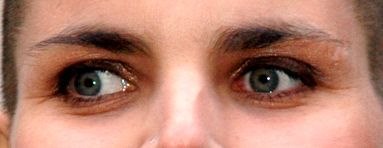
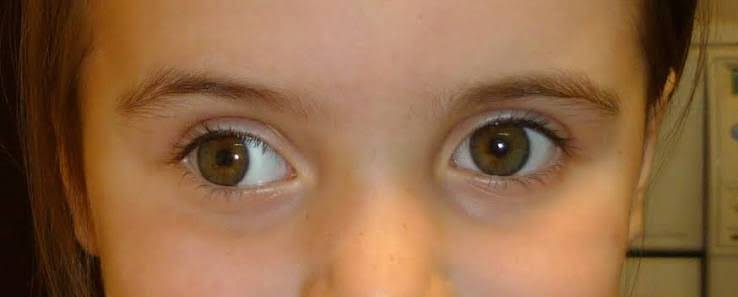
Exotropia is an outward deviation of one or both eyes — the opposite of esotropia — and it is the second most common form of childhood strabismus after esotropia in most populations, with a different natural history and set of management considerations.
Unlike esotropia, which often presents in infancy or early childhood with a constant deviation, exotropia frequently starts as an intermittent problem that only shows up under certain conditions before becoming more constant over time.
The distinction between intermittent and constant exotropia is one of the more clinically important calls in the whole condition, because it changes both the urgency of referral and the expected surgical outcome.
Classification
- Intermittent exotropia — the most common form, present some of the time (classically with fatigue, illness, daydreaming, or bright light) and controlled the rest of the time by fusional convergence
- Constant exotropia — present at all times, either from progression of intermittent disease or as a primary presentation
- Sensory exotropia — secondary to poor vision in one eye from any cause (cataract, corneal opacity, retinal disease), where the visually impaired eye drifts outward because there is no visual stimulus to keep it aligned
- Consecutive exotropia — following surgical overcorrection of a prior esotropia
Sensory exotropia deserves particular attention, because the strabismus itself is a secondary finding, and the real diagnostic task is identifying and, where possible, treating the underlying cause of vision loss in the deviating eye.
Clinical Presentation
Parents often first notice the eye turning out during specific situations; squinting in bright sunlight is a classic trigger in intermittent exotropia, thought to relate to light-induced dissociation of binocular fusion.
Older children and adults with longstanding intermittent exotropia may describe eye strain, intermittent double vision, or a tendency to close one eye in bright light, rather than a constantly visible turn.
As intermittent exotropia progresses toward constant deviation, the episodes become more frequent and longer, and binocular fusion becomes harder to maintain even under favorable conditions.
Once the deviation is constant, young children in particular are at risk of suppressing the image from the deviating eye, which can lead to amblyopia if not addressed.
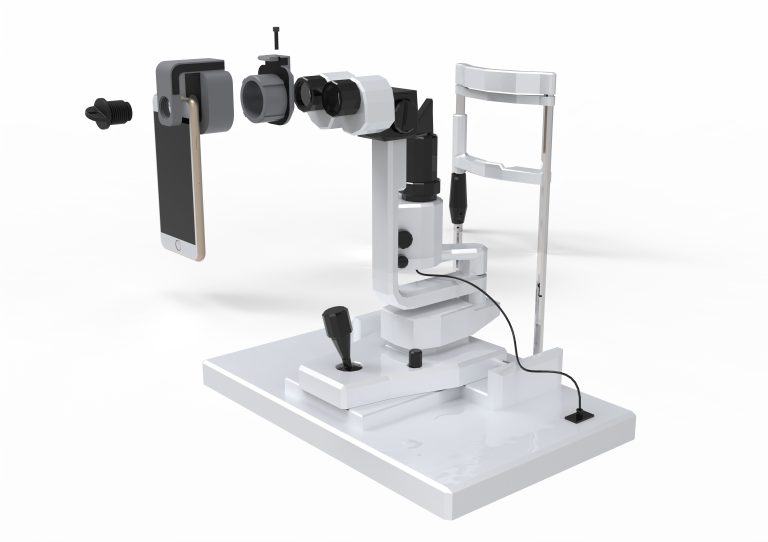
All-fit Slit-Lamp Adapter
Record and share exactly what you see at the slit lamp. One adapter fits any slit lamp or surgical microscope — and any smartphone.
From Choroida — the team behind this siteExam and Classification by Distance
Prism cover testing at both distance and near helps classify the pattern, which matters for surgical planning: exotropia greater at distance than near suggests a “true divergence excess” pattern, while a deviation greater at near suggests convergence insufficiency contributing to the picture.
A comparable deviation at both distances is described as “basic” exotropia, and this distinction affects which muscles are targeted surgically and how much surgery is planned.
The control of the deviation — how well the patient can pull the eyes back into alignment voluntarily, and how long they can sustain fusion after a dissociating cover test — is graded and tracked over time, because worsening control is one of the main triggers for moving from observation to intervention.
Differential Diagnosis
- Sixth (abducens) nerve palsy — typically produces esotropia, not exotropia, but is worth distinguishing from exotropia caused by third nerve palsy, where outward deviation occurs alongside ptosis and other extraocular muscle weakness
- Duane retraction syndrome, type II — outward deviation with globe retraction on adduction
- Sensory exotropia from an undiagnosed cause of monocular vision loss
- Pseudoexotropia — apparent outward deviation from a wide angle kappa or facial asymmetry, without a true ocular misalignment
Management
Observation is reasonable for well-controlled, infrequent intermittent exotropia, particularly in young children, because a meaningful proportion remain stable or even improve without intervention.
Part-time patching of the dominant eye, and correction of any significant refractive error (particularly myopia, which is common in this population), are first-line non-surgical measures used to encourage better fusional control while the deviation is monitored.
Surgery — recession of the lateral rectus muscles, sometimes combined with resection of the medial rectus — is indicated when control deteriorates, when the deviation becomes constant, or when the frequency and duration of manifest exotropia start interfering with binocular function and daily activities.
Timing is individualized rather than fixed by age or angle alone, because overly early surgery in a still-improving intermittent deviation risks consecutive esotropia, while waiting too long risks the loss of binocular fusion the surgery was meant to preserve, making serial control grading over multiple visits more valuable for surgical timing than any single-visit measurement.
Prognosis
Surgical outcomes for exotropia are generally good, though a meaningful proportion of patients develop some recurrence of exodeviation over the years following surgery, which is why long-term follow-up — not just an early postoperative check — is part of standard care, sometimes extending well into adulthood for patients operated on in childhood.
Amblyopia in sensory exotropia depends heavily on treating the underlying cause of the visual asymmetry as early as possible, and the strabismus itself often improves once the visual disparity driving it is addressed.
This is why sensory exotropia in a child should always prompt a thorough search for the underlying visual cause rather than proceeding directly to strabismus surgery as though the misalignment were the primary problem.
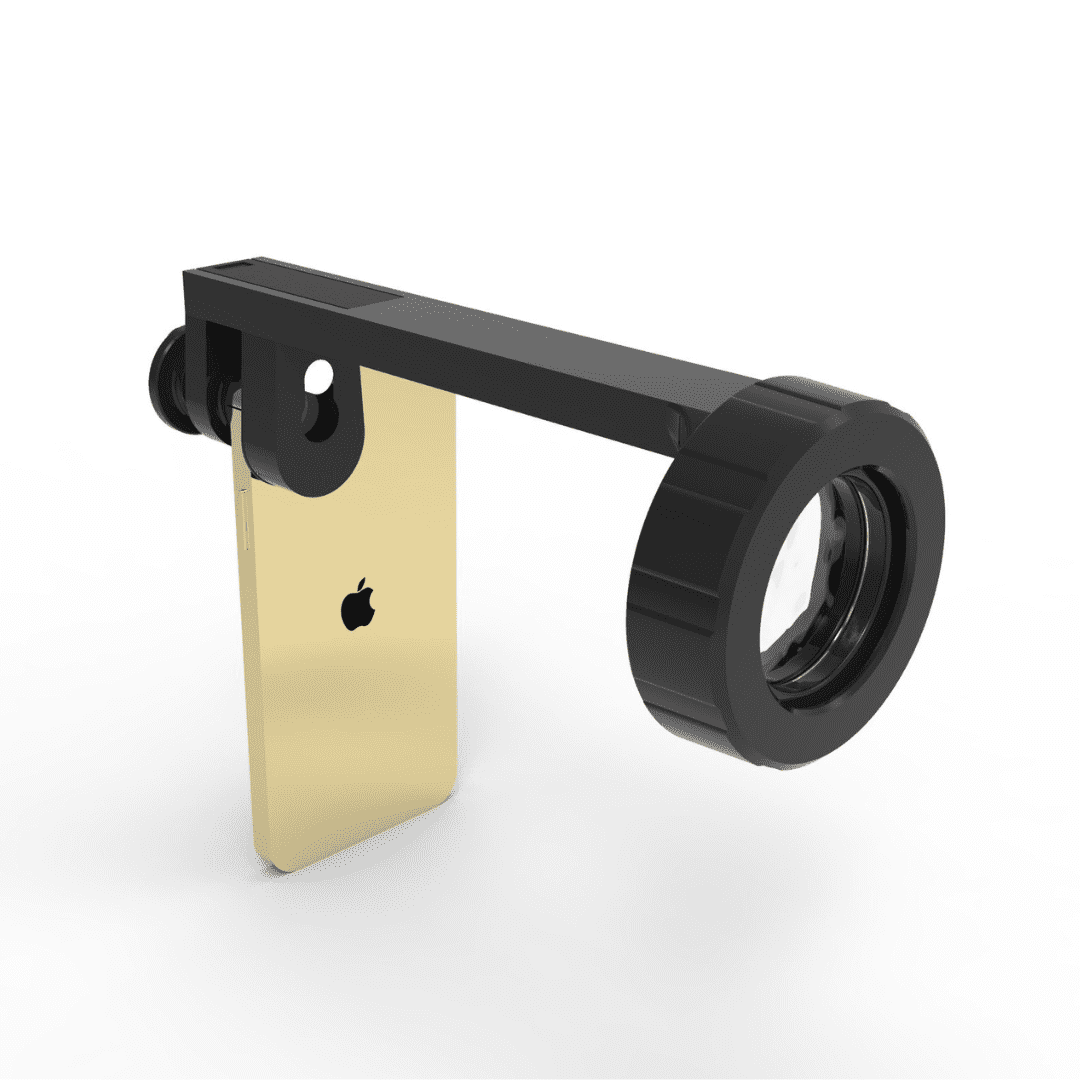
Document what you see
Two smartphone imaging tools built for everyday clinic use — one for the slit lamp, one for the fundus.
From Choroida — the team behind this siteReferences
- Mohney BG, Erie JC, Hodge DO, Jacobsen SJ. Public health burden of childhood exotropia. American Journal of Ophthalmology.
- Pediatric Eye Disease Investigator Group. A randomized trial comparing part-time patching with observation for children with intermittent exotropia. Ophthalmology.
- Hatt SR, Mohney BG, Leske DA, Holmes JM. Variability of control in intermittent exotropia. Ophthalmology.
- American Academy of Ophthalmology. Basic and Clinical Science Course, Section 6: Pediatric Ophthalmology and Strabismus.
