LASIK, laser-assisted in situ keratomileusis, reshapes the corneal stroma with an excimer laser beneath a hinged corneal flap to correct myopia, hyperopia, and astigmatism.
It remains the most widely performed refractive procedure worldwide, and its long track record is both its main selling point and the source of most of what is now known about its limitations.
Patient selection, more than any technical refinement of the laser itself, is what separates a satisfied LASIK patient from a complicated one.
How LASIK Works
A femtosecond laser or mechanical microkeratome creates a thin, hinged flap in the anterior corneal stroma. This flap is lifted, exposing the underlying stromal bed.
An excimer laser then ablates stromal tissue in a pattern calculated from the patient’s refractive error, reshaping the corneal curvature to correct focusing power. For myopia, tissue is removed centrally to flatten the cornea; for hyperopia, tissue is removed in the periphery to steepen it.
The flap is then repositioned without sutures, relying on the natural adhesion of the corneal epithelium and stroma to hold it in place while it heals.
Patient Selection
Candidacy depends on a combination of refractive stability, corneal thickness, and a normal, regular corneal topography.
- Stable refraction for at least a year, since LASIK performed on a still-changing prescription risks under- or over-correction as the eye continues to change
- Adequate corneal thickness to allow flap creation and stromal ablation while preserving a sufficient residual stromal bed, generally at least 250 microns, to avoid destabilising the cornea
- Normal corneal topography, with no evidence of keratoconus or forme fruste keratoconus, which is an absolute contraindication given the risk of inducing ectasia
- Realistic expectations, particularly around night vision symptoms and the likelihood of still needing reading glasses with age regardless of the refractive outcome achieved
Topographic screening for subclinical keratoconus is arguably the single most important step in the entire preoperative workup, since operating on an unrecognised ectatic cornea is the pathway to the procedure’s most feared complication.
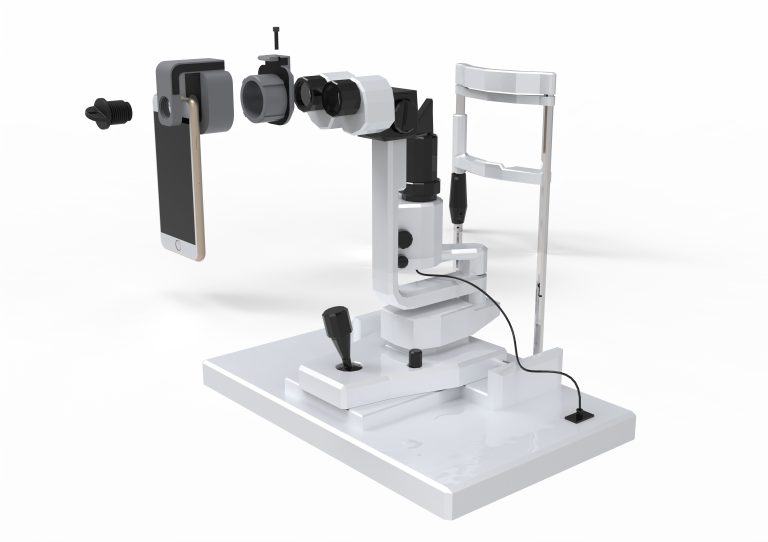
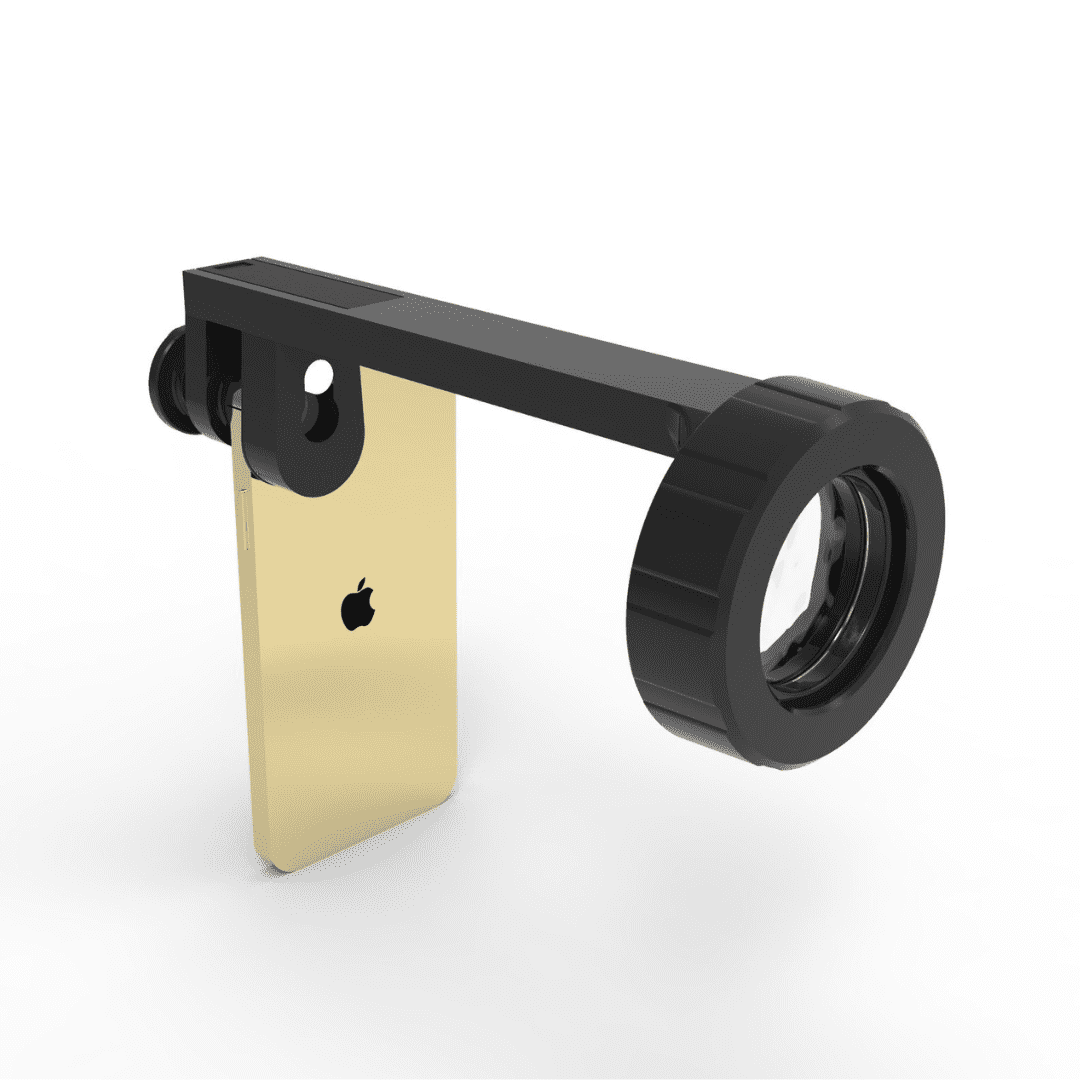
All-fit Slit-Lamp Adapter
Record and share exactly what you see at the slit lamp. One adapter fits any slit lamp or surgical microscope — and any smartphone.
From Choroida — the team behind this siteThe Procedure
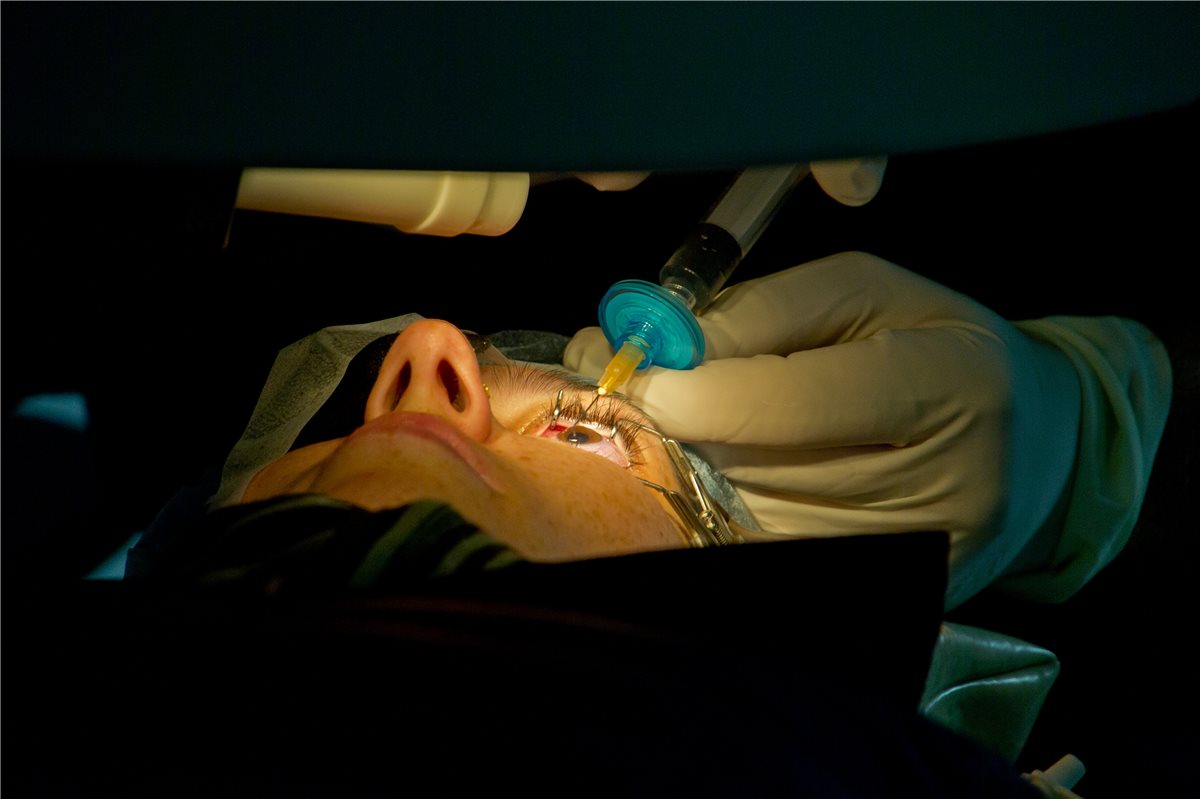
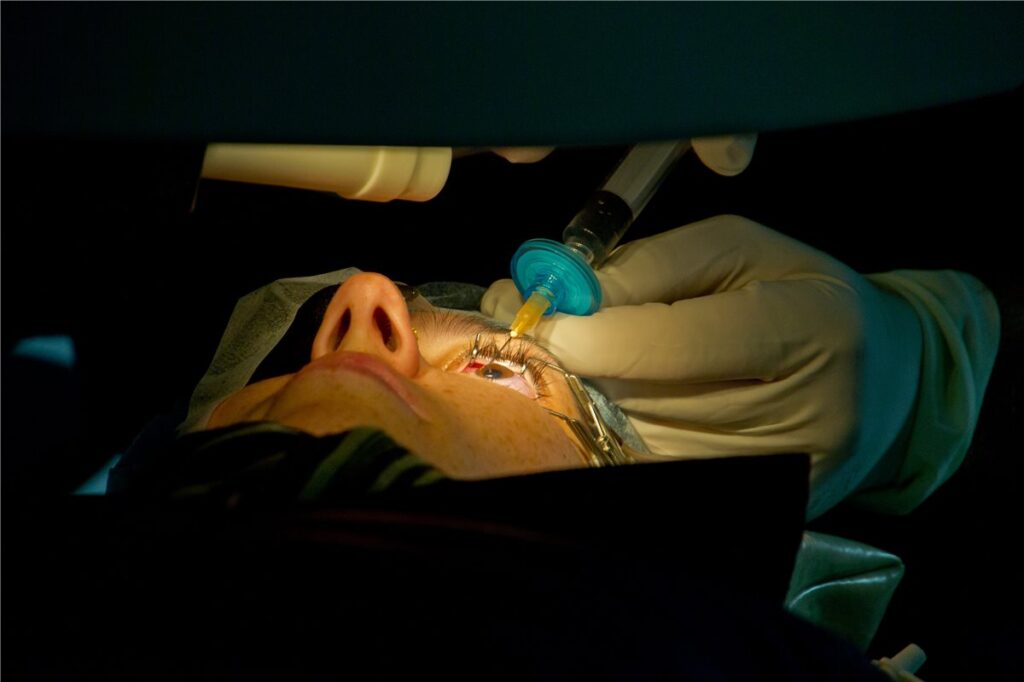
The procedure is performed under topical anaesthesia with the patient awake, typically taking only a few minutes per eye. A lid speculum keeps the eye open, and the patient is asked to fixate on a target light while the laser tracks eye movement in real time to keep the ablation centred.
Most patients notice improved vision within hours, with further stabilisation over the following days to weeks as the flap heals and any residual corneal oedema resolves.
Outcomes
Large outcome studies consistently show that the large majority of patients achieve uncorrected vision of 20/20 or better, and the great majority achieve at least 20/40, sufficient for driving without correction in most jurisdictions.
Patient satisfaction rates are generally high, though a meaningful minority of patients report persistent dry eye or night vision disturbances, such as glare and haloes, that affect their day-to-day experience even when their measured visual acuity is excellent.
This gap between objective visual acuity outcomes and subjective patient-reported symptoms is worth discussing explicitly during counselling, since a technically successful result on the chart does not guarantee an entirely symptom-free patient.
Complications
- Dry eye, the most common postoperative complaint, related to corneal nerve transection during flap creation; usually improves over months but can be persistent in a minority of patients
- Flap complications, including striae, displacement, or epithelial ingrowth beneath the flap, more common with mechanical microkeratome flaps than with femtosecond-created flaps
- Under- or over-correction, sometimes requiring a secondary enhancement procedure once the refraction has stabilised
- Night vision disturbances, including glare and haloes, more likely in patients with larger pupils relative to the treatment zone
- Post-LASIK ectasia, progressive corneal steepening in a cornea that was not adequately screened preoperatively, the most serious long-term complication and largely avoidable with proper topographic screening
- Infectious or inflammatory keratitis, uncommon but requiring prompt recognition and treatment when it occurs
Ectasia is the complication that shapes preoperative screening protocols more than any other, precisely because it is rare but largely preventable through careful patient selection rather than treatable once established.
Alternatives to LASIK
Photorefractive keratectomy (PRK) achieves similar refractive outcomes without creating a corneal flap, removing the epithelium directly before laser ablation. It avoids flap-related complications entirely but involves a longer, more uncomfortable recovery in the days after surgery.
PRK is often preferred in patients with thinner corneas or certain occupational or lifestyle risks of eye trauma, where flap-related risk is a greater concern.
Small incision lenticule extraction (SMILE) is a newer alternative that removes a lenticule of stromal tissue through a small incision without a full flap, offering a different risk profile that is still being compared against LASIK in longer-term studies.
Prognosis
LASIK has a strong long-term safety record when performed on properly screened candidates, with refractive stability generally maintained over many years.
Patients should be counselled that presbyopia will still develop with age regardless of the refractive correction achieved, since LASIK corrects distance focusing power but does not prevent the natural loss of accommodation that comes with an ageing lens.
Overall, patient-reported satisfaction remains high in most long-term follow-up studies, though the small subset of patients with persistent dry eye or visual disturbance symptoms is a genuine and predictable minority worth setting expectations for before surgery, not after.
Document what you see
Two smartphone imaging tools built for everyday clinic use — one for the slit lamp, one for the fundus.
From Choroida — the team behind this siteReferences
- Sandoval HP, Donnenfeld ED, Kohnen T, et al. Modern laser in situ keratomileusis outcomes. Journal of Cataract and Refractive Surgery. 2016.
- Solomon KD, Fernandez de Castro LE, Sandoval HP, et al. LASIK world literature review: quality of life and patient satisfaction. Ophthalmology. 2009.
- Randleman JB, Woodward M, Lynn MJ, Stulting RD. Risk assessment for ectasia after corneal refractive surgery. Ophthalmology. 2008.
- LASIK. EyeWiki, American Academy of Ophthalmology.
- LASIK. StatPearls, NCBI Bookshelf.
Test yourself
A few questions straight from this article.
-
How does LASIK correct refractive error?
A femtosecond laser or microkeratome raises a hinged anterior stromal flap, and the excimer laser reshapes the exposed stromal bed to change corneal focusing power. -
How is the cornea reshaped to correct hyperopia during LASIK?
Hyperopic treatment steepens the cornea by ablating the periphery. Myopic treatment does the opposite, removing central tissue to flatten the curvature. -
How is the LASIK flap secured at the end of the procedure?
Natural adhesion between corneal epithelium and stroma holds the flap while it heals. This is also why flap striae and displacement are recognised complications. -
What minimum residual stromal bed does LASIK candidacy generally require?
Enough stroma must remain under the flap after ablation to keep the cornea structurally stable. Going below this threshold risks destabilising the cornea. -
How long should a patient's refraction be stable before LASIK is offered?
Treating a still-changing prescription invites under- or over-correction, because the eye keeps changing after the cornea has been reshaped. -
Which preoperative finding is an absolute contraindication to LASIK?
Operating on an unrecognised ectatic cornea is the route to post-LASIK ectasia. Topographic screening for subclinical keratoconus is the single most important preoperative step. -
What causes the dry eye that commonly follows LASIK?
Dry eye is the most common postoperative complaint. It usually improves over months, but stays persistent in a minority of patients. -
Which patients are most likely to report glare and haloes after LASIK?
Night vision disturbance is a recognised source of dissatisfaction even when chart acuity is excellent, which is why it belongs in preoperative counselling. -
How does photorefractive keratectomy differ from LASIK?
PRK removes the epithelium directly, avoiding flap complications entirely. The trade-off is a longer and more uncomfortable recovery in the first days. -
What should every LASIK patient be counselled about before surgery?
LASIK changes corneal focusing power but does nothing to prevent the ageing lens losing accommodation. Reading glasses remain likely regardless of the refractive result.

Writes and reviews the clinical articles on Educate. Every post is checked against peer-reviewed sources before it goes live.