A pyogenic granuloma of the conjunctiva is a benign, rapidly growing, highly vascular reactive lesion, and despite the alarming name and its sometimes dramatic growth rate, it is actually one of the most reassuring conjunctival masses an ophthalmologist encounters, since it is a predictable, exaggerated healing response rather than a neoplastic process, and it almost always has an identifiable trigger.
What a Pyogenic Granuloma Actually Is
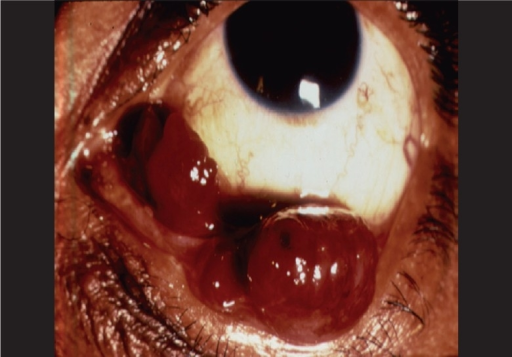
Despite the name, a pyogenic granuloma is neither infectious (pus-producing) nor a true granuloma in the pathological sense; it is a lobular proliferation of capillaries and inflammatory tissue representing an exuberant vascular response to a preceding inciting stimulus.
This exaggerated healing response explains both its characteristic rapid growth, often over days to a few weeks, and its bright red, friable, easily bleeding appearance, reflecting the dense capillary proliferation that makes up the lesion.
Common Triggers
- Recent ocular surgery, including strabismus surgery, pterygium excision, and other conjunctival or scleral procedures, is among the most common precipitating factors
- Chalazion, where the lesion can develop from the palpebral conjunctival surface overlying or adjacent to the underlying chalazion
- Minor conjunctival trauma or foreign body
- An underlying, sometimes unnoticed, area of conjunctival irritation or inflammation
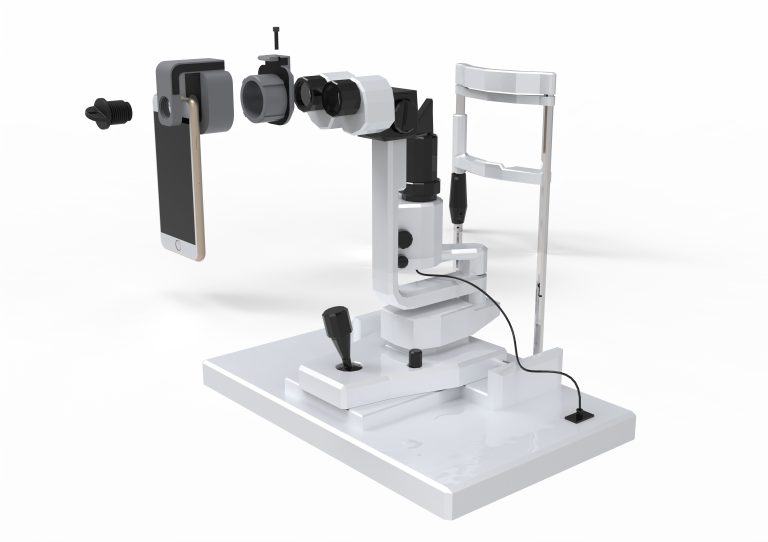
All-fit Slit-Lamp Adapter
Record and share exactly what you see at the slit lamp. One adapter fits any slit lamp or surgical microscope — and any smartphone.
From Choroida — the team behind this siteClinical Presentation
- A rapidly growing, bright red to pink, fleshy, often pedunculated (stalked) mass
- Friable and prone to bleeding, even with minor contact such as blinking or gentle examination
- Can occur on the bulbar or palpebral conjunctiva, or at a recent surgical wound site
- Generally not painful, though the affected eye may feel irritated or have a foreign body sensation given the mass effect
- A relevant recent history, whether surgery, a chalazion, or minor trauma, is often identifiable and supports the diagnosis
Diagnosis
Diagnosis is usually straightforward based on the characteristic rapid growth, vascular friable appearance, and an identifiable recent inciting event.
Biopsy is not typically necessary when the clinical picture is characteristic and a plausible trigger is present, though it can be considered if the lesion does not respond to treatment as expected, or if the presentation is atypical enough to raise concern for an alternative diagnosis, such as a vascular malformation or, rarely, a malignant lesion mimicking a pyogenic granuloma.
Management
Topical Corticosteroids
Topical corticosteroid drops are often effective as a first-line treatment for pyogenic granuloma, particularly for smaller lesions, working by reducing the inflammatory and vascular proliferative response driving the lesion’s growth, and can lead to significant regression or resolution without the need for surgical intervention.
Surgical Excision
For larger lesions, those not responding adequately to topical corticosteroid treatment, or lesions causing significant symptoms, surgical excision is effective and generally curative, particularly when the underlying inciting factor, such as a chalazion, is addressed simultaneously.
- Excision is generally straightforward given the lesion’s typically superficial, often pedunculated nature
- Addressing any underlying persistent trigger, such as residual chalazion material, at the time of excision helps reduce the risk of recurrence
Addressing the Underlying Cause
Since pyogenic granuloma is fundamentally a reactive process, identifying and addressing any ongoing inciting factor, such as a retained suture, residual chalazion, or other persistent source of conjunctival irritation, is an important part of both treatment and recurrence prevention.
Prognosis
Pyogenic granuloma of the conjunctiva has an excellent prognosis, with most lesions resolving completely with topical corticosteroid treatment or straightforward excision, and recurrence is uncommon once any underlying trigger has been adequately addressed.
Because it is a benign reactive process rather than a neoplasm, pyogenic granuloma does not carry the surveillance implications of a conjunctival tumor, and patients can generally be reassured once the characteristic clinical picture and an identifiable trigger support the diagnosis.
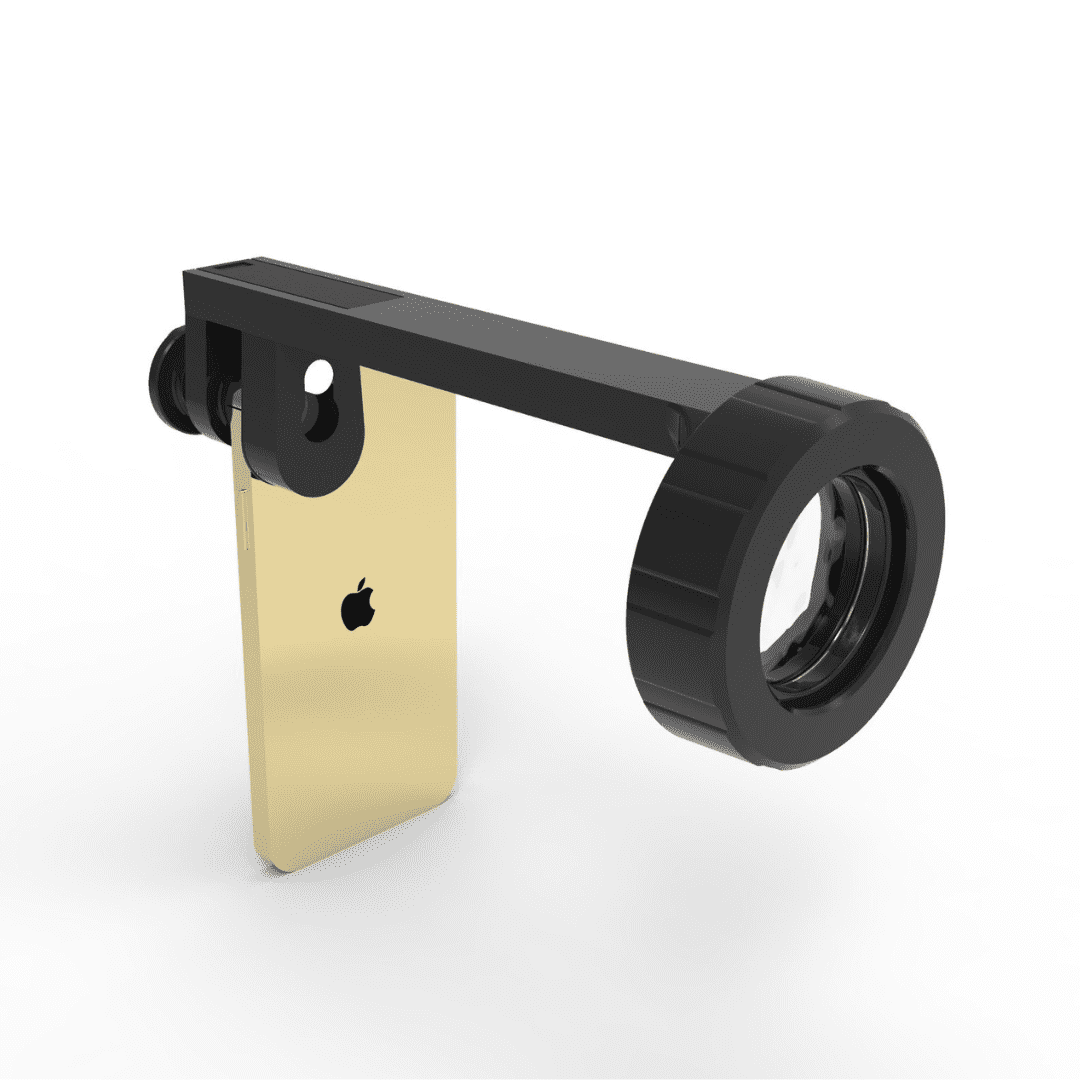
Document what you see
Two smartphone imaging tools built for everyday clinic use — one for the slit lamp, one for the fundus.
From Choroida — the team behind this siteReferences
- Ferry AP. Pyogenic granulomas of the eye and ocular adnexa: a study of 100 cases. Trans Am Ophthalmol Soc. 1989;87:327-347.
- Shields JA, Shields CL. Eyelid, Conjunctival, and Orbital Tumors: An Atlas and Textbook. 3rd ed. Philadelphia: Wolters Kluwer; 2016.
- Rao NK, Goldstein MH. Steroids in the prevention of postoperative pyogenic granuloma. J Cataract Refract Surg. 2011;37:1918-1919.
- Kumar KS, Rajesh B, Manisha M, Mishra PC. Conjunctival pyogenic granuloma following pterygium excision. Middle East Afr J Ophthalmol. 2010;17:276-278.
Test yourself
A few questions straight from this article.
-
What kind of process is a conjunctival pyogenic granuloma?
Despite its name, the lesion is neither infectious nor a true granuloma: it is a benign, exaggerated vascular healing response to a preceding stimulus rather than a neoplasm. -
What tissue makes up a conjunctival pyogenic granuloma histologically?
The lesion is a lobular proliferation of capillaries with inflammatory tissue, and that dense capillary content explains its bright red, friable appearance. -
Over what period does a conjunctival pyogenic granuloma characteristically enlarge?
The exaggerated healing response drives rapid growth, typically over days to a few weeks, which is one of the most recognisable features of the lesion. -
Which factor is among the commonest precipitants of a conjunctival pyogenic granuloma?
Recent ocular surgery, including strabismus surgery, pterygium excision and other conjunctival or scleral procedures, is among the most common precipitating factors. -
Which surface characteristic is typical of a conjunctival pyogenic granuloma?
The lesion is fleshy and friable and bleeds readily even with minor contact such as blinking or gentle examination, reflecting its dense vascularity. -
When should biopsy be considered for a suspected conjunctival pyogenic granuloma?
Biopsy is not usually needed when the picture is characteristic and a plausible trigger exists; it is reserved for lesions that fail to respond, or atypical cases raising concern for a vascular malformation or a malignant mimic. -
What is the usual first-line treatment for a small conjunctival pyogenic granuloma?
Topical corticosteroid drops are often effective first-line, particularly for smaller lesions, by damping the inflammatory and vascular proliferative response driving growth, and can produce resolution without surgery. -
Which situation calls for surgical excision of a conjunctival pyogenic granuloma?
Excision is used for larger lesions, those not responding adequately to topical corticosteroid, or those causing significant symptoms, and is generally curative. -
Which step most reduces recurrence after treating a conjunctival pyogenic granuloma?
Because the lesion is fundamentally reactive, finding and removing an ongoing inciting factor such as a retained suture or residual chalazion material is central to both cure and recurrence prevention. -
What follow-up does conjunctival pyogenic granuloma require after successful treatment?
Prognosis is excellent and recurrence uncommon once the trigger is addressed; being reactive rather than neoplastic, the lesion carries none of the surveillance implications of a conjunctival tumour.

Writes and reviews the clinical articles on Educate. Every post is checked against peer-reviewed sources before it goes live.