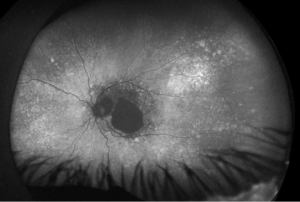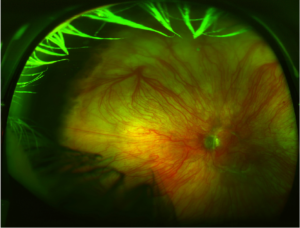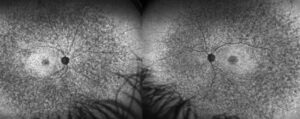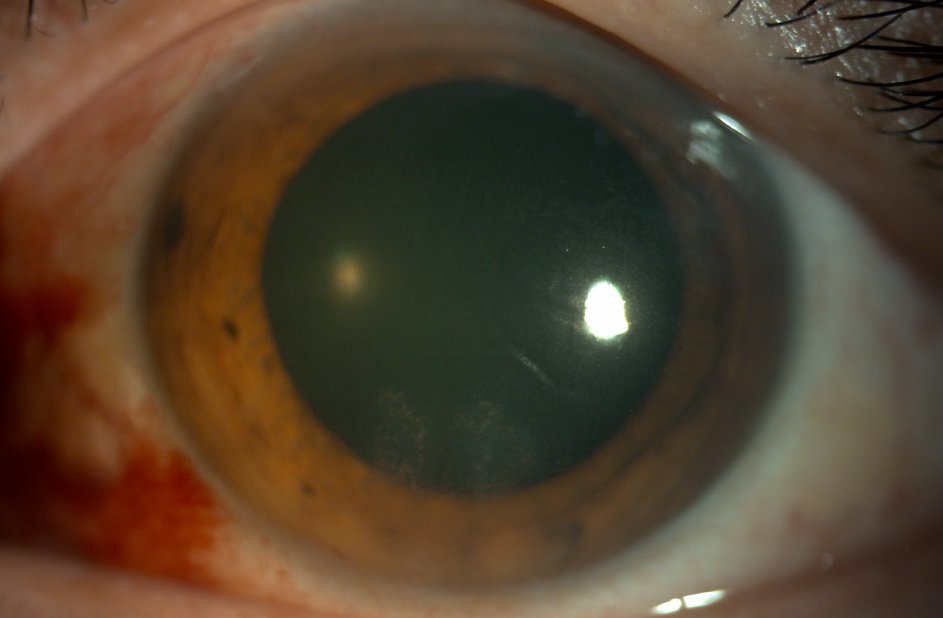
Heavy silicone oil is a tamponade agent that is denser than water, so it sinks and presses on the inferior retina.
Standard silicone oil floats, and it leaves the lower retina uncovered, where proliferative vitreoretinopathy often forms.
Heavy oils aim to close this gap in eyes with inferior breaks or recurrent detachments.
How Heavy Silicone Oil Works
Heavy oils combine silicone oil with fluorinated molecules, such as perfluorohexyloctane, to raise the density above that of water.
In an upright patient, the oil sinks and covers the inferior retina and breaks.
The tamponade effect depends on surface tension and the fill of the cavity.
Standard oil still supports the superior retina better, so the choice depends on break location (see silicone oil tamponade complications).
When to Use Heavy Silicone Oil
Surgeons choose heavy oil for inferior retinal breaks, inferior PVR, and recurrent inferior detachments.
They also use it in eyes with a high risk of inferior redetachment after standard oil.
Eyes with superior breaks usually do better with standard oil or gas (see proliferative vitreoretinopathy).
Fundus Explorer Pro
Photograph the retinal findings described here with the phone already in your pocket — 22 D optics and built-in illumination in one handheld unit.
From Choroida — the team behind this siteEvidence for Heavy Silicone Oil
Small series reported good anatomic success in complex detachments with inferior pathology.
The Heavy Silicone Oil Study compared heavy and standard oil in inferior PVR and found no clear benefit of heavy oil in the main analysis.
Therefore, many surgeons reserve it for selected cases, not for every inferior detachment.
Complications also appear more often, which tempers enthusiasm.
Surgical Technique
Complete a thorough vitrectomy, remove membranes, and drain the subretinal fluid.
Use perfluorocarbon liquid to flatten the retina, and treat the breaks with laser.
Then perform a fluid-air exchange, and fill the eye with heavy oil under direct vision.
Keep the eye filled, since a partial fill allows oil to float and block the view (see perfluorocarbon liquids in vitreoretinal surgery).
Complications of Heavy Silicone Oil
- Inflammation and an emulsified oil layer in the anterior chamber
- Raised pressure and glaucoma
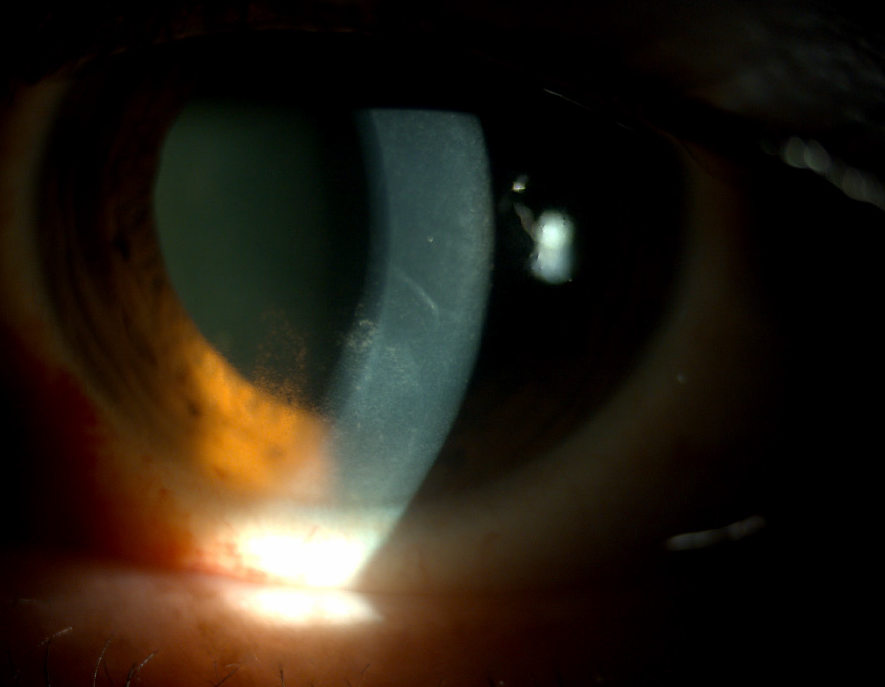
- Corneal edema and keratopathy
- Cataract in phakic eyes
Emulsification can occur earlier than with standard oil, and early removal may be needed.
Removal and Follow-Up
Plan removal when the retina has stayed attached for three to six months and the PVR is quiet.
Some surgeons remove heavy oil earlier because of inflammation.
Check pressure and the anterior chamber at every visit, and watch for inferior redetachment after removal.
An Example Case
A 48-year-old man has a redetachment with an inferior break and PVR after standard oil.
The surgeon removes the membranes, applies laser, and fills the eye with heavy oil.
The retina stays attached, and removal at four months leaves a stable result with 20/80 vision.
Key Points
- Reserve heavy oil for inferior pathology
- Watch for emulsification and pressure changes
- Remove the oil when the retina is stable
Questions Patients Ask
Patients ask how long the oil stays, and the usual answer is three to six months, although some eyes keep it longer.
They also ask about positioning, and most need face-down or upright posture for a short time.
Because the oil may affect vision, explain that sight is blurry until removal.
Pitfalls to Avoid
- Choosing heavy oil for superior breaks
- Leaving the eye underfilled, which lets oil float and hides the retina
- Forgetting to check intraocular pressure in the first week
- Delaying removal when emulsification appears
Looking Ahead
New heavy tamponades with lower emulsification are under study.
Also, surgeons debate whether the benefit justifies the added complications.
Until stronger trials appear, use judgment and reserve heavy oil for selected inferior pathology.
Practical Points
Plan the oil type before the case, and have the heavy oil available.
Because the viscosity is high, use appropriate injection equipment.
Then record the oil type, volume, and lot number in the chart.
Choosing Between Heavy and Standard Oil
Standard oil suits most superior breaks and many total detachments.
However, an inferior break after multiple surgeries often justifies heavy oil.
Also consider the patient’s ability to maintain posture, since heavy oil requires different positioning than standard oil.
Because both oils need removal, plan the second surgery at the first visit.
Check the oil label for the density and the viscosity before injection.
For the latest studies, see the PubMed results for heavy silicone oil.


Document what you see
Two smartphone imaging tools built for everyday clinic use — one for the slit lamp, one for the fundus.
From Choroida — the team behind this siteReferences
- Silicone Study Group. Vitrectomy with silicone oil or sulfur hexafluoride gas in eyes with severe proliferative vitreoretinopathy: results of a randomized clinical trial. Silicone Study Report 1. Arch Ophthalmol. 1992;110:770-779.
- Wong D, Van Meurs JC, Stappler T, et al. A pilot study on the use of a perfluorohexyloctane/silicone oil solution as a heavier than water internal tamponade agent. Br J Ophthalmol. 2005;89:662-665.
- Barca F, Caporossi T, Rizzo S. Silicone oil: different physical proprieties and clinical applications. Biomed Res Int. 2014;2014:502143.
- American Academy of Ophthalmology. Basic and Clinical Science Course, Section 12: Retina and Vitreous. AAO; current edition.

Writes and reviews the clinical articles on Educate. Every post is checked against peer-reviewed sources before it goes live.