Perfluorocarbon liquids, often called heavy liquids, are dense, clear intraoperative surgical tools used during vitrectomy to flatten and stabilize a detached or mobile retina, a fundamentally different role from the gas or silicone oil tamponade agents discussed in their own dedicated article on this site.
Because perfluorocarbon liquid is denser than water and sinks rather than rises, it does the opposite job of a gas bubble during surgery: rather than floating up to press the retina from inside against the front of the eye, it settles down over the posterior retina, flattening it from posterior to anterior as it is instilled.
Understanding this density-driven, purely intraoperative role, distinct from the postoperative tamponade role of gas and silicone oil, clarifies why perfluorocarbon liquid is used temporarily during surgery and is essentially never left in the eye at the end of the case.
The introduction of perfluorocarbon liquids into routine vitreoretinal practice meaningfully changed how surgeons approach some of the more mechanically difficult cases, particularly giant retinal tears, which were considerably harder to manage reliably before these liquids became a standard part of the surgical toolkit.
Mechanism and Physical Properties
Perfluorocarbon liquids are immiscible with both water and typical intraocular fluids and are significantly denser than either, properties that together allow them to displace subretinal or intraocular fluid and mechanically unfold and flatten a mobile retina as they are slowly instilled over the posterior pole.
Because the liquid sinks to the most posterior, dependent part of the eye, it provides a stable, flat surface against which a mobile or detached retina settles as fluid is displaced anteriorly toward the vitreous base, where it can then be more easily removed.
This behavior is exactly opposite to a gas bubble’s tendency to rise, which is why the two are used at different points in a case for different mechanical purposes rather than being interchangeable tools.
Several specific perfluorocarbon compounds are used clinically, differing somewhat in density and viscosity, though they share the same core physical principles and general surgical handling.
Intraoperative Uses
- Giant retinal tear repair, discussed in relation to giant retinal tear elsewhere on this site, where perfluorocarbon liquid unfolds and flattens the large, often inverted retinal flap characteristic of this injury, making it far more manageable to reposition surgically
- Complex retinal detachment with significant proliferative vitreoretinopathy, where the liquid stabilizes a stiff, distorted retina during membrane peeling and dissection
- Displacement of subretinal or submacular hemorrhage away from the fovea, using the liquid to push blood peripherally and protect central vision from prolonged toxic contact with blood breakdown products
- Removal of a dropped, retained lens fragment, discussed in relation to retained lens fragments in its own dedicated article on this site, where the liquid can help float or stabilize the fragment for safer removal from the vitreous cavity
Fundus Explorer Pro
Photograph the retinal findings described here with the phone already in your pocket — 22 D optics and built-in illumination in one handheld unit.
From Choroida — the team behind this siteWhy It Must Be Fully Removed
Perfluorocarbon liquid is not biocompatible for long-term intraocular use, and retained droplets left behind at the end of surgery can cause chronic inflammation, retinal toxicity, and other complications if they persist in the eye.
Careful, meticulous removal of all perfluorocarbon liquid is therefore a standard, essential final step before completing the vitrectomy and instilling whatever tamponade agent, if any, the case requires.
Small retained droplets are occasionally identified on postoperative imaging even after careful intraoperative removal, and while a very small residual droplet is sometimes observed rather than actively pursued for removal, larger retained volumes generally warrant a return to surgery to remove them.
Perfluorocarbon Liquid Versus Tamponade Agents
Perfluorocarbon liquid is used transiently during surgery specifically for its mechanical, retina-flattening properties, and it is removed before the case ends, while gas or silicone oil is instilled at the conclusion of surgery specifically to remain in the eye and provide sustained tamponade during postoperative healing.
Confusing the two, or assuming perfluorocarbon liquid could substitute for postoperative tamponade, would be a fundamental misunderstanding of their distinct and non-overlapping surgical roles.
For a trainee learning vitreoretinal surgery, keeping this specific distinction clear from the outset, one tool for intraoperative retinal flattening, the other for postoperative tamponade, avoids a common source of early conceptual confusion.
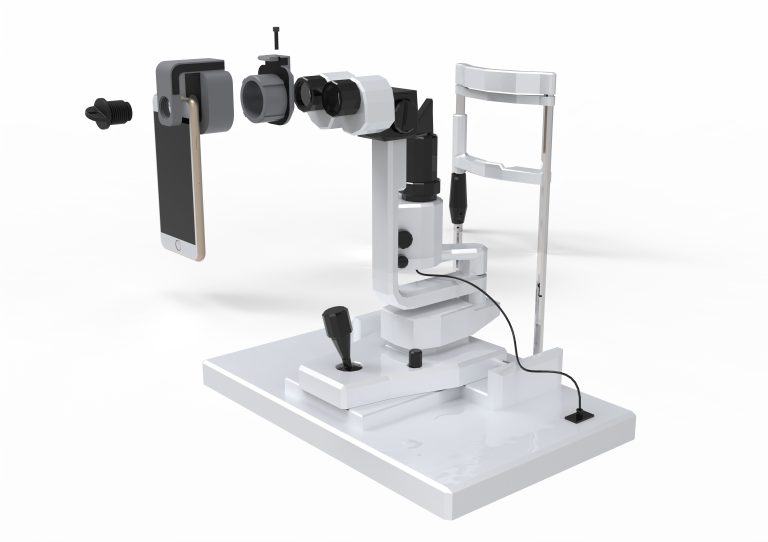
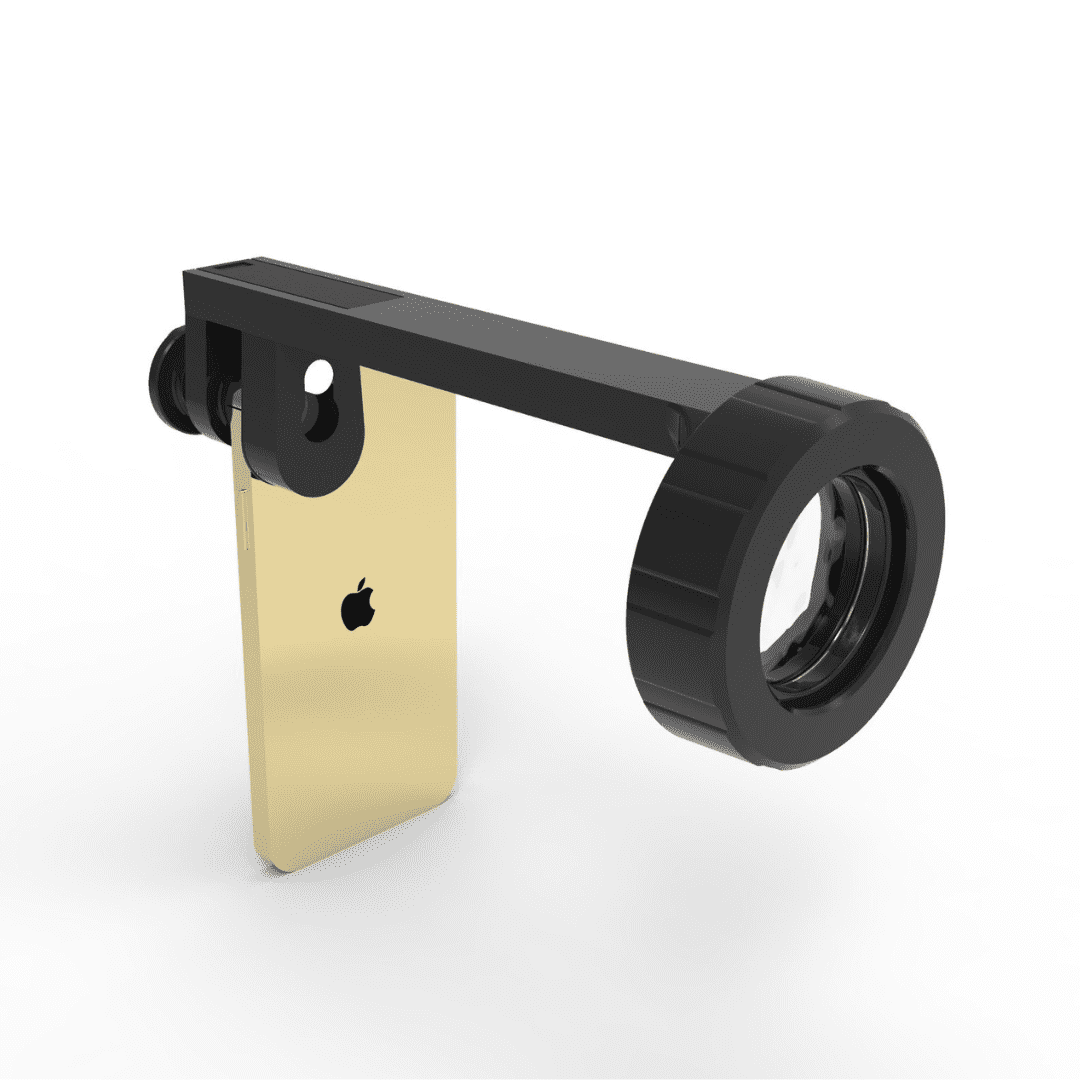
Document what you see
Two smartphone imaging tools built for everyday clinic use — one for the slit lamp, one for the fundus.
From Choroida — the team behind this siteReferences
- Chang S. Low viscosity liquid fluorochemicals in vitreous surgery. American Journal of Ophthalmology.
- American Academy of Ophthalmology. Basic and Clinical Science Course, Section 12: Retina and Vitreous.
- Elsing SH, Fekrat S, Green WR, et al. Clinicopathologic findings in eyes with retained perfluoro-n-octane liquid. Ophthalmology.
Test yourself
A few questions straight from this article.
-
What role do perfluorocarbon liquids serve during vitreoretinal surgery?
Perfluorocarbon liquids are dense, clear intraoperative tools used during vitrectomy to flatten and stabilise a detached or mobile retina. -
Which physical property lets perfluorocarbon liquid flatten the retina from posterior to anterior?
Being denser than water, the liquid settles into the most posterior dependent part of the eye and flattens the retina from posterior to anterior as it is instilled. -
As perfluorocarbon liquid is instilled during vitrectomy, displaced intraocular fluid moves in which direction?
The sinking liquid displaces fluid anteriorly toward the vitreous base, where it can then be removed more easily. -
Perfluorocarbon liquid stays as a discrete intraocular bubble because it has which property?
Perfluorocarbon liquids are immiscible with water and typical intraocular fluids, so they displace fluid rather than mixing with it. -
Which mechanically difficult repair was meaningfully changed by perfluorocarbon liquids?
Perfluorocarbon liquid unfolds and flattens the large, often inverted flap of a giant retinal tear, which was considerably harder to manage reliably before these liquids existed. -
How is perfluorocarbon liquid used in the surgical management of submacular haemorrhage?
The heavy liquid displaces subretinal or submacular blood peripherally, protecting central vision from prolonged contact with blood breakdown products. -
What does perfluorocarbon liquid contribute during removal of a dropped lens fragment?
In eyes with a dropped lens fragment, the liquid can help float or stabilise the fragment so it can be removed more safely from the vitreous cavity. -
Why must perfluorocarbon liquid be fully removed before a vitrectomy is completed?
Perfluorocarbon liquid is not biocompatible for long-term intraocular use, and retained droplets can cause chronic inflammation and retinal toxicity. -
How is a very small retained perfluorocarbon droplet seen on postoperative imaging usually handled?
A very small residual droplet is sometimes simply observed, whereas larger retained volumes generally warrant a return to surgery for removal. -
Which agent is instilled at the end of vitrectomy to provide sustained postoperative tamponade?
Gas or silicone oil is instilled at the conclusion of surgery to remain in the eye and tamponade during healing; perfluorocarbon liquid is purely an intraoperative tool.

Writes and reviews the clinical articles on Educate. Every post is checked against peer-reviewed sources before it goes live.