The SCORE study (Standard Care versus Corticosteroid for Retinal Vein Occlusion) was a pair of randomized trials. They tested intravitreal triamcinolone for macular edema caused by central or branch retinal vein occlusion.
Investigators ran it before anti-VEGF drugs became the first choice.
It shaped the use of steroids in retinal vein occlusion (see central retinal vein occlusion and branch retinal vein occlusion).
Design of the SCORE Study
In the central vein occlusion trial, 271 patients were assigned to observation, 1 milligram of triamcinolone, or 4 milligrams of triamcinolone.
In the branch vein occlusion trial, 411 patients received standard care, which was grid laser, or the same two steroid doses.
Also, the main outcome was a gain of at least 15 letters of acuity at twelve months (see the references).
SCORE Study: Results in Central Vein Occlusion
A gain of 15 letters or more occurred in about 7 percent of the observed eyes. It occurred in 27 percent with 1 milligram and 26 percent with 4 milligrams (see the references).
Benefits were similar between doses, but the higher dose caused more side effects, so 1 milligram was the favored dose.
Results remained at 24 months, though the gain faded after treatment stopped.
Fundus Explorer Pro
Photograph the retinal findings described here with the phone already in your pocket — 22 D optics and built-in illumination in one handheld unit.
From Choroida — the team behind this siteSCORE Study: Results in Branch Vein Occlusion
In contrast, laser and steroid groups had similar acuity gains, about 29 percent for laser and 26 to 27 percent for the steroid doses.
Steroids produced more cataract and pressure rises, so grid laser stayed as the standard of care at the time (see the references).
SCORE Study: Side Effects
- Cataract progression, much more common with the higher dose
- Raised intraocular pressure needing drops in a sizable minority (see steroid-induced glaucoma)
- Rare endophthalmitis and pseudo-endophthalmitis
Investigators gave injections every four months in the trial when edema persisted.
SCORE2 and the Modern Era
SCORE2 compared bevacizumab with aflibercept in central vein occlusion, and found that bevacizumab was not inferior to aflibercept at six months (see the references).
Anti-VEGF drugs are now the first-line therapy. Steroids serve patients who respond poorly, who cannot make frequent visits, or who have a high cardiovascular risk (see anti-VEGF therapy).
SCORE Study: Limits of the Study
The studies used a preservative-free triamcinolone preparation that is not commonly available in some regions.
They did not compare steroids with anti-VEGF drugs, and the duration was also limited.
Practical Use
Consider a steroid implant in pseudophakic patients with persistent edema, while monitoring the pressure.
An Example Case
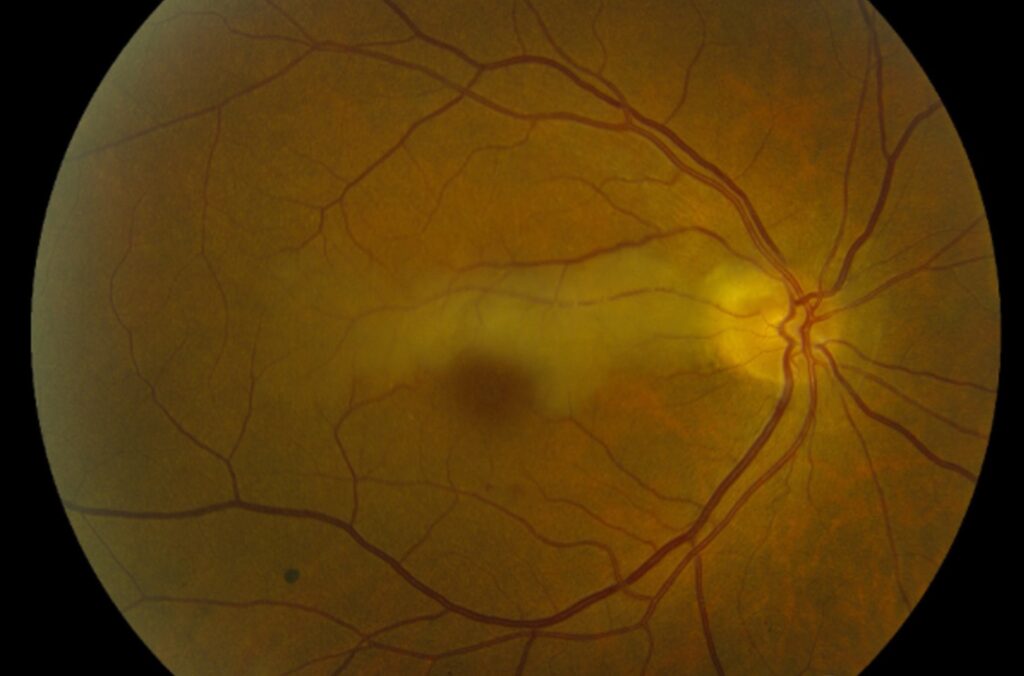
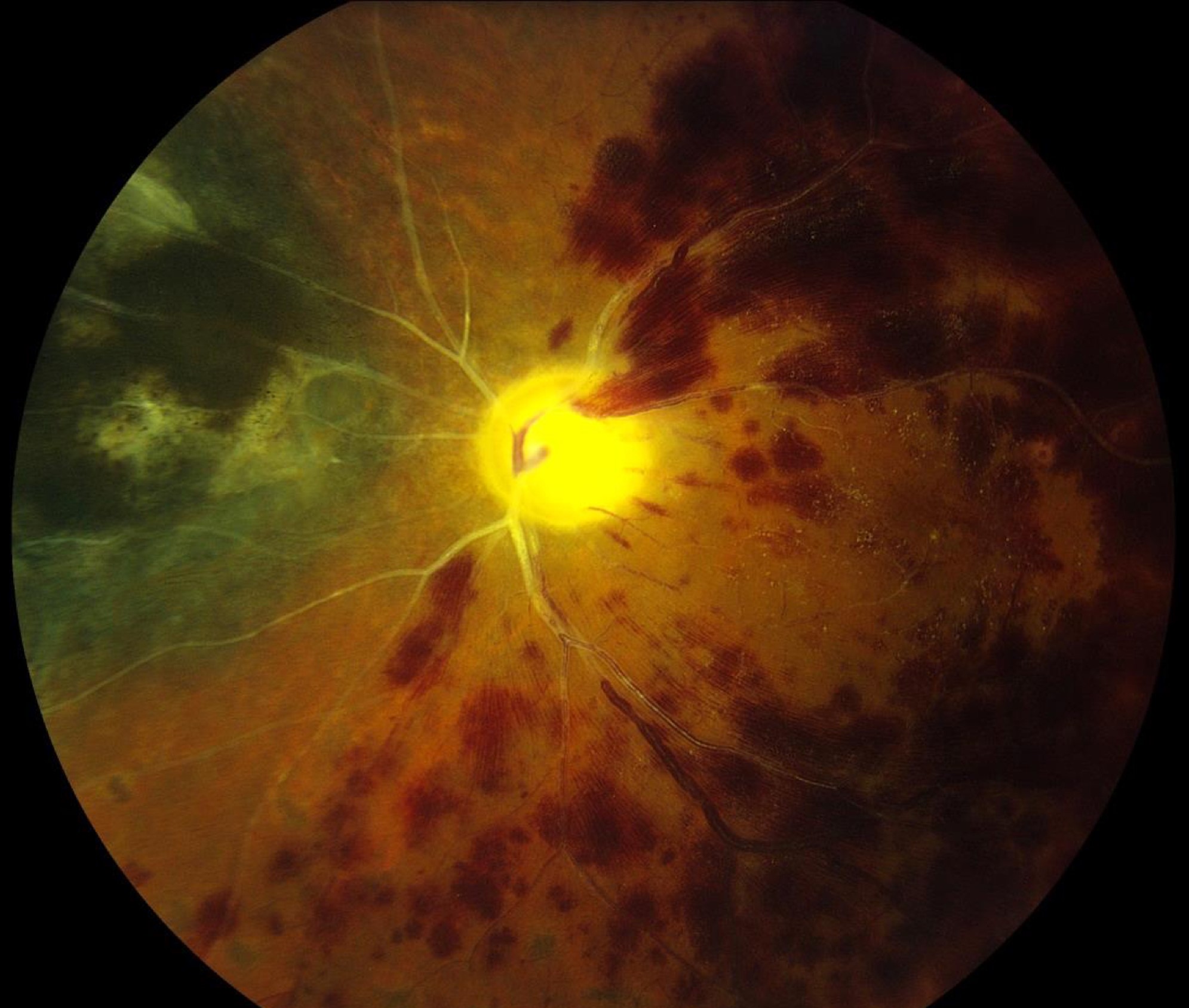
A 61-year-old man with hypertension has central retinal vein occlusion in the right eye with macular edema and an acuity of 20/200.
Anti-VEGF injections give a gain to 20/80, but the edema keeps returning. After discussion of the SCORE results and the risk of cataract and pressure rise, the team chooses a dexamethasone implant in this pseudophakic eye.
The edema resolves, the pressure rises to 26 mmHg for two months and is controlled with drops, and his vision reaches 20/50.
How to Explain the Study
Tell patients that the studies tested a steroid injection against observation and laser. Steroid helped in central occlusion, and laser was as good as steroid in branch occlusion at that time.
Explain that anti-VEGF drugs have since become first-line treatment.
Questions Patients Ask
- Will the vision come back? Some improves with treatment, and the amount depends on the damage.
- Why are the injections repeated? The edema tends to return until the vein recovers.
- Is a steroid risky? It can cause cataract and a pressure rise, so the eye is checked often.
What Came After
Later trials showed that anti-VEGF drugs give better gains. Steroid implants became second-line options for those with an incomplete response (see dexamethasone implant for diabetic macular edema).
In addition, SCORE2 and other studies helped to define the role of bevacizumab as a lower-cost choice.
Key Points to Remember
- In CRVO, triamcinolone beat observation, and 1 milligram was as good as 4 milligrams with fewer side effects
- For BRVO, grid laser matched steroid with fewer side effects
- Cataract and pressure rise are the main risks
- Anti-VEGF drugs are now first-line, and SCORE2 showed bevacizumab to be a sound choice


Document what you see
Two smartphone imaging tools built for everyday clinic use — one for the slit lamp, one for the fundus.
From Choroida — the team behind this siteReferences
- Ip MS, Scott IU, VanVeldhuisen PC, et al. A randomized trial comparing the efficacy and safety of intravitreal triamcinolone with observation to treat vision loss associated with macular edema secondary to central retinal vein occlusion: the SCORE study report 5. Arch Ophthalmol. 2009;127:1101-1114.
- Scott IU, Ip MS, VanVeldhuisen PC, et al. A randomized trial comparing the efficacy and safety of intravitreal triamcinolone with standard care to treat vision loss associated with macular edema secondary to branch retinal vein occlusion: the SCORE study report 6. Arch Ophthalmol. 2009;127:1115-1128.
- Scott IU, VanVeldhuisen PC, Ip MS, et al. Effect of bevacizumab vs aflibercept on visual acuity among patients with macular edema due to central retinal vein occlusion: the SCORE2 randomized clinical trial. JAMA. 2017;317:2072-2087.
- American Academy of Ophthalmology. Basic and Clinical Science Course, Section 12: Retina and Vitreous. AAO; current edition.

Writes and reviews the clinical articles on Educate. Every post is checked against peer-reviewed sources before it goes live.