Age-related macular degeneration risk factors fall into three groups: those that cannot be changed, those that can, and those for which the evidence is also weak.
Patients often ask what they might have done differently, and what they can do now to protect the fellow eye or the next generation.
A clear answer separates the established causes from the many myths.
Age-Related Macular Degeneration Risk Factors That Cannot Be Changed
- Age: the strongest risk factor, with prevalence rising steeply after the age of 60
- Family history: a first-degree relative with AMD increases the risk several-fold
- Genetics: variants in complement factor H and in the ARMS2/HTRA1 region account for a large share of the heritable risk
- Ancestry: late AMD is more frequent in people of European ancestry than in those of African ancestry in many series
- Sex: some studies show a slightly higher risk in women, which may reflect longer life expectancy
Guidelines do not recommend genetic testing in routine care, because it does not change management.
A normal result does not exclude disease.
Age-Related Macular Degeneration Risk Factors: Modifiable Risk Factors
Smoking is the most important modifiable risk factor, with current smokers having a risk two to three times higher than never-smokers.
The risk falls after quitting, although it remains higher for many years.
Obesity and a high body mass index are associated with progression to advanced disease.
Studies link hypertension and cardiovascular disease to AMD, and treating them is also advisable for other reasons.
A diet low in green leafy vegetables, fish, and nuts, and high in saturated fat, has been associated with a higher risk (see AREDS2 supplements).
Fundus Explorer Pro
Photograph the retinal findings described here with the phone already in your pocket — 22 D optics and built-in illumination in one handheld unit.
From Choroida — the team behind this siteFactors With Weaker or Conflicting Evidence
- Sunlight: a biologically plausible risk, but epidemiological evidence is inconsistent
- Alcohol: results vary between studies
- Cataract surgery: some studies report a higher risk of progression afterward, while others do not
- Statins and aspirin: no clear causal effect has been shown
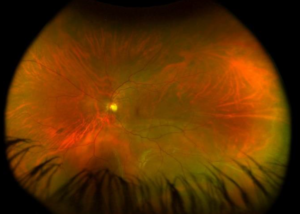
- Reticular pseudodrusen: a marker of higher risk of advanced disease (see reticular pseudodrusen)
Do not tell patients to avoid cataract surgery because of the risk of AMD, since the benefit of better vision usually outweighs the uncertain effect.
Age-Related Macular Degeneration Risk Factors: Fundus Features That Predict Progression
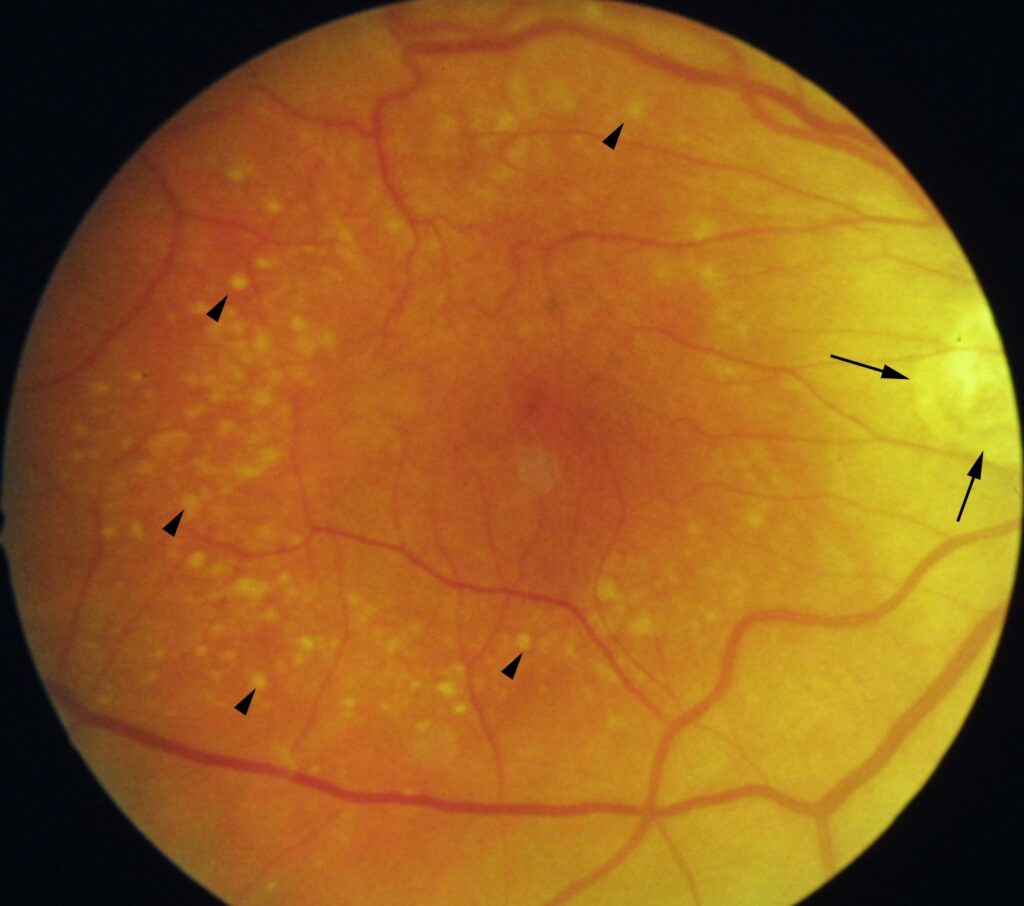
The size and number of drusen, and pigmentary abnormalities, are the best clinical predictors of progression.
Large drusen and pigment changes in one eye, with advanced disease in the fellow eye, carry a particularly high risk.
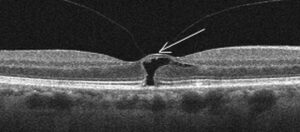
OCT features such as drusen volume, subretinal drusenoid deposits, and hyperreflective foci add information (see age-related macular degeneration).
In addition, fundus autofluorescence shows areas of atrophy and can help to monitor progression (see fundus autofluorescence).
What to Tell Patients
- Stop smoking, and ask for help if needed
- Eat a diet that includes leafy greens and fish, and maintain a healthy weight
- Control blood pressure and cholesterol with the primary care doctor
- Take an AREDS2 formulation if they have intermediate AMD or advanced AMD in one eye
- Monitor each eye at home with an Amsler grid or a similar test, and report new distortion or a blind spot at once
- Attend regular examinations, even without symptoms
Advise relatives of affected patients to have eye examinations and to avoid smoking.
Counselling
Explain that AMD results from a combination of age, genes, and environment, so it is not caused by something the patient did or neglected to do.
Emphasize that many people with risk factors never develop vision loss, and that effective treatments exist for neovascular disease when doctors find it early.
Using Risk Information in Clinic
A simple risk grading can be done at the slit lamp or on a photograph: look at drusen size and pigment in each eye, and count the number of risk features.
The AREDS simplified severity scale gives the five-year risk of progression to advanced disease, from a low percentage in eyes with no risk features to a high percentage in those with several.
Use this information to decide on the follow-up interval and the discussion of supplements.
Sharing Risk With Relatives
Siblings and children of patients with AMD may ask about their own risk.
Explain that a family history raises the likelihood but does not make disease certain, and that avoiding smoking and having eye examinations from the age of 50 or 60 are reasonable steps.
Genetic panels sold directly to consumers are not validated for management, so do not use their results to decide on treatment.
For the latest studies, see the PubMed results for age-related macular degeneration risk factors.
Document what you see
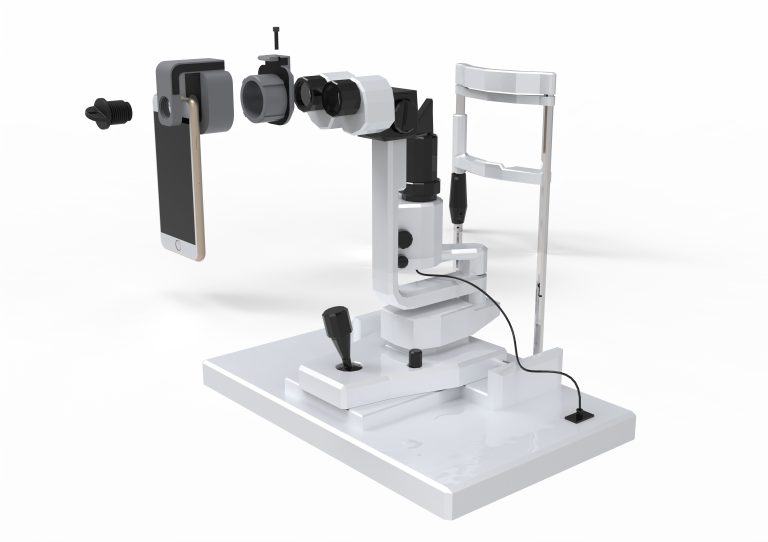
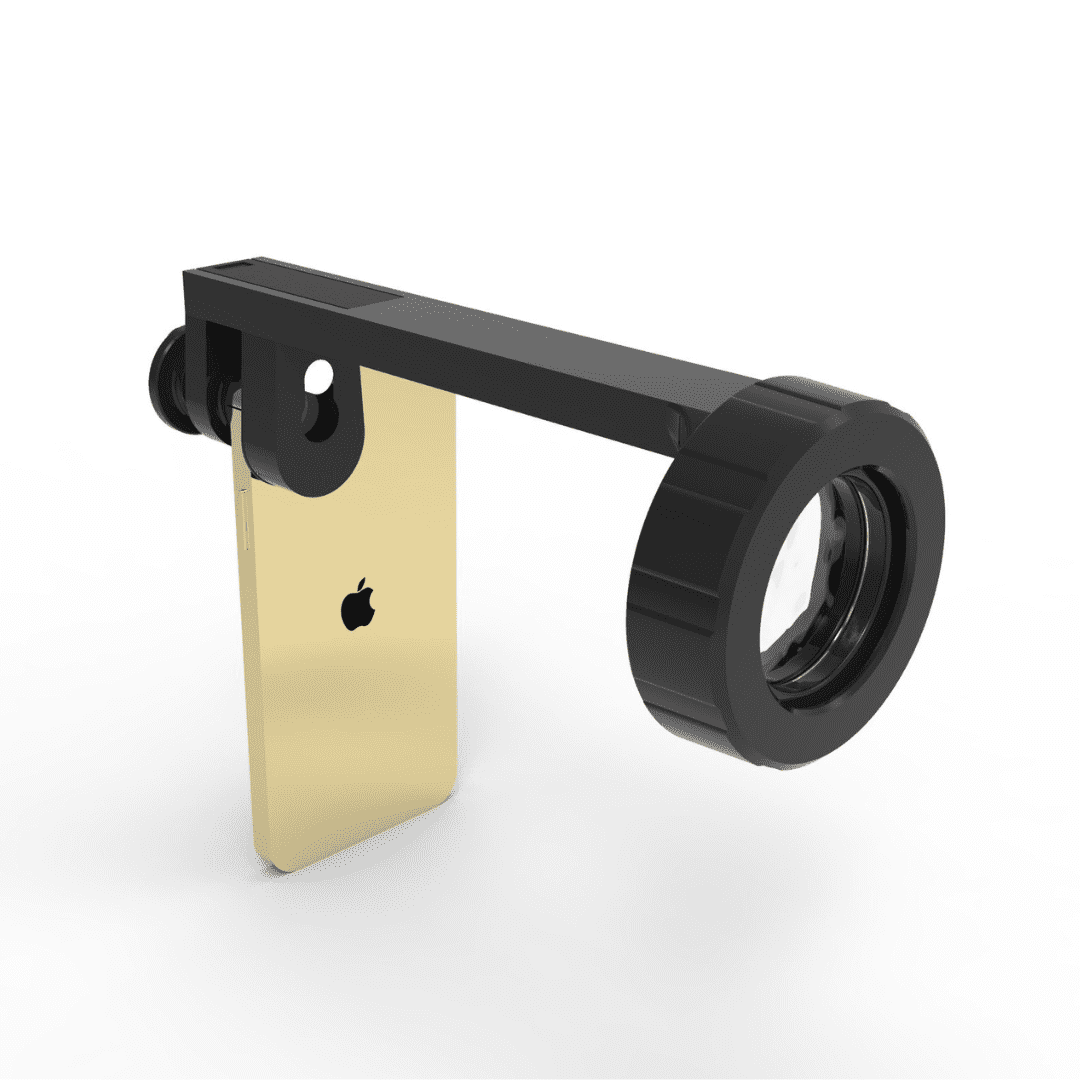
Two smartphone imaging tools built for everyday clinic use — one for the slit lamp, one for the fundus.
From Choroida — the team behind this siteReferences
- Chakravarthy U, Wong TY, Fletcher A, et al. Clinical risk factors for age-related macular degeneration: a systematic review and meta-analysis. BMC Ophthalmol. 2010;10:31.
- Smith W, Assink J, Klein R, et al. Risk factors for age-related macular degeneration: pooled findings from three continents. Ophthalmology. 2001;108:697-704.
- Fritsche LG, Igl W, Bailey JN, et al. A large genome-wide association study of age-related macular degeneration highlights contributions of rare and common variants. Nat Genet. 2016;48:134-143.
- American Academy of Ophthalmology. Basic and Clinical Science Course, Section 12: Retina and Vitreous. AAO; current edition.

Writes and reviews the clinical articles on Educate. Every post is checked against peer-reviewed sources before it goes live.