
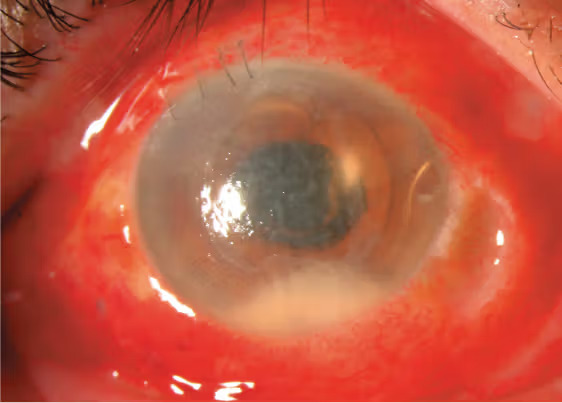
Intracameral antibiotic prophylaxis injects an antibiotic directly into the anterior chamber at the conclusion of cataract surgery, a practice adopted specifically to reduce the risk of acute postoperative endophthalmitis, discussed in its own dedicated article on this site.
It represents a genuinely different prevention strategy from topical perioperative antibiotic drops alone, delivering a reliably high, immediate intraocular drug concentration rather than depending on topical medication penetrating through the cornea into the eye.
Understanding the evidence behind this practice, and why it has become standard in many parts of the world while adoption has been slower in others, requires looking at both the trial data and the practical, regulatory hurdles that have shaped its uptake.
Endophthalmitis after cataract surgery is already a rare event with modern technique, and any intervention aiming to reduce an already low baseline rate further needs correspondingly strong evidence to justify routine, universal adoption.
Rationale
Topical antibiotic drops applied before, during, or after surgery achieve variable and generally limited intraocular penetration, meaning actual drug concentration within the anterior chamber where contamination risk exists can be considerably lower than what reaches the ocular surface.
An intracameral injection delivers antibiotic directly into the anterior chamber at the precise moment surgery concludes, achieving a high, immediate concentration exactly where any contaminating organisms introduced during surgery would be present.
This direct delivery addresses the specific window of highest infection risk, the brief period during and immediately after the procedure when the eye is most vulnerable to introduced organisms, more reliably than topical treatment can achieve on its own.
The Evidence
A large European multicenter randomized trial found that intracameral cefuroxime significantly reduced the incidence of postoperative endophthalmitis compared to eyes that did not receive it, providing much of the foundational evidence supporting widespread adoption of the practice.
Subsequent large observational studies and registry data from multiple countries have generally supported this finding, showing lower endophthalmitis rates in practices and regions that adopted routine intracameral prophylaxis compared to those relying on topical antibiotics alone.
This body of evidence is part of why intracameral prophylaxis has become the standard of care in much of Europe and is increasingly adopted elsewhere, even as some regions have been slower to shift practice for reasons discussed below.
Professional society guidelines in several countries have shifted over time to reflect this accumulating evidence, and awareness of the local guideline landscape is a practical part of deciding how to incorporate the practice into a given surgical setting.
All-fit Slit-Lamp Adapter
Record and share exactly what you see at the slit lamp. One adapter fits any slit lamp or surgical microscope — and any smartphone.
From Choroida — the team behind this siteCommonly Used Agents
- Cefuroxime, the agent used in the major European trial, requiring careful dilution and preparation to achieve the correct intracameral dose
- Moxifloxacin, a fluoroquinolone increasingly used given its broader spectrum of coverage and, in some formulations, availability as a pre-prepared, ready-to-use intracameral product
- Vancomycin, historically used by some surgeons though now used more cautiously given a recognized, if rare, association with a severe postoperative hemorrhagic retinal vasculitis complication
Practical and Regulatory Considerations
In regions without a commercially available, pre-prepared intracameral antibiotic product, surgeons have historically needed to compound the correct dilution from a larger-volume vial intended for other uses, introducing a real risk of dosing error if this compounding is not performed with meticulous care.
Concern about this compounding-related dosing error risk, along with regulatory and approval considerations in some countries, has been a genuine factor slowing adoption in regions where a licensed, pre-prepared product has not been readily available.
As commercially prepared, pre-dosed intracameral antibiotic products have become more widely available in additional markets, some of these practical barriers have diminished, and adoption has continued to expand accordingly.
Practical Takeaway
Intracameral antibiotic prophylaxis is not a replacement for meticulous surgical technique and sterile protocol, but an additional layer of protection specifically targeting the moment of highest infection risk during cataract surgery.
Surgeons and centers considering adoption weigh the strong supporting evidence against local practical factors, including product availability, cost, and the specific protocols already in place for perioperative infection prevention.
Whatever the local practice, meticulous attention to compounding accuracy is non-negotiable wherever a pre-prepared product is not used, since an incorrectly dosed intracameral injection carries its own risk of direct toxicity to intraocular tissue.


Document what you see
Two smartphone imaging tools built for everyday clinic use — one for the slit lamp, one for the fundus.
From Choroida — the team behind this siteReferences
- ESCRS Endophthalmitis Study Group. Prophylaxis of postoperative endophthalmitis following cataract surgery: results of the ESCRS multicenter study. Journal of Cataract and Refractive Surgery.
- American Academy of Ophthalmology. Basic and Clinical Science Course, Section 11: Lens and Cataract.
- Chang DF, Braga-Mele R, Henderson BA, et al. Antibiotic prophylaxis of postoperative endophthalmitis after cataract surgery: results of the 2014 ASCRS member survey. Journal of Cataract and Refractive Surgery.
