
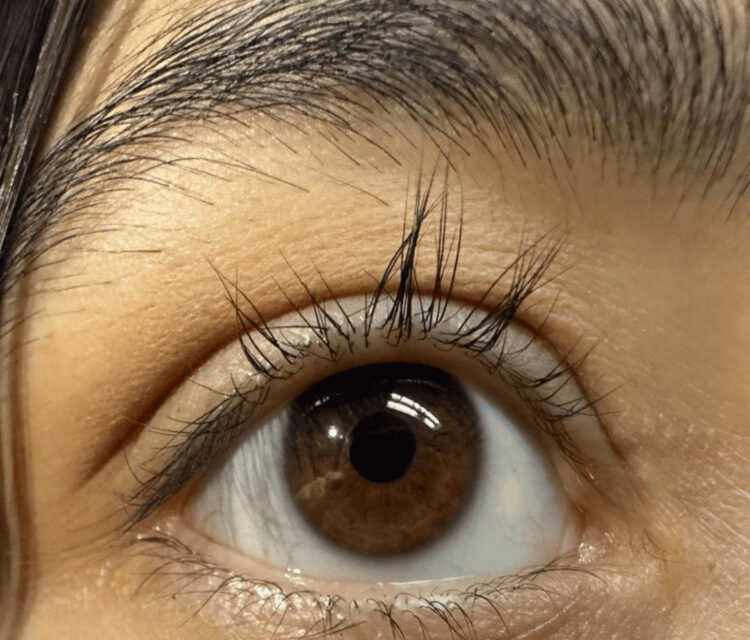
Madarosis is loss of eyelashes, or occasionally eyebrows, and it functions less as a diagnosis in its own right than as a physical sign pointing toward one of a genuinely wide range of local and systemic underlying causes.
The pattern of loss, whether it is partial or complete, localized or diffuse, and whether it affects one eye or both, narrows the differential considerably before any further workup is needed.
A careful lid margin exam looking for accompanying inflammation, scarring, or a mass lesion often does more diagnostic work than any single laboratory test ordered in isolation.
Eyebrow involvement alongside lash loss broadens the differential further, since some systemic and dermatologic conditions preferentially affect one site over the other.
Mechanism
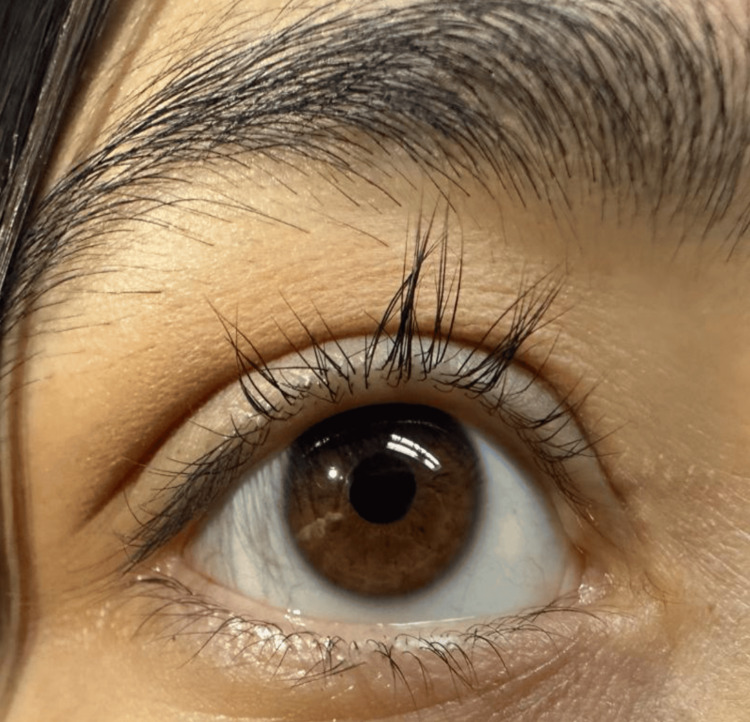
Eyelash loss occurs either because the hair follicle itself is destroyed, producing permanent, non-regrowing madarosis, or because the follicle is intact but temporarily disrupted, producing loss that can regrow once the underlying cause resolves.
Scarring processes, including chronic cicatrizing conjunctivitis, severe chemical injury, or radiation, destroy the follicle architecture directly and cause permanent loss.
Non-scarring causes, including many inflammatory, infectious, and systemic conditions, disrupt the normal hair growth cycle without destroying the follicle, which is why lashes in these cases can regrow once the underlying process is controlled.
Establishing early whether a given case is scarring or non-scarring, based on the appearance of the lid margin itself, meaningfully shapes how much urgency and what kind of workup the case warrants.
Local Causes
- Chronic blepharitis, particularly demodex-associated or severe posterior blepharitis, one of the most common causes encountered in general practice
- Eyelid tumors, including sebaceous carcinoma, which classically causes madarosis of the lashes overlying the tumor and should always be considered when lash loss is localized and asymmetric
- Trauma, burns, or prior eyelid surgery causing direct follicle destruction
- Trichotillomania, repetitive lash-pulling, often but not always recognized by the patient or family, sometimes presenting with lashes of variable, irregular length rather than complete absence
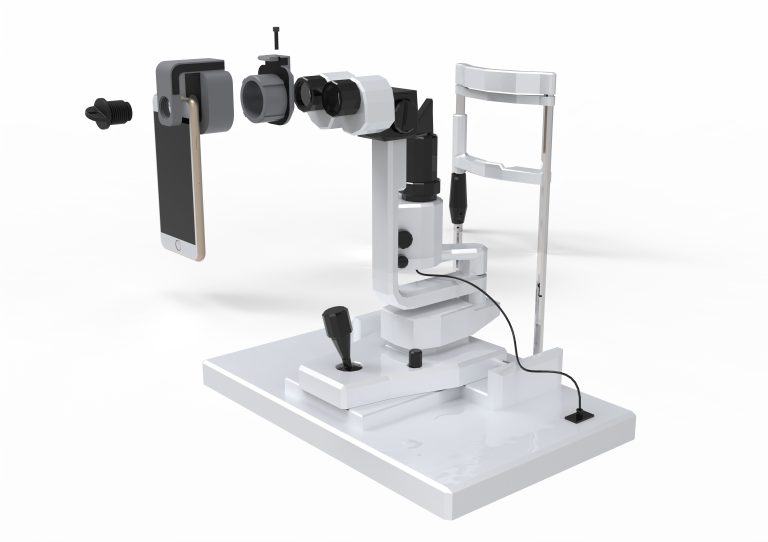
All-fit Slit-Lamp Adapter
Record and share exactly what you see at the slit lamp. One adapter fits any slit lamp or surgical microscope — and any smartphone.
From Choroida — the team behind this siteSystemic Causes
- Thyroid disease, both hyper- and hypothyroidism, a common and easily tested systemic cause of diffuse madarosis
- Alopecia areata, an autoimmune process that can affect eyelashes and eyebrows alongside or instead of scalp hair
- Leprosy, a classic cause of madarosis in endemic regions, discussed in more detail in its own dedicated article on this site
- Systemic chemotherapy, causing diffuse, temporary hair loss affecting lashes along with scalp and body hair
- Nutritional deficiency and severe systemic illness, including protein-calorie malnutrition, which can affect the hair growth cycle broadly
The Localized-Versus-Diffuse Distinction
Localized, asymmetric madarosis, especially when confined to lashes overlying a visible lid lesion, should always raise concern for an eyelid malignancy, most classically sebaceous carcinoma, until that possibility has been specifically excluded.
Diffuse, bilateral madarosis more often points toward a systemic cause, prompting a directed history and examination for thyroid disease, autoimmune conditions, or a medication effect rather than an immediate biopsy.
This distinction is what should actually drive the workup, rather than treating every case of lash loss identically regardless of its distribution pattern.
Evaluation
A careful history covers onset and tempo, associated skin or systemic symptoms, medication and chemotherapy exposure, and any family or personal history of autoimmune or thyroid disease.
Slit-lamp examination of the lid margin looks specifically for inflammation, scarring, an associated mass, or the irregular lash lengths characteristic of trichotillomania.
Targeted laboratory testing, most commonly thyroid function tests, is reasonable when diffuse madarosis is not explained by an obvious local cause, and biopsy of any suspicious localized lesion should not be delayed while a broader systemic workup is pursued.
Referral to dermatology is worthwhile when a systemic dermatologic condition such as alopecia areata is suspected, since management of the underlying skin disease falls outside typical ophthalmic practice.
Management
Treatment is directed entirely at the underlying cause: blepharitis treatment for lid margin disease, thyroid management for thyroid-related loss, or tumor excision when an eyelid malignancy is identified.
Non-scarring causes generally allow lash regrowth once the underlying process is controlled, while scarring processes produce permanent loss that cosmetic measures, rather than medical treatment, are left to address.
Prostaglandin analog lash-growth solutions can help in some cosmetically bothersome non-scarring cases once the underlying cause has been addressed, though they are an adjunct to, not a substitute for, treating the actual driver of the hair loss.
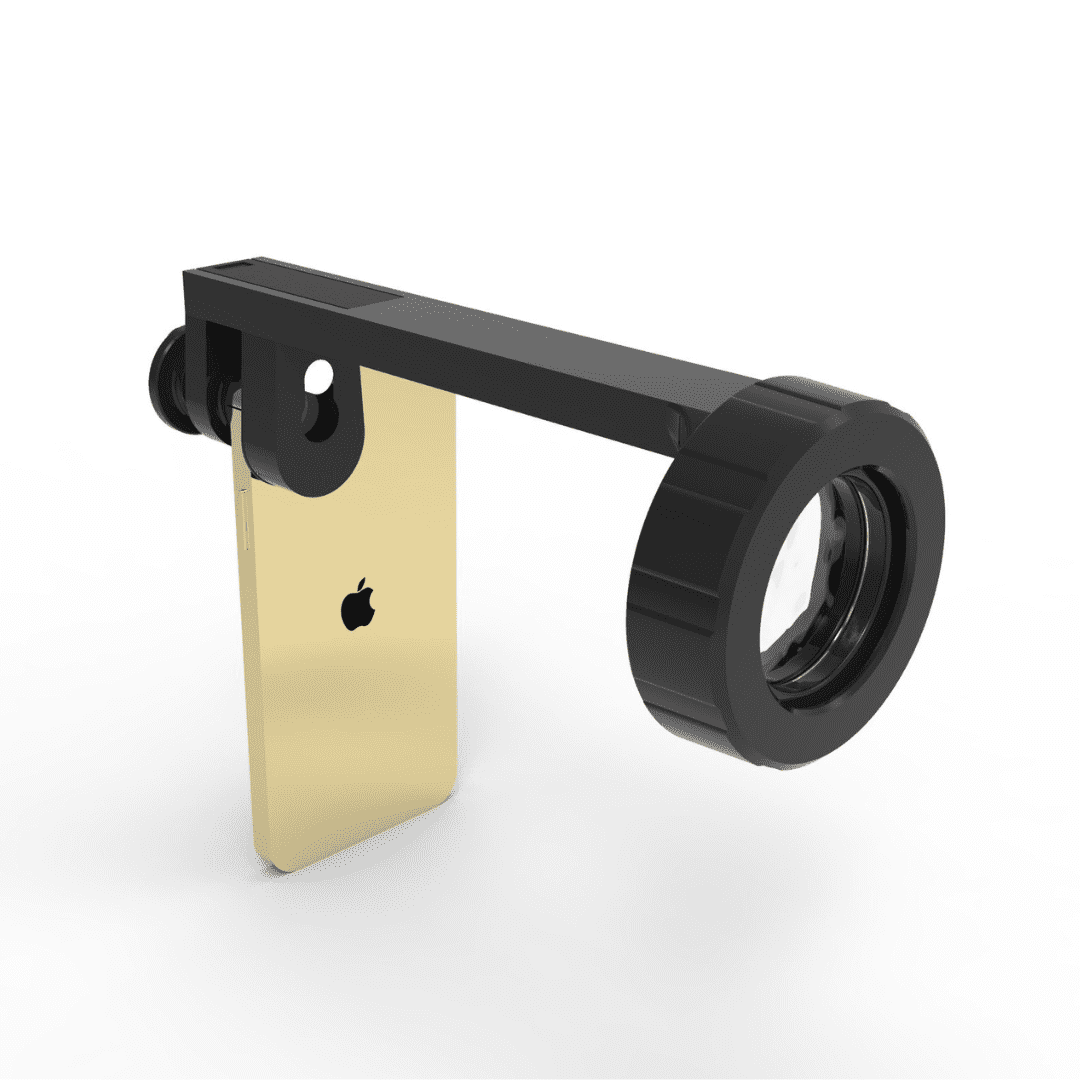
Document what you see
Two smartphone imaging tools built for everyday clinic use — one for the slit lamp, one for the fundus.
From Choroida — the team behind this siteReferences
- Bowling B. Kanski’s Clinical Ophthalmology.
- American Academy of Ophthalmology. Basic and Clinical Science Course, Section 7: Oculofacial Plastic and Orbital Surgery.
- Prendiville S, Logan A. Madarosis: a marker of many diseases. Cutis.
