
Case study
A 54-year-old female presented with symptoms of persistent dry eyes, redness, and a gritty sensation in both eyes, which had been progressively worsening over the past three months.

The patient had a history of allogeneic hematopoietic stem cell transplantation for acute myeloid leukemia one year prior.
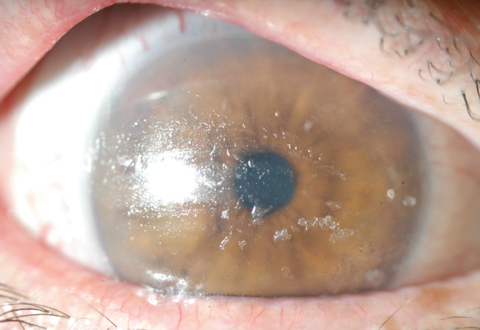
She also reported blurred vision and sensitivity to light. On examination, the slit-lamp revealed significant conjunctival hyperemia, punctate epithelial erosions on the cornea, and decreased tear break-up time.
The Schirmer test showed markedly reduced tear production. The patient’s systemic review was notable for chronic graft-versus-host disease affecting the skin and liver.
Based on the clinical findings and history, the patient was diagnosed with Ocular Graft Versus Host Disease (GVHD).
Introduction
Ocular Graft Versus Host Disease (GVHD) is a significant and common complication of allogeneic hematopoietic stem cell transplantation (HSCT).
GVHD occurs when the donor’s immune cells recognize the recipient’s tissues as foreign and mount an immune response against them.
This condition can affect various organs, including the eyes, and can lead to severe discomfort, visual impairment, and even blindness if not managed appropriately.
All-fit Slit-Lamp Adapter
Record and share exactly what you see at the slit lamp. One adapter fits any slit lamp or surgical microscope — and any smartphone.
From Choroida — the team behind this sitePathophysiology
The pathophysiology of ocular GVHD involves the infiltration of donor-derived immune cells, primarily T lymphocytes, into ocular tissues.
This immune response leads to inflammation and damage to various parts of the eye, including the conjunctiva, cornea, lacrimal glands, and eyelids.
The severity of ocular Ocular Graft Versus Host Disease (GVHD) can vary widely, from mild dryness and irritation to severe inflammation and scarring that can compromise vision.
Epidemiology
Ocular Graft Versus Host Disease (GVHD) is a common complication in patients undergoing allogeneic HSCT. Studies indicate that between 40% and 60% of HSCT recipients develop ocular GVHD.
The incidence is higher in patients with chronic systemic GVHD, which affects multiple organs. Risk factors for developing ocular GVHD include the use of unrelated or mismatched donors, older age at the time of transplantation, and the presence of acute GVHD.
Clinical Features
Ocular Graft Versus Host Disease (GVHD) can present with a variety of symptoms, including:
- Dryness: Patients often experience severe dry eye symptoms due to lacrimal gland dysfunction and reduced tear production.
- Irritation and Pain: Chronic inflammation can lead to a gritty or burning sensation in the eyes, along with pain.
- Redness: Persistent conjunctival inflammation can cause redness of the eyes.
- Photophobia: Sensitivity to light is a common symptom due to corneal involvement.
- Visual Disturbances: Blurred vision, fluctuating vision, and even significant visual impairment can occur in severe cases.
- Discharge: Mucus discharge may be present, particularly in cases with significant conjunctival involvement.
Ocular Graft Versus Host Disease (GVHD) Diagnosis
Diagnosis of ocular GVHD is primarily clinical, based on patient history, symptomatology, and a thorough ocular examination. Key diagnostic steps include:
- Slit-Lamp Examination: This allows detailed evaluation of the anterior segment of the eye, including the conjunctiva, cornea, and tear film.
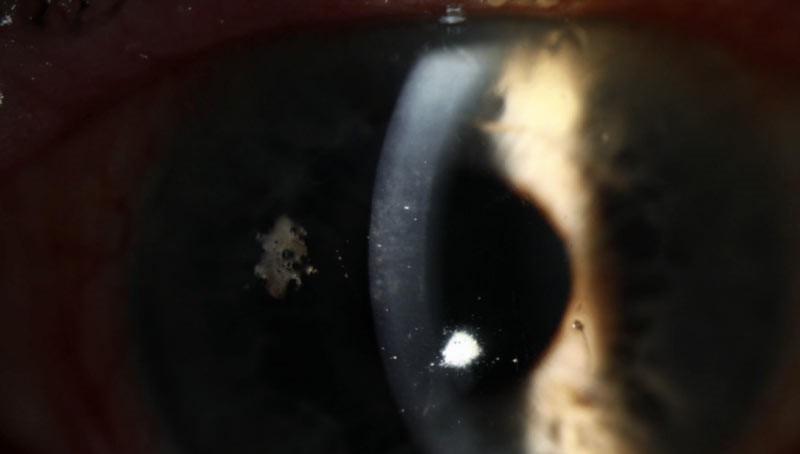
- Tear Break-Up Time (TBUT): This test assesses tear film stability, which is often reduced in ocular GVHD.
- Schirmer Test: This measures tear production and can help quantify the severity of dry eye.
- Conjunctival Biopsy: In certain cases, a biopsy may be performed to confirm the diagnosis by demonstrating lymphocytic infiltration and other histopathological features of GVHD.
Differential Diagnosis
Several conditions can mimic the symptoms of ocular GVHD, making differential diagnosis important. These conditions include:
- Dry Eye Syndrome: Non-GVHD-related dry eye can present similarly but usually lacks the severity seen in ocular GVHD.
- Infectious Conjunctivitis: Bacterial or viral infections can cause redness and irritation but are typically accompanied by other signs of infection.
- Allergic Conjunctivitis: Allergies can cause redness, itching, and tearing but are usually seasonal and associated with other allergic symptoms.
- Autoimmune Disorders: Conditions such as Sjögren’s syndrome can cause dry eye and inflammation, necessitating careful differentiation.
Ocular Graft Versus Host Disease (GVHD) Management
Management of ocular GVHD requires a multidisciplinary approach involving ophthalmologists, hematologists, and transplant specialists.
Treatment goals focus on alleviating symptoms, reducing inflammation, and preventing complications. Key management strategies include:
1. Lubrication and Tear Substitution:
- Artificial Tears: Frequent use of preservative-free artificial tears helps to maintain ocular surface hydration.
- Ointments: Lubricating ointments can be used at night to provide longer-lasting relief.
- Punctal Plugs: These can be inserted to block tear drainage, thereby increasing tear film retention on the ocular surface.
2. Anti-Inflammatory Therapy:
- Topical Corticosteroids: These are effective in reducing inflammation but should be used cautiously due to potential side effects, such as increased intraocular pressure and cataract formation.
- Topical Cyclosporine: This immunomodulatory agent can reduce inflammation and improve tear production.
- Lifitegrast: An anti-inflammatory medication specifically approved for dry eye disease that may be beneficial in ocular GVHD.
3. Immunosuppressive Therapy:
- Systemic Immunosuppressants: In cases with severe ocular involvement or concurrent systemic GVHD, systemic immunosuppressive agents like corticosteroids, cyclosporine, or tacrolimus may be necessary.
- Biologic Agents: Emerging therapies such as rituximab and other biologics targeting specific immune pathways are being explored for refractory cases.
4. Mechanical and Surgical Interventions:
- Moisture Chamber Goggles: These can help retain moisture and protect the ocular surface.
- Scleral Contact Lenses: These specialized lenses provide a protective barrier and improve vision in patients with severe ocular surface disease.
- Surgical Procedures: In advanced cases, surgical interventions such as amniotic membrane transplantation or conjunctival grafting may be required to restore the ocular surface.
Prognosis
The prognosis for patients with Ocular Graft Versus Host Disease (GVHD) varies depending on the severity of the disease and the promptness of treatment.
Early and aggressive management can significantly improve symptoms and prevent long-term complications.
However, chronic ocular GVHD can lead to persistent symptoms and may require long-term maintenance therapy.
Complications
Complications of Ocular Graft Versus Host Disease (GVHD) can include:
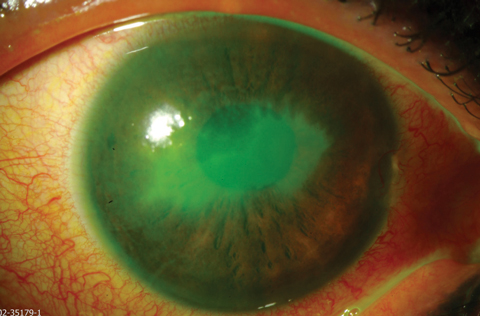
- Corneal Ulcers: Chronic inflammation and dry eye can predispose patients to corneal ulceration and infection.
- Scarring: Severe conjunctival and corneal inflammation can lead to scarring, impacting vision.
- Secondary Infections: The compromised ocular surface can be more susceptible to bacterial, viral, or fungal infections.
- Vision Loss: In severe cases, untreated or poorly managed ocular GVHD can lead to significant and irreversible vision loss.

Document what you see
Two smartphone imaging tools built for everyday clinic use — one for the slit lamp, one for the fundus.
From Choroida — the team behind this siteReferences
- Ferrara, J.L.M., Levine, J.E., Reddy, P., & Holler, E. (2009). Graft-versus-host disease. The Lancet, 373(9674), 1550-1561.
- Ogawa, Y., & Kuwana, M. (2013). Dry eye as a major complication associated with chronic graft-versus-host disease after hematopoietic stem cell transplantation. Cornea, 32(Suppl 1), S14-S18.
- Shikari, H., Amparo, F., & Saboo, U.S., et al. (2013). Onset of ocular graft-versus-host disease symptoms after allogeneic hematopoietic stem cell transplantation. American Journal of Ophthalmology, 155(1), 192-197.e3.
- Inamoto, Y., Valdés-Sanz, N., & Ogawa, Y., et al. (2019). Ocular graft-versus-host disease after hematopoietic cell transplantation: expert review from the Late Effects and Quality of Life Working Committee of the CIBMTR and Cornea and Tears Subcommittee of the International Chronic Ocular GVHD Consensus Group. Bone Marrow Transplantation, 54(2), 205-214.
- Jacobs, R., Tran, U., & Chen, H., et al. (2018). Ocular graft-versus-host disease: importance of early diagnosis and treatment to prevent vision loss. Clinical Ophthalmology, 12, 189-197.
- Kim, S.K., Lee, S.B., & Kim, K.M., et al. (2017). A review of ocular graft-versus-host disease: pathophysiology, diagnosis, and treatment. Acta Ophthalmologica, 95(5), e331-e339.
