Eye rubbing feels harmless, but repeated force can damage the cornea.
It links strongly to keratoconus and may speed its progression, so counseling patients early can protect their vision.
Why Patients Rub Their Eyes
Itch from allergy is the commonest reason, while dry eye, blepharitis and fatigue also trigger rubbing. Some patients rub out of habit, so ask about itch and the rubbing style.
Eye Rubbing and Keratoconus
Studies find that many keratoconus patients rub vigorously, and rubbing raises temperature and pressure on the cornea. It can weaken the stromal collagen over time, so rubbing is a recognized risk factor (see keratoconus in children).
All-fit Slit-Lamp Adapter
Record and share exactly what you see at the slit lamp. One adapter fits any slit lamp or surgical microscope — and any smartphone.
From Choroida — the team behind this siteHow Eye Rubbing Harms the Cornea
Knuckle rubbing creates short bursts of high pressure, and epithelial cells die while inflammatory mediators rise. Repeated trauma may lead to thinning, and as a result, the cone steepens and vision worsens.
Who Is at Highest Risk
Children and teenagers with atopy rub most, and Down syndrome carries a high risk of keratoconus with rubbing. A family history adds more risk, and sleep apnea has also been linked to ectasia.
Eye Rubbing After Refractive Surgery
Rubbing can destabilize a thin post-LASIK cornea, and it also dislodges flaps in the early weeks. Patients must avoid it after surgery, so counsel every candidate before the procedure.
Recognizing Rubbing Habits
Ask the patient to show how they rub, because fist and knuckle rubbing is more harmful than a gentle finger touch. Observe habits during the visit, and also ask parents about sleeping posture and nighttime rubbing.
Treating the Cause of Itch
Antihistamine and mast cell drops reduce itch (see allergic conjunctivitis), and lubricants help dry eye. Lid care treats blepharitis, so the best way to stop rubbing is to remove its trigger.
Behavior Changes
Cold compresses give relief without pressure, and short nails reduce injury. Sleeping with a shield can protect during the night, so offer practical alternatives.
Counseling Children and Parents
Explain that rubbing can deform the eye shape, using simple language and pictures. Engage the parents in daily reminders, and also schedule regular reviews.
Monitoring Corneal Health
Perform topography in patients who rub and have unexplained astigmatism, and look for asymmetric steepening or thinning. Repeat imaging at set intervals (see keratoconus progression and cross-linking), and early detection allows early cross-linking.
Eye Rubbing and Cross-Linking
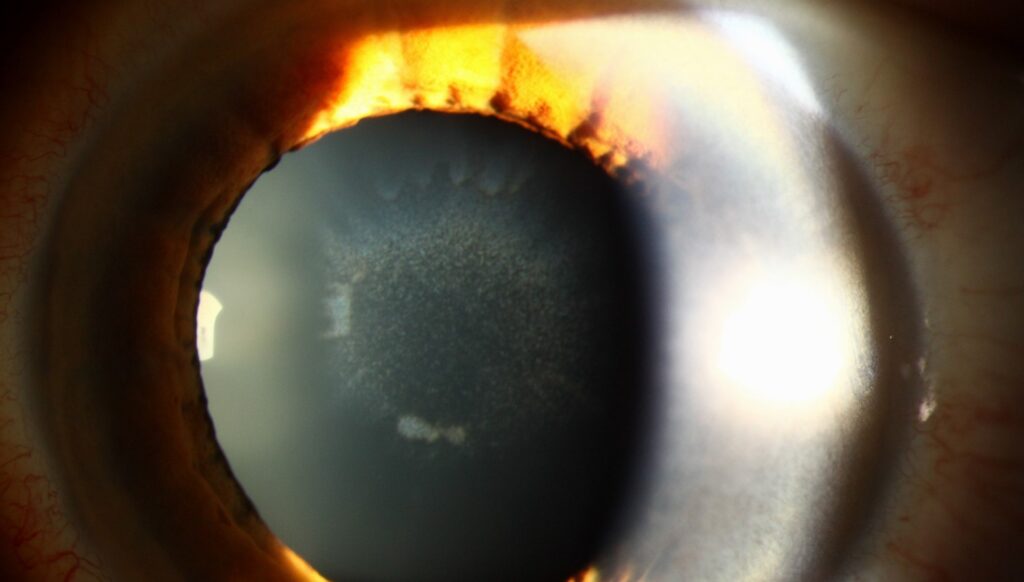
Cross-linking stabilizes the cornea but does not stop rubbing, and continued rubbing may still harm the eye. Counseling remains essential after treatment, so address the habit as part of care.
Eye Rubbing and Glaucoma
Vigorous rubbing raises the intraocular pressure briefly, so patients with glaucoma or damaged nerves should avoid it. Rubbing may also worsen visual field loss, so include this advice in glaucoma education.
Pitfalls to Avoid
- Do not dismiss rubbing as a harmless habit
- Never ignore itch in children with keratoconus
- Avoid treating the cone without addressing the cause
- Do not forget to ask about rubbing before refractive surgery
Eye Rubbing in Allergic Children
Children with vernal disease rub intensely because of itch, and if the itch continues, the cornea can scar or thin. Therefore, control the allergy early (see vernal keratoconjunctivitis), and also teach the child to use cold compresses instead.
Eye Rubbing and Sleep
Many people rub their eyes in their sleep, and because the habit is unconscious, patients often deny it. If the cone is worse on the side the patient sleeps on, ask about posture, and then consider a protective shield at night.
Eye Rubbing and Dry Eye
Dry eye causes grittiness that triggers rubbing, and when the tear film improves, the urge falls. Therefore, treat the surface with lubricants and lid care, and also reassess after four weeks.
Eye Rubbing in Adults
Adults rub when tired or when screens strain the eyes, and since the habit is learned, it can be unlearned. Ask the patient to notice each time they reach for the eyes, then replace the action with blinking or a cold pack.
Eye Rubbing and Corneal Hydrops
Forceful rubbing in advanced keratoconus can rupture Descemet membrane, which causes sudden clouding and pain (see corneal hydrops). Because it can recur, repeat counseling after any episode, and therefore protect these eyes strictly.
Eye Rubbing Research Gaps
Studies on rubbing rely on self-report, and objective tools to measure rubbing force are limited. However, the link to ectasia is consistent across studies, so counsel patients even without perfect data.
Eye Rubbing: Practical Summary
When a patient has itch, treat it first, and if rubbing continues, explain the harm in plain words. Because the cornea can thin, repeat imaging at intervals, and finally, ask about rubbing at every keratoconus visit.


Document what you see
Two smartphone imaging tools built for everyday clinic use — one for the slit lamp, one for the fundus.
From Choroida — the team behind this siteReferences
- McMonnies CW. Mechanisms of rubbing-related corneal trauma in keratoconus. Cornea. 2009;28:607-615.
- Rabinowitz YS. Keratoconus. Surv Ophthalmol. 1998;42:297-319.
- Sugar J, Macsai MS. What causes keratoconus? Cornea. 2012;31:716-719.
- Gordon-Shaag A, Millodot M, Shneor E, Liu Y. The genetic and environmental factors for keratoconus. Biomed Res Int. 2015;2015:795738.
Test yourself
A few questions straight from this article.
-
What is the commonest reason patients rub their eyes?
Allergic itch is the commonest trigger; dry eye, blepharitis, fatigue and habit also drive rubbing, so ask about itch and rubbing style. -
Through which corneal change is repeated eye rubbing thought to promote keratoconus?
Rubbing raises temperature and pressure on the cornea and can weaken stromal collagen over time, making it a recognized keratoconus risk factor. -
Which style of eye rubbing is most harmful to the cornea?
Knuckle rubbing creates short bursts of high pressure and is more harmful than a gentle finger touch, so ask patients to demonstrate how they rub. -
Which systemic condition carries a high risk of keratoconus in patients who rub their eyes?
Down syndrome carries a high risk of keratoconus with rubbing; atopic children and teenagers and those with a family history are also at higher risk. -
Why must patients avoid eye rubbing in the early weeks after LASIK?
Rubbing can destabilize a thin post-LASIK cornea and dislodge flaps in the early weeks, so every refractive candidate should be counselled beforehand. -
In an eye rubber, which finding should prompt corneal topography?
Topography is advised in patients who rub and have unexplained astigmatism, looking for asymmetric steepening or thinning so cross-linking can start early. -
After corneal cross-linking for keratoconus, what is the advice on eye rubbing?
Cross-linking stabilizes the cornea but does not stop rubbing, and continued rubbing may still harm the eye, so the habit must be addressed after treatment. -
In advanced keratoconus, forceful eye rubbing can rupture which structure, causing corneal hydrops?
Rupture of Descemet membrane causes sudden clouding and pain; because hydrops can recur, counseling is repeated after any episode. -
Why should patients with glaucoma avoid vigorous eye rubbing?
Vigorous rubbing raises intraocular pressure briefly, so patients with glaucoma or damaged nerves should avoid it and it belongs in glaucoma education. -
What is the best way to stop eye rubbing in a patient with itch or irritation?
Antihistamine and mast cell drops for itch, lubricants for dry eye and lid care for blepharitis remove the trigger, which is the best way to stop rubbing.

Writes and reviews the clinical articles on Educate. Every post is checked against peer-reviewed sources before it goes live.