The Optic Neuritis Treatment Trial (ONTT) was a randomized study of corticosteroids in acute optic neuritis, and its findings shaped practice for more than thirty years.
It showed that intravenous steroids speed recovery without changing the final vision, that oral prednisone alone should also be avoided, and that brain MRI predicts the later risk of multiple sclerosis (see optic neuritis).
Design of the Optic Neuritis Treatment Trial
The trial enrolled 457 patients aged 18 to 46 years with acute unilateral optic neuritis, within eight days of onset (see the references).
Patients received one of three treatments:
- Intravenous methylprednisolone 250 milligrams every six hours for three days, followed by oral prednisone for eleven days
- Oral prednisone 1 milligram per kilogram for fourteen days
- Oral placebo
Visual function was measured at baseline and regularly afterward.
Optic Neuritis Treatment Trial: Effect on Visual Recovery
The intravenous group recovered faster, with better acuity, contrast sensitivity, and field in the first weeks.
At six months and one year, the final acuity was the same in all groups, and most patients, about 90 percent, recovered to 20/40 or better (see the references).
Also, the study showed that steroids change the speed of recovery and not the outcome.
Fundus Explorer Pro
Photograph the retinal findings described here with the phone already in your pocket — 22 D optics and built-in illumination in one handheld unit.
From Choroida — the team behind this siteThe Oral Prednisone Surprise
Patients who took only oral prednisone at standard doses, however, had a higher rate of new attacks of optic neuritis in the following two years than the other groups.
For this reason, low-dose oral prednisone alone is not recommended for optic neuritis.
Optic Neuritis Treatment Trial: Risk of Multiple Sclerosis
After fifteen years of follow-up, about half of the patients had developed multiple sclerosis (see the references).
- With one or more typical brain lesions on baseline MRI, the risk was about 72 percent
- With no lesions on MRI, the risk was about 25 percent
Male sex, severe disc swelling, and absence of pain were associated with lower risk in patients with a normal MRI.
Visual Outcomes After Fifteen Years
Most eyes kept good acuity, and about 72 percent of affected eyes were 20/20 or better, though many patients had reduced contrast sensitivity, color vision, or field.
A small group had worse vision after a recurrent attack.
Optic Neuritis Treatment Trial: Features That Fit Typical Optic Neuritis
- Age 18 to 45 years, more often women
- Pain on eye movement in about 90 percent
- Subacute loss over days, with recovery over weeks
- A normal disc in two thirds, or mild swelling
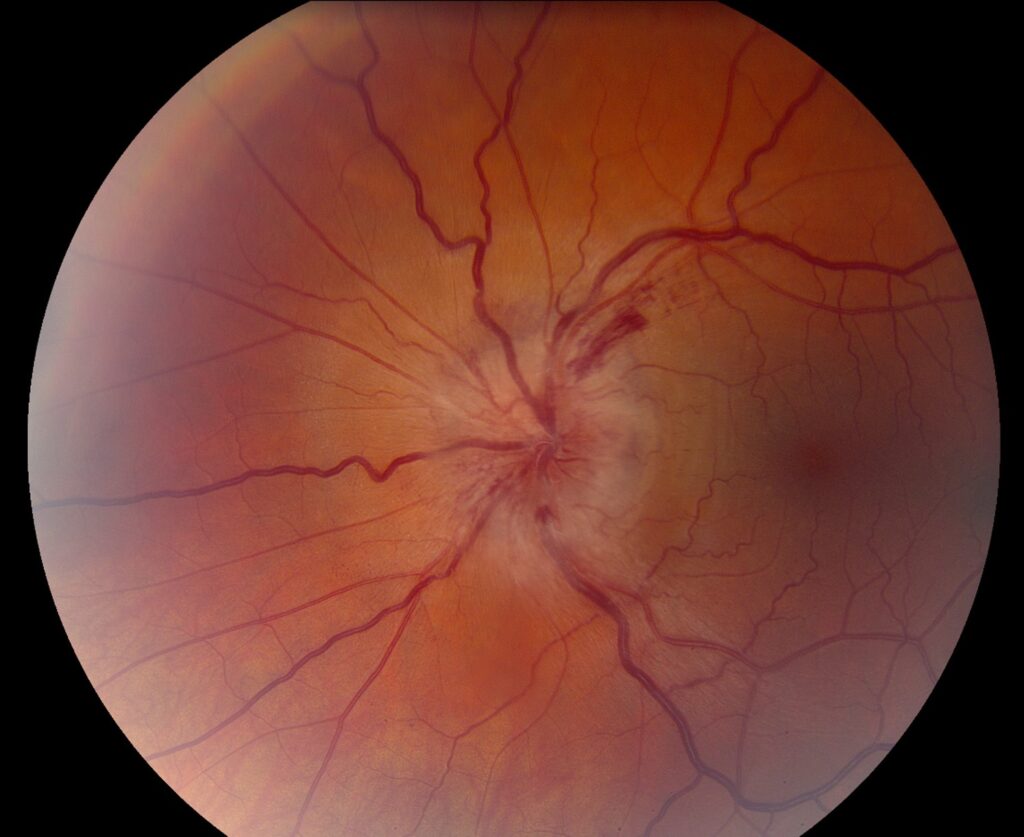
Atypical features, such as severe disc swelling with hemorrhages, no pain, or bilateral loss, call for a search for other causes (see demyelinating optic neuropathy beyond multiple sclerosis).
What Has Changed Since
Antibody testing for aquaporin-4 and myelin oligodendrocyte glycoprotein identifies patients with a different disease, who need faster and sometimes longer treatment (see MOG-IgG associated optic neuritis).
In addition, OCT has added a way to track nerve fiber loss, and disease-modifying drugs have lowered the risk of further attacks in multiple sclerosis.
Optic Neuritis Treatment Trial: Practical Use
Order an MRI of the brain and orbits at presentation, and then discuss the risk of multiple sclerosis with the patient.
Offer high-dose intravenous steroids when a faster recovery matters, and avoid oral prednisone alone.
An Example Case
A 27-year-old woman has had three days of blurred vision and pain on looking sideways in her left eye.
Acuity is 20/100, there is a relative afferent pupillary defect, color plates are reduced, and the disc looks normal.
MRI of the brain shows three periventricular lesions, so the ONTT data place her risk of multiple sclerosis at about 70 percent, and she receives three days of intravenous methylprednisolone, with a neurology referral for disease-modifying therapy.
How to Explain the Findings
Tell patients that most people recover good vision within weeks, with or without steroids, although steroids make the recovery quicker.
Also, explain that the MRI is the most useful test for the future risk of multiple sclerosis, and that early treatment of the disease protects the brain.
Questions Patients Ask
- Will I go blind? No, nearly all recover useful vision.
- Do I have multiple sclerosis? Not necessarily, but the MRI shows the risk.
- Why not take tablets at home? Low-dose tablets alone raised the rate of new attacks in the trial.
- Can it come back? Yes, in either eye, so any new symptoms need a review.
Key Points to Remember
- Steroids speed recovery but do not change the final acuity
- Oral prednisone alone is not advised
- Brain MRI at presentation guides prognosis
- Test for antibodies in atypical cases


Document what you see
Two smartphone imaging tools built for everyday clinic use — one for the slit lamp, one for the fundus.
From Choroida — the team behind this siteReferences
- Beck RW, Cleary PA, Anderson MM Jr, et al. A randomized, controlled trial of corticosteroids in the treatment of acute optic neuritis. N Engl J Med. 1992;326:581-588.
- Optic Neuritis Study Group. Visual function 15 years after optic neuritis: a final follow-up report from the Optic Neuritis Treatment Trial. Ophthalmology. 2008;115:1079-1082.
- Optic Neuritis Study Group. Multiple sclerosis risk after optic neuritis: final Optic Neuritis Treatment Trial follow-up. Arch Neurol. 2008;65:727-732.
- American Academy of Ophthalmology. Basic and Clinical Science Course, Section 5: Neuro-Ophthalmology. AAO; current edition.

Writes and reviews the clinical articles on Educate. Every post is checked against peer-reviewed sources before it goes live.