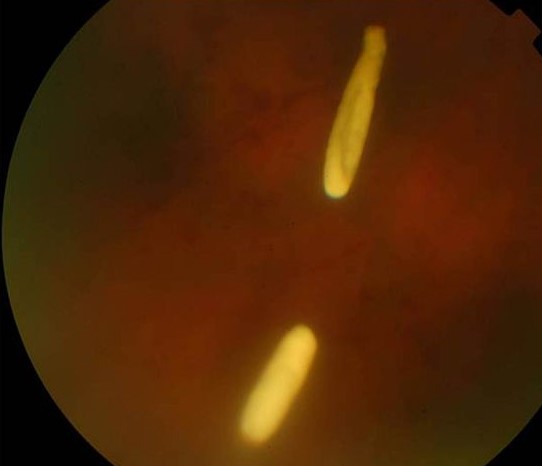
The dexamethasone intravitreal implant is a biodegradable rod that releases corticosteroid into the vitreous over several months.
It treats macular edema from diabetes and vein occlusion, and noninfectious posterior uveitis.
It is especially useful when anti-VEGF drugs are not enough or are not suitable.
The price is a high rate of cataract in phakic eyes and a risk of raised pressure.
What Is the Dexamethasone Intravitreal Implant?
The implant contains 0.7 milligram of dexamethasone in a polymer matrix, delivered with a 22-gauge applicator through the pars plana.
Also, the drug is released in a biphasic pattern, with a peak in the first two months and a gradual decline over about three to six months.
Dexamethasone is a potent steroid with strong anti-inflammatory and antipermeability effects, so it reduces vascular leakage and inflammation, and it also lowers VEGF expression.
The rod dissolves, and no removal is needed.
Dexamethasone Intravitreal Implant: Evidence
- Retinal vein occlusion: in the GENEVA studies, the implant improved vision and reduced edema compared with sham, with a peak effect at about two months (see branch retinal vein occlusion and central retinal vein occlusion)
- Diabetic macular edema: the MEAD trials showed improvement of at least 15 letters in about 22 percent of eyes on the implant, compared with 12 percent on sham at three years, with benefit in pseudophakic eyes in particular (see diabetic macular edema)
- Noninfectious intermediate and posterior uveitis: the HURON trial showed a reduction in vitreous haze and an improvement in vision (see uveitic macular edema)
- Postsurgical macular edema, in smaller studies and practice
The anti-VEGF drugs generally give better vision gains in diabetic macular edema, so the implant is often a second-line choice.
Fundus Explorer Pro
Photograph the retinal findings described here with the phone already in your pocket — 22 D optics and built-in illumination in one handheld unit.
From Choroida — the team behind this siteWho May Benefit
- Pseudophakic eyes with diabetic macular edema that responds incompletely to anti-VEGF drugs
- Patients who cannot attend frequent injection visits, since the effect lasts months (see anti-VEGF therapy)
- Patients with a recent cardiovascular event, in whom anti-VEGF therapy may be less desirable (see anti-VEGF systemic safety)
- Vitrectomized eyes, in which anti-VEGF drugs clear quickly and the implant has a long effect
- Uveitic macular edema that needs local therapy
- Patients with vein occlusion that is not controlled by other drugs
Complications of Dexamethasone Intravitreal Implant
- Cataract: common in phakic eyes, and progression within the first year or two is frequent, so most phakic patients will need cataract surgery
- Raised intraocular pressure: seen in a substantial share of eyes, usually managed with drops, though a few need laser or surgery (see steroid-induced glaucoma)
- Implant migration into the anterior chamber in aphakic eyes or those with a defect in the posterior capsule, which can cause corneal edema and needs removal
- Endophthalmitis and retinal detachment, rare
- Vitreous hemorrhage and conjunctival hemorrhage
Patients with glaucoma or a history of steroid response need a careful discussion before treatment.
Monitoring
- Check the pressure at one to two weeks, and at one month, two months, and thereafter as needed
- Examine the lens and the implant position
- Obtain OCT at one and two months and at intervals, to follow the edema
- Plan retreatment when the edema recurs, usually after four to six months, though some eyes remain dry longer
The decision to repeat should consider the lens status, the pressure, and the effect of the first injection.
Practical Pointers
Use an aseptic technique as for any injection, and check the implant is visible in the vitreous after delivery.
Do not use the implant in eyes with a ruptured posterior capsule unless the risk of migration is considered.
Combine with anti-VEGF drugs or laser in selected patients, and look for the underlying cause of edema.
Also, explain the risk of cataract and pressure rise in advance.
Special Situations
In patients with diabetic macular edema who are phakic and likely to need cataract surgery soon, the cataract risk is less of a concern.
The implant may be a good choice.
In young phakic patients with uveitis, the lens risk is more important, and the surgeon should weigh the alternatives.
For eyes with a history of vitrectomy, a shorter effect than in vitreous-filled eyes has been reported in some studies, though the implant still works.
Combine with systemic treatment of the underlying condition, such as immunosuppression in uveitis and glycemic control in diabetes.
Patient Information
Explain that the implant is a tiny rod that dissolves, that the effect is gradual, and that vision may fluctuate as the drug wears off.
Mention that the pressure will be checked at each visit, and that eye drops may be needed.
Tell patients to report pain, redness, or reduced vision after the injection.


Document what you see
Two smartphone imaging tools built for everyday clinic use — one for the slit lamp, one for the fundus.
From Choroida — the team behind this siteReferences
- Boyer DS, Yoon YH, Belfort R Jr, et al. Three-year, randomized, sham-controlled trial of dexamethasone intravitreal implant in patients with diabetic macular edema. Ophthalmology. 2014;121:1904-1914.
- Haller JA, Bandello F, Belfort R Jr, et al. Randomized, sham-controlled trial of dexamethasone intravitreal implant in patients with macular edema due to retinal vein occlusion. Ophthalmology. 2010;117:1134-1146.
- Lowder C, Belfort R Jr, Lightman S, et al. Dexamethasone intravitreal implant for noninfectious intermediate or posterior uveitis. Arch Ophthalmol. 2011;129:545-553.
- American Academy of Ophthalmology. Basic and Clinical Science Course, Section 12: Retina and Vitreous. AAO; current edition.

Writes and reviews the clinical articles on Educate. Every post is checked against peer-reviewed sources before it goes live.