Cenegermin nerve growth factor drops are the first approved treatment that targets the cause of neurotrophic keratitis.
For years, doctors could only protect the cornea with lubricants, lenses, and surgery, while the cornea lacked the nerve signals that keep the epithelium healthy.
Also, recombinant human nerve growth factor replaces part of that missing support (see neurotrophic keratopathy).
The Disease Cenegermin Nerve Growth Factor Drops Treat
In neurotrophic keratitis, the corneal nerves are damaged by herpes, diabetes, surgery, or trigeminal disease, so sensation falls.
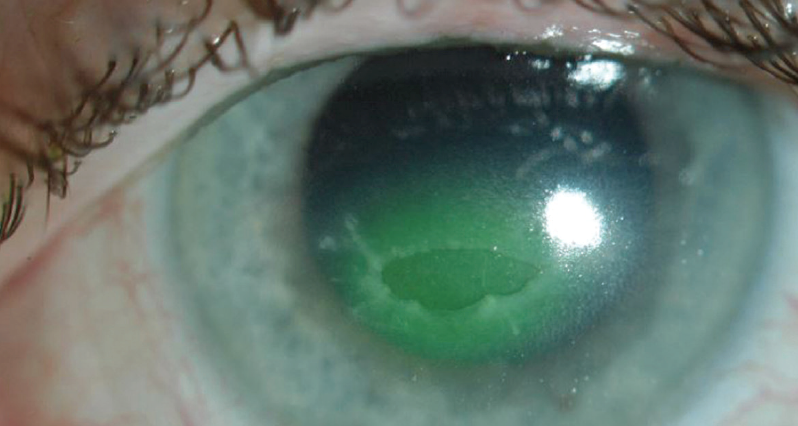
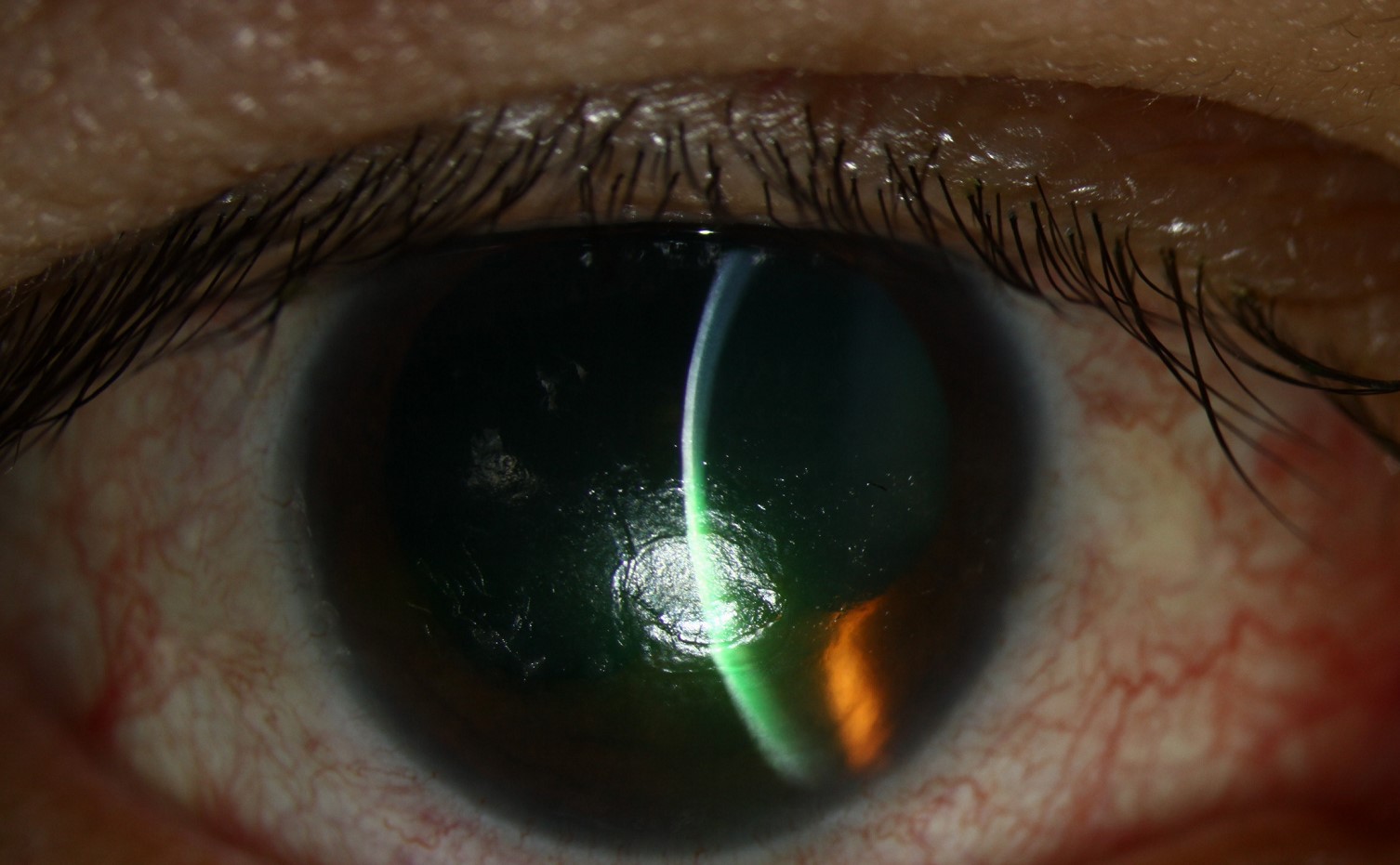
Without nerve signals and trophic factors, the epithelium fails to heal, defects persist, and ulcers can also melt or perforate (see neurotrophic keratitis staging and treatment).
Cenegermin Nerve Growth Factor Drops: What Cenegermin Is
Cenegermin is recombinant human nerve growth factor, produced in bacteria.
- It binds receptors on corneal and limbal cells, and promotes epithelial proliferation and nerve repair
- It is given as eye drops, in a concentration of 20 micrograms per milliliter
- The usual regimen is one drop six times a day for eight weeks
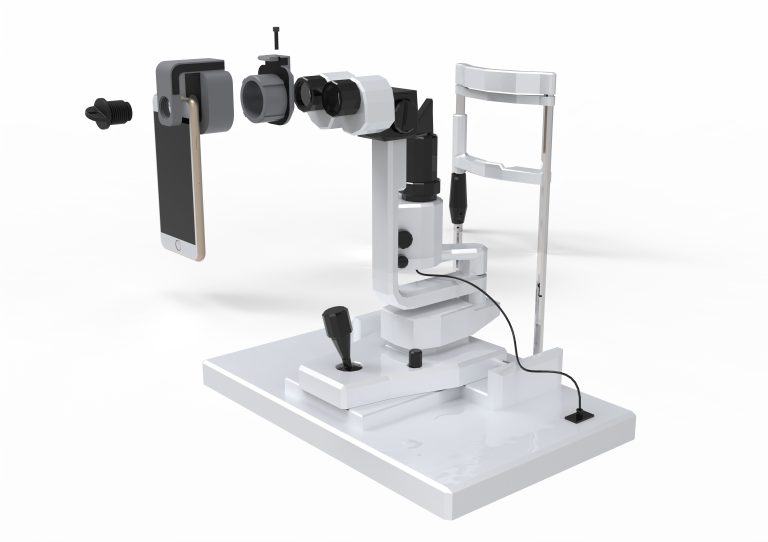
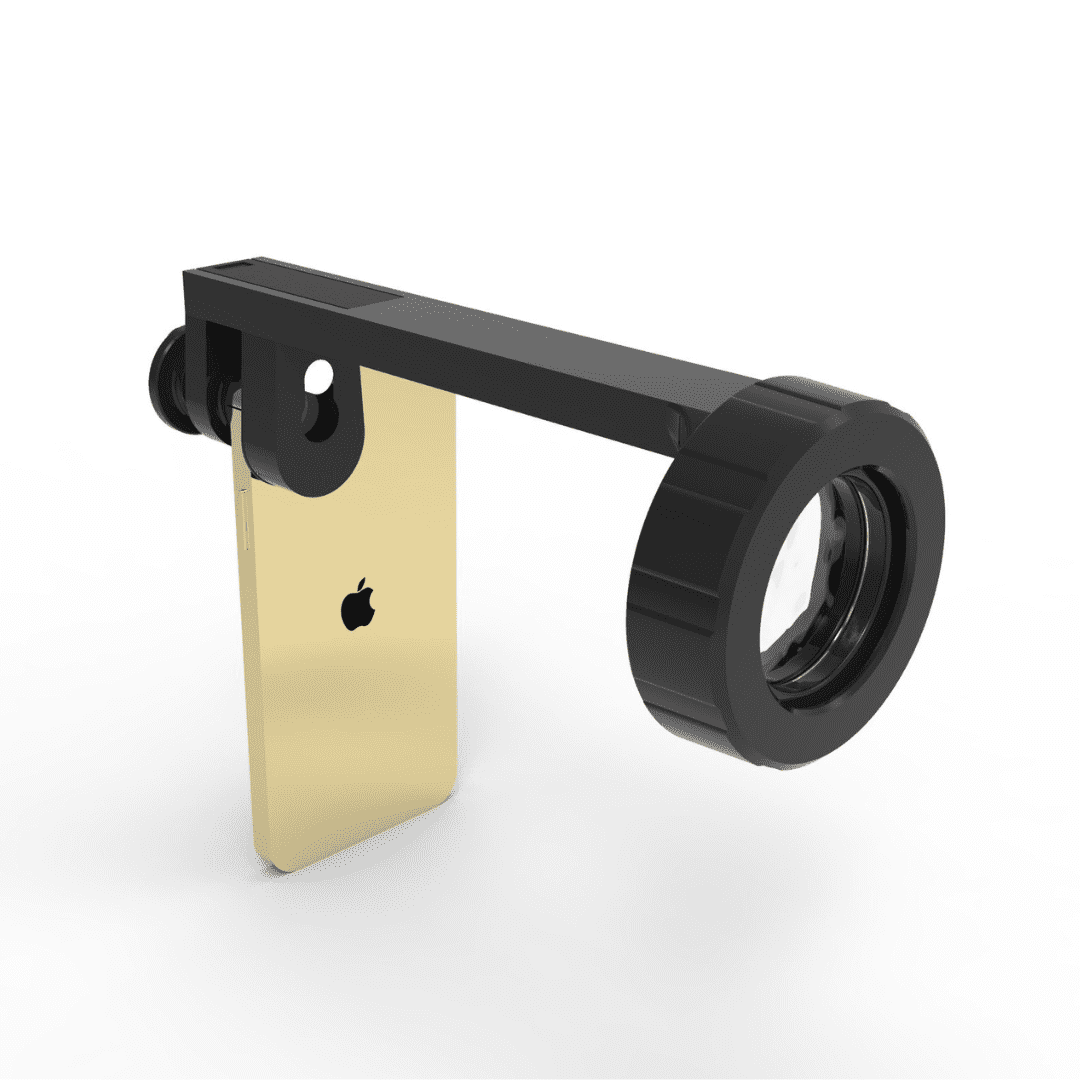
All-fit Slit-Lamp Adapter
Record and share exactly what you see at the slit lamp. One adapter fits any slit lamp or surgical microscope — and any smartphone.
From Choroida — the team behind this siteTrial Evidence
A phase 2 trial, REPARO, tested two concentrations against vehicle in patients with stage 2 or 3 disease, and found more healing in the NGF groups (see the references).
A later phase 3 trial confirmed that a significantly larger share of patients had complete healing of the persistent defect or ulcer after eight weeks, compared with vehicle, and that improvements in corneal sensitivity followed in some (see the references).
Healing was mostly maintained after treatment stopped.
Cenegermin Nerve Growth Factor Drops: Who Qualifies?
- Moderate neurotrophic keratitis with a persistent epithelial defect, or severe disease with a corneal ulcer
- Failure of simple measures, such as lubricants, preservative-free drops, and bandage lenses (see persistent epithelial defect)
- Absence of active infection and a documented lower corneal sensation
Clinicians treat mild disease with only punctate changes instead with lubricants and protective measures.
Side Effects
- Eye pain and discomfort, which is the most common and may also relate to nerve regrowth
- Redness, irritation, and tearing
- Rarely, inflammation or increased pressure
Pain can be a sign that nerves are recovering, so many patients tolerate it.
Cenegermin Nerve Growth Factor Drops: Practical Use
- Store the drug in a freezer at the pharmacy and in a refrigerator for the patient, as the label instructs
- Teach patients the schedule, and ask them not to use other drops within a short interval
- Review every one to two weeks, with fluorescein staining and photographs
- Continue protective measures during treatment
Cost and Access
The drug is expensive, and approval and reimbursement vary, so clinicians may need to document the stage and failure of other treatments.
In addition, where it is not available, alternatives include autologous serum, amniotic membrane, and surgery.
Cenegermin Nerve Growth Factor Drops: When It Fails
- Reconsider the diagnosis, and exclude infection and toxic drops
- Consider corneal neurotization, which restores sensation by nerve transfer (see corneal neurotization)
- Use amniotic membrane or tarsorrhaphy for refractory cases
Counselling
Explain that treatment lasts eight weeks, that discomfort may occur, and that protective measures remain important.
Tell patients to report pain, discharge, or reduced vision at once.
Cenegermin Nerve Growth Factor Drops: An Example Case
A 55-year-old man with herpes zoster ophthalmicus years ago has reduced corneal sensation and a 4-millimeter persistent epithelial defect despite lenses and lubricants.
Cenegermin is prescribed six times a day, with fluorescein photographs every two weeks, and the defect then closes in six weeks.
He continues lubricants and lid care, and returns at three months with a stable surface.
Counselling About Discomfort
Patients should know that mild pain or foreign body sensation can occur, although it often settles.
If pain is severe, review for infection or toxicity from other drops.
Combination With Other Care
- Stop preserved drops and other toxic medications
- Keep a bandage lens or other protection if needed (see bandage contact lens)
- Treat dry eye and exposure
- Plan long-term protection, since sensation may stay low
Looking Ahead
Longer-acting formulations, other growth factors, and treatments that restore corneal nerves are being studied, and may expand options for patients with severe disease.
Corneal neurotization also remains an option for eyes with no response to drops.
Monitoring Response
Photograph the defect with fluorescein at each visit, and measure its size, depth, and the presence of infiltrates.
Also, improvement is usually seen within two to four weeks, and complete healing by eight weeks.
If the defect does not shrink by four weeks, check adherence, look for infection, and consider other measures such as amniotic membrane.
Cost and Reimbursement
Treatment is costly, so many systems ask for evidence of stage, failure of other measures, and documented follow-up.
Photographs and clinic notes help to support requests, and a letter from the treating specialist can also speed approval.
For the latest studies, see the PubMed results for cenegermin nerve growth factor drops.
Document what you see
Two smartphone imaging tools built for everyday clinic use — one for the slit lamp, one for the fundus.
From Choroida — the team behind this siteReferences
- Bonini S, Lambiase A, Rama P, et al. Phase II randomized, double-masked, vehicle-controlled trial of recombinant human nerve growth factor for neurotrophic keratitis. Ophthalmology. 2018;125:1332-1343.
- Pflugfelder SC, Massaro-Giordano M, Perez VL, et al. Topical recombinant human nerve growth factor (cenegermin) for neurotrophic keratopathy: a multicenter randomized vehicle-controlled trial. Ophthalmology. 2020;127:14-26.
- Dua HS, Said DG, Messmer EM, et al. Neurotrophic keratopathy. Prog Retin Eye Res. 2018;66:107-131.
- American Academy of Ophthalmology. Basic and Clinical Science Course, Section 8: External Disease and Cornea. AAO; current edition.

Writes and reviews the clinical articles on Educate. Every post is checked against peer-reviewed sources before it goes live.