Herpes keratitis treatment depends on which corneal layer the herpes simplex virus involves.
Live virus drives epithelial disease, while immune inflammation drives most stromal and endothelial disease. Therefore, one patient may need antivirals alone, steroids with antiviral cover, or surface repair. The Herpetic Eye Disease Study (HEDS) still guides most of these choices.
Why Layer Guides Herpes Keratitis Treatment
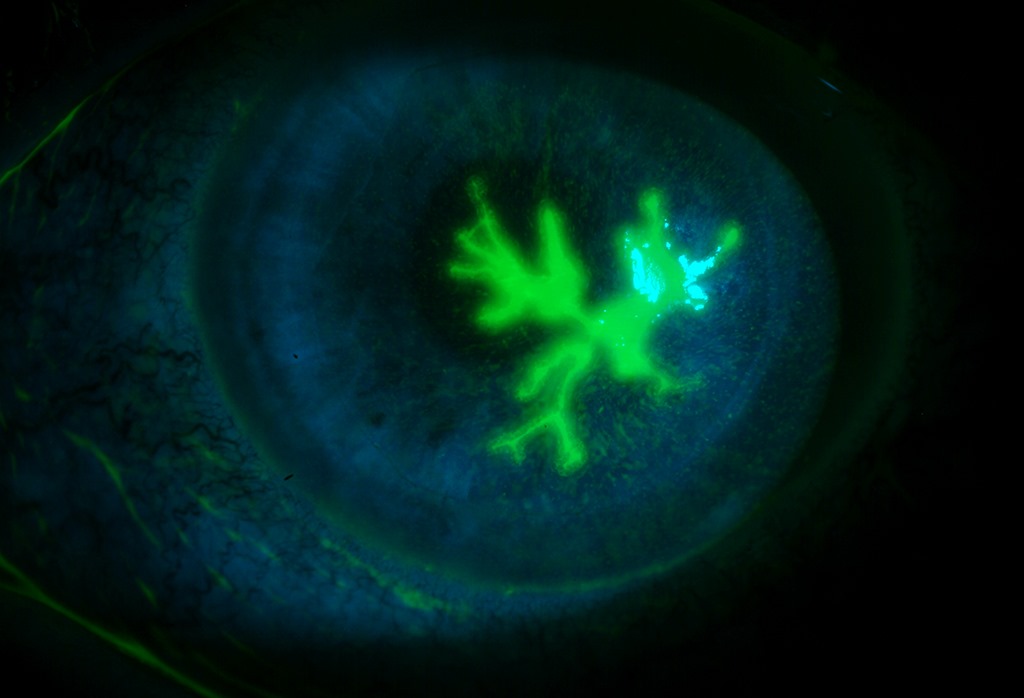
Each layer reflects a different balance between viral replication and host response, so for example, a dendrite contains replicating virus, and a topical steroid can enlarge it. In contrast, disciform edema is mostly immune, so antivirals alone rarely clear it.
Confirm the Diagnosis First
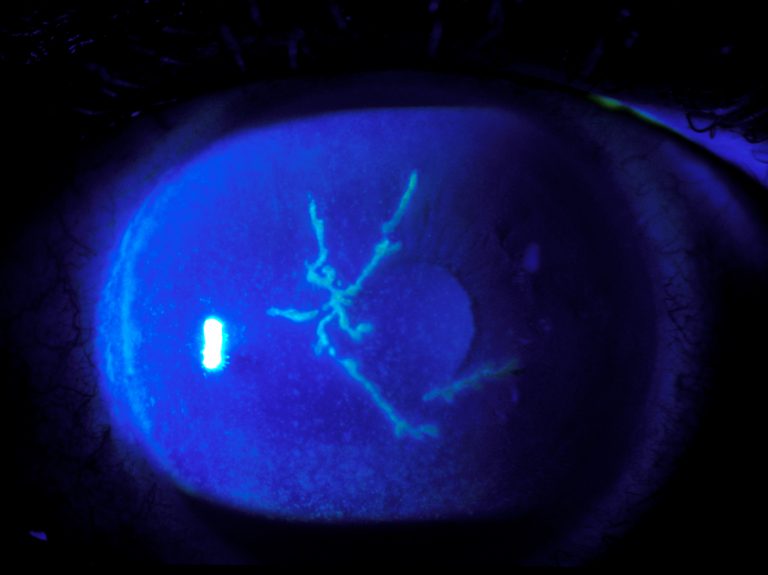
First, look for terminal bulbs, fluorescein staining of the ulcer bed and rose bengal staining of the edges. Next, test corneal sensation before you instill anesthetic.
Also, consider Acanthamoeba, healing abrasions and zoster pseudodendrites, because each can mimic herpes. Then, send a PCR swab when the picture looks atypical or the patient fails therapy.
All-fit Slit-Lamp Adapter
Record and share exactly what you see at the slit lamp. One adapter fits any slit lamp or surgical microscope — and any smartphone.
From Choroida — the team behind this siteEpithelial Herpes Keratitis Treatment
Dendritic and geographic ulcers need antiviral therapy and no topical steroid, and topical ganciclovir 0.15% gel and trifluridine 1% drops are common choices. However, prolonged trifluridine damages the epithelium, so stop it once the ulcer heals. Alternatively, oral acyclovir or valacyclovir at treatment doses spares the ocular surface, and gentle debridement of infected epithelium can also speed healing.
Oral Antivirals in Epithelial Disease
Oral agents suit patients with poor adherence, surface toxicity or young children. However, the HEDS epithelial keratitis trial found that adding oral acyclovir did not prevent later stromal keratitis or iritis, and you should adjust doses for renal impairment, especially in older patients.
Stromal Herpes Keratitis Treatment
Non-necrotizing stromal keratitis shows stromal haze, edema and sometimes ghost vessels under an intact epithelium. Viral antigen and the immune response drive this form, so topical steroid is the active treatment, and a prophylactic dose of oral antiviral reduces epithelial reactivation under steroid (see steroid balance in herpes simplex keratitis).
What HEDS Showed About Steroids
In the HEDS stromal keratitis trial, topical prednisolone reduced persistence or progression of inflammation compared with placebo, and recovery was also faster with steroid. However, delaying steroid did not worsen visual acuity at six months, and in a separate trial, adding oral acyclovir to steroid and trifluridine showed no clear added benefit.
Tapering Steroids Safely
Start with a moderate frequency and reduce slowly over weeks to months. Rapid withdrawal often triggers rebound inflammation, and you should check intraocular pressure and lens clarity at each visit.
Necrotizing Stromal Disease
Necrotizing keratitis combines viral invasion with intense inflammation, ulceration and possible thinning. Therefore, start treatment-dose oral antivirals first and add steroid cautiously, and rule out bacterial or fungal superinfection before you increase steroid. Severe thinning may need glue or tectonic grafting (see necrotizing stromal keratitis).
Endotheliitis in Herpes Keratitis Treatment
Disciform endotheliitis presents with a round zone of stromal edema and underlying keratic precipitates. The epithelium usually stays intact, and mild iritis may coexist. Topical steroid clears the edema, while oral antiviral protects against epithelial recurrence, but repeated episodes can exhaust the endothelium and leave chronic edema.
Iritis and Pressure Control
Herpetic iritis often raises intraocular pressure through trabeculitis, so combine steroid with aqueous suppressants and monitor pressure closely. The HEDS iridocyclitis trial suggested a benefit from oral acyclovir, but small enrollment limited firm conclusions.
Neurotrophic Disease in Herpes Keratitis Treatment
Persistent epithelial defects after herpes often reflect damaged corneal nerves after repeated attacks, and active virus is usually absent at this stage. First, stop toxic drops, including unnecessary topical antivirals, and then use preservative-free lubricants, bandage lenses, amniotic membrane or tarsorrhaphy as needed. Topical cenegermin is another option for moderate to severe disease (see neurotrophic keratitis staging).
Long-Term Suppression in Herpes Keratitis Treatment
The HEDS Acyclovir Prevention Trial gave oral acyclovir 400 mg twice daily for 12 months, and treatment lowered recurrences of ocular herpes compared with placebo. In addition, patients with previous stromal keratitis had fewer stromal recurrences, but the benefit appeared limited to the treatment period.
Surgery and Graft Protection
Keratoplasty can restore vision once disease stays quiet, but herpes can recur in the graft and trigger rejection. Therefore, most surgeons give oral antiviral prophylaxis after keratoplasty in these eyes.
Counseling the Patient on Herpes Keratitis Treatment
Explain that the virus stays latent in the trigeminal ganglion and current drugs cannot eradicate it, and warn that stopping steroids suddenly can trigger a flare. Ask patients to return early for redness, pain, blur or light sensitivity.
Pitfalls to Avoid
- Giving topical steroid to an active dendrite
- Continuing trifluridine after the ulcer heals
- Stopping antiviral cover while stromal steroids continue
- Treating a neurotrophic defect as active infection
- Forgetting renal dose adjustment for oral antivirals


Document what you see
Two smartphone imaging tools built for everyday clinic use — one for the slit lamp, one for the fundus.
From Choroida — the team behind this siteReferences
- Wilhelmus KR, Gee L, Hauck WW, et al. Herpetic Eye Disease Study: a controlled trial of topical corticosteroids for herpes simplex stromal keratitis. Ophthalmology. 1994;101:1883-1896.
- Barron BA, Gee L, Hauck WW, et al. Herpetic Eye Disease Study: a controlled trial of oral acyclovir for herpes simplex stromal keratitis. Ophthalmology. 1994;101:1871-1882.
- Herpetic Eye Disease Study Group. A controlled trial of oral acyclovir for the prevention of stromal keratitis or iritis in patients with herpes simplex virus epithelial keratitis. Arch Ophthalmol. 1997;115:703-712.
- Herpetic Eye Disease Study Group. Acyclovir for the prevention of recurrent herpes simplex virus eye disease. N Engl J Med. 1998;339:300-306.
- Herpetic Eye Disease Study Group. A controlled trial of oral acyclovir for iridocyclitis caused by herpes simplex virus. Arch Ophthalmol. 1996;114:1065-1072.

Writes and reviews the clinical articles on Educate. Every post is checked against peer-reviewed sources before it goes live.