Teleophthalmology is the use of images, data, and video to deliver eye care at a distance, and it has grown fast since the pandemic.
It works best for screening and triage, and for follow-up of stable disease, but it does not replace the full examination in many conditions (see AI diabetic retinopathy screening).
Models of Teleophthalmology
- Store-and-forward: images and history are captured, sent, and reviewed later by a specialist
- Synchronous: a live video visit, with a technician or patient at one end
- Remote monitoring: data from home devices, such as home tonometry, perimetry, or an app for the Amsler grid
- Remote reading centers: large screening programs, with graders and ophthalmologists
Teleophthalmology: Diabetic Retinopathy Screening
This is the best-established use.
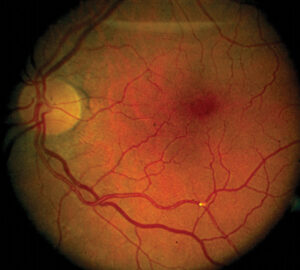
Nonmydriatic fundus photographs taken in primary care are also read by trained graders or software, and patients with referable disease are sent to an ophthalmologist (see the references).
Studies show that sensitivity and specificity are also high for referable retinopathy, with good cost-effectiveness compared with usual care.
Fundus Explorer Pro
Photograph the retinal findings described here with the phone already in your pocket — 22 D optics and built-in illumination in one handheld unit.
From Choroida — the team behind this siteRetinopathy of Prematurity
Wide-field cameras allow remote reading of infant retinal images, so programs in several countries can support nurseries without a local specialist.
Image quality, training, and rules for who is screened must also be set up carefully.
Teleophthalmology: Glaucoma and Other Chronic Disease
Remote review of disc photographs and OCT, with home-collected pressure data, can triage patients and reduce visits when the disease is stable.
Teleglaucoma programs have shown reasonable agreement with in-person examination for disc assessment, though pressure and angle evaluation are limited (see Humphrey visual field interpretation).
Emergency and Anterior Segment Triage
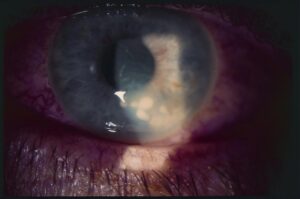
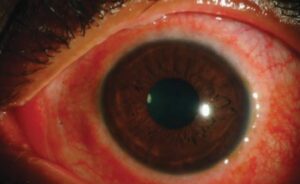
Slit lamp photos from a smartphone or an adapter can help to triage red eyes, corneal ulcers, and trauma in remote clinics (see smartphone slit lamp photography).
The ophthalmologist decides who needs to be seen the same day, and who can also be treated at a distance.
Teleophthalmology: Limits
- Image quality depends on the operator, equipment, and media clarity
- Intraocular pressure, gonioscopy, pupil testing, and dynamic examination are hard to do remotely
- Missed findings outside the imaging field
- Privacy, consent, data security, and licensing across regions
- Digital divide for older and low-income patients
Setting Up a Program
First, define the purpose and the patients, choose validated equipment, train staff, and set image quality standards.
Write clear rules for referral, such as who sees urgent cases, and for the timing of follow-up.
Also, check results against the standard examination in an audit, and track missed cases.
Teleophthalmology: Payment and Regulation
Rules differ between countries, and reimbursement for remote care is changing, so clinics should check local requirements before starting.
Counselling
Explain to patients what a remote visit can and cannot do, and when they must come in person.
Teleophthalmology: An Example Case
A rural primary care clinic takes nonmydriatic photographs of 400 patients with diabetes in a year.
A remote ophthalmologist reads them within three days, finds referable disease in 46 patients, and arranges clinic visits for them, including two with proliferative retinopathy who had no symptoms.
Without the program, the clinic estimates that most of these patients would not have had an eye examination that year.
Practical Steps in the Clinic
- Capture clear, centered images with consistent protocols
- Add a short history and the visual acuity to each referral
- Use a secure platform with a record of consent
- Set a standard time for reports and for urgent referral
- Audit a sample of cases against an in-person examination
Counselling
Tell patients what to expect, that images may miss some problems, and that an in-person visit is always available when there is doubt.
Remind them that new symptoms need an urgent visit and not a wait for the next remote review.
Key Points to Remember
- Strongest use: diabetic retinopathy and ROP screening
- Image quality and training decide success
- Pressure, angle, and pupil tests need in-person care
- Plan for privacy, regulation, and equity of access
Looking Ahead
Artificial intelligence reading, home OCT, and improved smartphone attachments will widen access, and evidence on outcomes and cost will help to guide funding.
Training and Quality
Technicians need a short, structured course in image capture, while graders should be tested against reference sets.
Quality checks, such as the share of ungradable images and the time to report, show whether the program is working.
Patient Experience
Most patients accept remote visits when staff explain them well, and they value the saved travel time.
Offer a phone number for questions, and give written results, so that patients feel supported and know the next step.


Document what you see
Two smartphone imaging tools built for everyday clinic use — one for the slit lamp, one for the fundus.
From Choroida — the team behind this siteReferences
- Rathi S, Tsui E, Mehta N, Zahid S, Schuman JS. The current state of teleophthalmology in the United States. Ophthalmology. 2017;124:1729-1734.
- Horton MB, Brady CJ, Cavallerano J, et al. Practice guidelines for ocular telehealth-diabetic retinopathy, third edition. Telemed J E Health. 2020;26:495-543.
- Saleem SM, Pasquale LR, Sidoti PA, Tsai JC. Virtual ophthalmology: telemedicine in a COVID-19 era. Am J Ophthalmol. 2020;216:237-242.
- American Academy of Ophthalmology. Basic and Clinical Science Course, Section 1: Update on General Medicine. AAO; current edition.

Writes and reviews the clinical articles on Educate. Every post is checked against peer-reviewed sources before it goes live.