Low-dose atropine for myopia control is the most widely used drug treatment to slow the growth of myopic eyes in children.
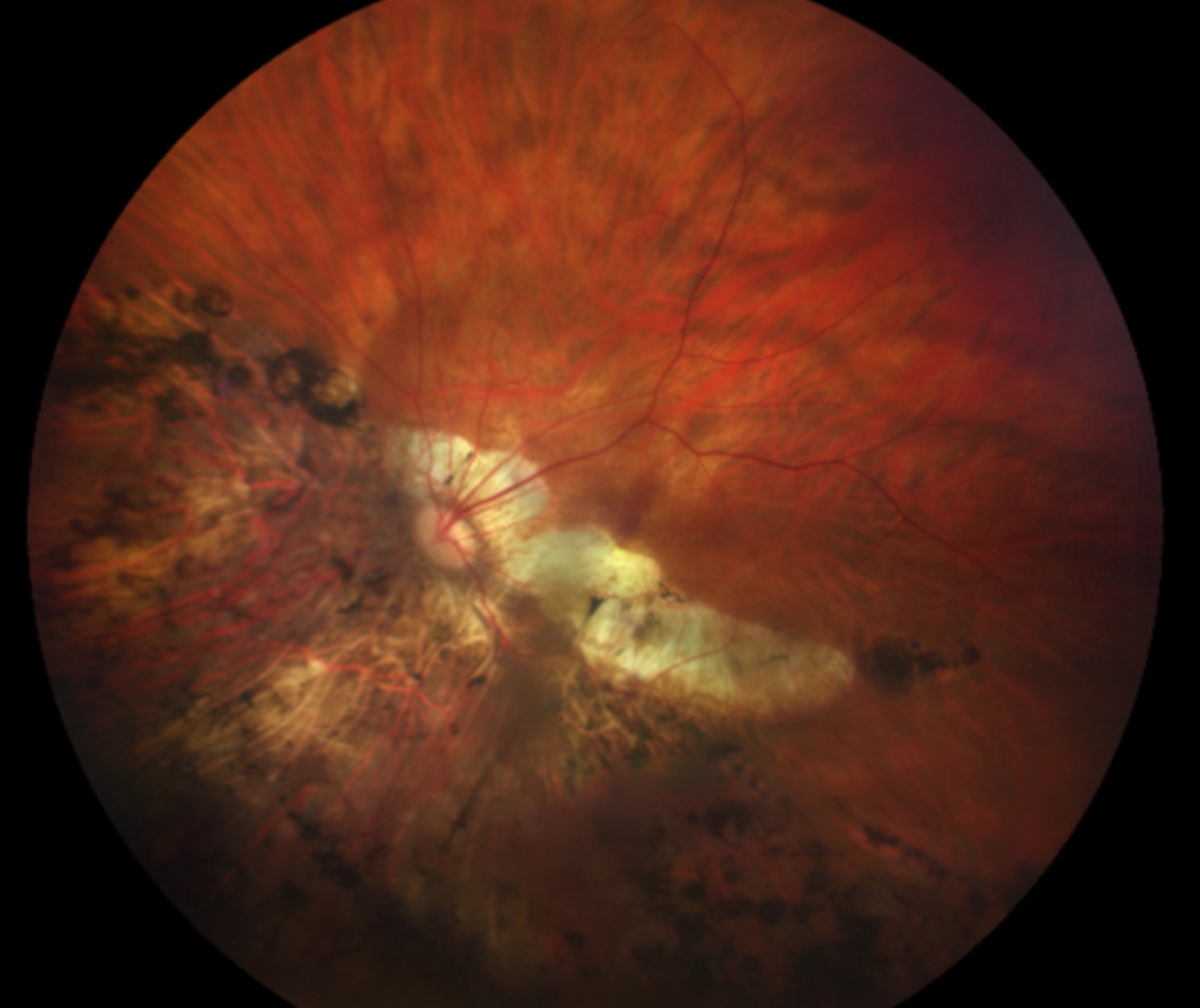
Myopia raises the lifetime risk of retinal detachment, glaucoma, and myopic maculopathy, so slowing the progression has real value (see retinal detachment in high myopia).
Also, large trials have shown that lower doses retain much of the benefit with fewer side effects.
Why Use Low-Dose Atropine for Myopia Control?
Myopia is common and rising, and high myopia carries the risk of blinding complications later in life (see pathologic myopia).
Glasses correct the blur but do not slow the lengthening of the eye, so treatments that target axial growth are needed.
Low-Dose Atropine for Myopia Control: The ATOM Trials
The first Atropine for the Treatment of Myopia study tested 1 percent atropine in children aged 6 to 12. It found a large reduction in progression, about 77 percent, compared with placebo (see the references).
But the high dose caused light sensitivity and blurred near vision, and myopia rebounded after stopping.
Also, ATOM2 compared 0.5, 0.1, and 0.01 percent concentrations, and found that the lowest dose gave good control with minimal side effects, and less rebound (see the references).
Fundus Explorer Pro
Photograph the retinal findings described here with the phone already in your pocket — 22 D optics and built-in illumination in one handheld unit.
From Choroida — the team behind this siteThe LAMP Studies
The Low-Concentration Atropine for Myopia Progression studies in Hong Kong tested 0.05, 0.025, and 0.01 percent.
They showed a dose-response effect, with 0.05 percent giving the greatest slowing of myopia and axial elongation, and the lower doses less (see the references).
In addition, the LAMP2 trial showed that 0.05 percent atropine reduced myopia onset in children with premyopia.
Low-Dose Atropine for Myopia Control: The CHAMP Trial
The Childhood Atropine for Myopia Progression trial in the United States and Europe tested 0.01 and 0.02 percent. It found modest, statistically significant slowing of progression over three years compared with placebo (see the references).
Side effects were mild.
Safety and Side Effects
- Light sensitivity and glare from a larger pupil, more at higher doses
- Reduced near focus, usually mild at low doses
- Allergic reactions to the drops or the preservative
- No evidence of retinal harm in the trials, though long-term studies continue
Rebound after stopping is more of a concern with higher doses.
Low-Dose Atropine for Myopia Control: Choosing a Dose
- Higher concentrations, such as 0.05 percent, give more control but more side effects
- Lower concentrations, such as 0.01 percent, are gentle but give a small effect
- Tailor the dose to the age, the speed of progression, and the child’s tolerance
Availability and approvals differ between countries.
Combination Therapy
Atropine can be combined with orthokeratology, special spectacles, or contact lenses, and studies suggest that combinations may give added benefit (see orthokeratology and myopia control lenses and spectacles).
Low-Dose Atropine for Myopia Control: Practical Follow-Up
- Measure axial length and cycloplegic refraction at baseline and every six months
- Check for symptoms of light sensitivity and near blur
- Stop treatment gradually when the myopia stabilizes, in the mid-teens in most cases
- Encourage time outdoors and limit close work
Counselling
Explain to parents that atropine slows, and does not stop, progression, that treatment lasts years, and that regular visits are needed.
An Example Case
A 9-year-old girl has progressed from minus 1.00 to minus 2.25 diopters in a year, with both parents myopic.
She starts 0.05 percent atropine at night, with a myopia control plan that adds two hours outdoors a day. Over the next two years her progression falls to about half a diopter a year (see orthokeratology as an alternative or add-on).
She reports mild light sensitivity in the first weeks, which settles.
Stopping Treatment
Stop gradually when progression has slowed and the child is in the mid-teens, with review after stopping to detect rebound.
Some centers lower the dose in steps over several months, which may also reduce rebound.
Counselling Parents
- Atropine slows progression, and does not reverse myopia
- Use glasses or lenses to correct vision during treatment
- Brown irises and light-colored irises may respond differently to the drops, and this is being studied
- Store the drops safely and out of children’s reach
Cost and Availability
Low-dose atropine is often compounded, with differences in quality and shelf life, and approved products are available in some countries, so clinicians should use trusted sources.
Key Messages for Colleagues
Set baseline measures, agree on a dose, and review progression every six months, so that the plan can be adapted.
Combine drops with outdoor time and, where suitable, optical treatments, and keep parents informed about the aim, which is to lower the chance of high myopia and its complications.
For the latest studies, see the PubMed results for low-dose atropine for myopia control.


Document what you see
Two smartphone imaging tools built for everyday clinic use — one for the slit lamp, one for the fundus.
From Choroida — the team behind this siteReferences
- Chua WH, Balakrishnan V, Chan YH, et al. Atropine for the treatment of childhood myopia. Ophthalmology. 2006;113:2285-2291.
- Chia A, Chua WH, Cheung YB, et al. Atropine for the treatment of childhood myopia: safety and efficacy of 0.5%, 0.1%, and 0.01% doses (Atropine for the Treatment of Myopia 2). Ophthalmology. 2012;119:347-354.
- Yam JC, Jiang Y, Tang SM, et al. Low-concentration atropine for myopia progression (LAMP) study: a randomized, double-blinded, placebo-controlled trial of 0.05%, 0.025%, and 0.01% atropine eye drops in myopia control. Ophthalmology. 2019;126:113-124.
- Zadnik K, Schulman E, Flitcroft I, et al. Efficacy and safety of 0.01% and 0.02% atropine for the treatment of pediatric myopia progression over 3 years: a randomized clinical trial. JAMA Ophthalmol. 2023;141:990-999.

Writes and reviews the clinical articles on Educate. Every post is checked against peer-reviewed sources before it goes live.