A conjunctival papilloma is a benign, human papillomavirus-associated squamous lesion of the conjunctiva that presents in two clinically distinct patterns depending on the patient’s age, and understanding this age-related distinction matters because it shapes both the expected natural history and how aggressively treatment should be pursued.
Two Clinical Patterns
Pediatric and Young Adult Papilloma
In children and young adults, conjunctival papillomas are typically multiple, pedunculated (on a stalk), often bilateral, and associated with HPV types 6 and 11, the same low-risk HPV types associated with genital and laryngeal papillomas, transmitted perinatally or through other routes of viral exposure.
These lesions have a notable tendency to recur after treatment and can occasionally spread to involve additional conjunctival sites, reflecting active, sometimes persistent viral replication within the conjunctival epithelium.
Adult Papilloma
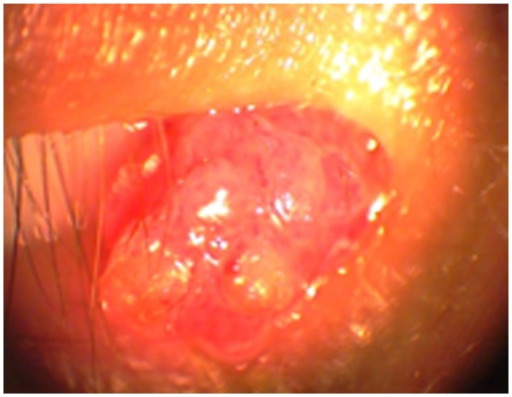
In older adults, conjunctival papillomas tend to be solitary, sessile (broad-based, not stalked), and while still generally associated with HPV, they carry a real, if uncommon, risk of malignant transformation to squamous cell carcinoma, distinguishing this presentation from the pediatric pattern in both its typical behavior and the degree of vigilance warranted.
Clinical Presentation
- A pink to reddish, vascular, often papillary or frond-like lesion on the conjunctiva, sometimes with visible fine, hairpin-loop-shaped blood vessels
- Location varies but the caruncle, fornix, and bulbar or palpebral conjunctiva are all recognized sites of involvement
- Can cause mild irritation, foreign body sensation, or cosmetic concern, though many lesions are relatively asymptomatic aside from their visible presence
- Larger lesions, particularly in children, can occasionally bleed with minor trauma given their vascularity
Fundus Explorer Pro
Photograph the retinal findings described here with the phone already in your pocket — 22 D optics and built-in illumination in one handheld unit.
From Choroida — the team behind this siteDiagnosis
Diagnosis is often suspected clinically based on the characteristic appearance, though biopsy is frequently performed both to confirm the diagnosis and to exclude other conjunctival lesions, including conjunctival intraepithelial neoplasia or squamous cell carcinoma, particularly for solitary lesions in an adult where malignant transformation is a real, if uncommon, consideration.
Management
Observation
Small, asymptomatic pediatric papillomas are sometimes observed initially, given both the tendency for these lesions to occasionally regress spontaneously and their known tendency to recur after treatment, which can make repeated interventions frustrating for both patient and family if pursued too readily for a minimally symptomatic lesion.
Surgical Excision
Excisional biopsy, generally combined with cryotherapy applied to the base and surrounding conjunctiva, is a mainstay of treatment for symptomatic or enlarging lesions, aiming to reduce the substantial recurrence risk associated with simple excision alone.
- A “no-touch” surgical technique, minimizing direct instrument contact with the lesion itself during excision, is used by some surgeons in an attempt to reduce the risk of seeding viral particles to adjacent, previously uninvolved conjunctiva
Adjunctive Medical Therapy
- Topical interferon alpha-2b, applied as eye drops after surgical debulking or, in some cases, as primary treatment for smaller lesions, has shown effectiveness in reducing recurrence and treating residual or recurrent disease, working through its antiviral and immunomodulatory properties against the underlying HPV infection
- Topical mitomycin C has also been used as an adjunctive treatment in some cases, though with attention to its more significant potential for ocular surface toxicity compared with interferon
Managing Recurrent Disease
Given the meaningful recurrence rate, particularly in the pediatric multiple-lesion pattern, a treatment plan that anticipates possible recurrence, with a lower threshold for adjunctive medical therapy after a second surgical intervention, is often more realistic and effective than repeated surgery alone.
Prognosis
Conjunctival papillomas are benign, and even with their tendency to recur, they do not typically threaten vision directly, though chronic or extensive recurrent disease can cause ongoing irritation and cosmetic concern requiring sustained management.
The adult solitary presentation warrants closer surveillance given its association, though uncommon, with malignant transformation, supporting biopsy confirmation and more vigilant follow-up in this age group compared with the typically more benign, if recurrence-prone, pediatric pattern.

Document what you see
Two smartphone imaging tools built for everyday clinic use — one for the slit lamp, one for the fundus.
From Choroida — the team behind this siteReferences
- Sjo NC, von Buchwald C, Cassonnet P, et al. Human papillomavirus in normal conjunctival tissue and in conjunctival papilloma: types and frequencies in a large series. Br J Ophthalmol. 2007;91:1014-1015.
- Sjo N, Heegaard S, Prause JU. Conjunctival papilloma: a histopathologically based retrospective study. Acta Ophthalmol Scand. 2000;78:663-666.
- Shields CL, Lally SE, Al Fayez YM, Yousef YA, Shields JA. Conjunctival papilloma: outcomes based on treatment approach in 213 cases. Eye (Lond). 2015;29:1425-1434.
- Sella R, Pratt DAJ, Sella G, et al. Topical interferon alpha-2b treatment for conjunctival papilloma. Cornea. 2018;37:471-476.
Test yourself
A few questions straight from this article.
-
Which HPV types are associated with conjunctival papilloma in children and young adults?
The pediatric and young adult pattern is associated with HPV types 6 and 11, the same low-risk types linked to genital and laryngeal papillomas. -
How does conjunctival papilloma typically appear in an older adult?
In older adults the lesion tends to be solitary and sessile, in contrast to the multiple, pedunculated and often bilateral lesions of the pediatric pattern. -
A solitary sessile conjunctival papilloma in an older adult may transform into which lesion?
The adult solitary presentation carries a real, if uncommon, risk of malignant transformation to squamous cell carcinoma, which is why biopsy and vigilant follow-up are advised in this age group. -
Which vascular feature is seen within a conjunctival papilloma?
Conjunctival papillomas are pink to reddish, vascular and frond-like, sometimes showing visible fine hairpin-loop-shaped vessels within the lesion. -
Why may a small asymptomatic pediatric conjunctival papilloma be observed first?
These lesions can occasionally regress on their own and are known to recur after treatment, so repeated intervention for a minimally symptomatic lesion becomes frustrating for patient and family. -
What is the mainstay surgical treatment for a symptomatic conjunctival papilloma?
Excisional biopsy combined with cryotherapy to the base and surrounding conjunctiva is the mainstay, since simple excision alone carries a substantial recurrence risk. -
What is the purpose of a no-touch technique when excising a conjunctival papilloma?
Minimising direct instrument contact with the lesion is used by some surgeons to lower the risk of seeding viral particles onto adjacent, previously uninvolved conjunctiva. -
How does topical interferon alpha-2b act against conjunctival papilloma?
Topical interferon alpha-2b works through antiviral and immunomodulatory properties directed against the underlying HPV infection, reducing recurrence and treating residual disease. -
What limits the use of topical mitomycin C compared with interferon in conjunctival papilloma?
Topical mitomycin C has been used as an adjunct, but carries a more significant potential for ocular surface toxicity than interferon. -
Which plan is most realistic for recurrent multiple pediatric conjunctival papillomas?
Given the meaningful recurrence rate in the pediatric multiple-lesion pattern, anticipating recurrence and reaching for adjunctive medical therapy after a second operation beats repeated surgery alone.

Writes and reviews the clinical articles on Educate. Every post is checked against peer-reviewed sources before it goes live.