Endophthalmitis prognosis depends mainly on three factors: the organism, the presenting vision and the delay to treatment.
The route of infection also shapes the outlook, because each route favors different organisms, so outcomes after cataract surgery, intravitreal injection, trauma and sepsis differ widely.
Why Endophthalmitis Prognosis Varies So Much
Endophthalmitis damages the retina through bacterial toxins and the host inflammatory response, and virulent organisms can injure photoreceptors within hours. As a result, two eyes with similar early signs may end with very different vision.
Presenting Visual Acuity
Presenting acuity is the strongest bedside predictor. In the Endophthalmitis Vitrectomy Study (EVS), eyes with light perception vision had worse final outcomes but also gained the most from immediate vitrectomy. However, eyes with hand motions or better did as well with tap and inject (see acute postoperative endophthalmitis).
Fundus Explorer Pro
Photograph the retinal findings described here with the phone already in your pocket — 22 D optics and built-in illumination in one handheld unit.
From Choroida — the team behind this siteThe Organism in Endophthalmitis Prognosis
Coagulase-negative staphylococci carry the most favorable outlook, while streptococci, enterococci, Staphylococcus aureus and gram-negative bacteria cause more severe damage. Bacillus cereus is among the most destructive organisms, especially after trauma, so early Gram stain and culture help set realistic expectations.
Exam Signs That Predict a Poor Outcome
Several presenting features predicted worse vision in EVS analyzes.
- Light perception vision only
- Relative afferent pupillary defect
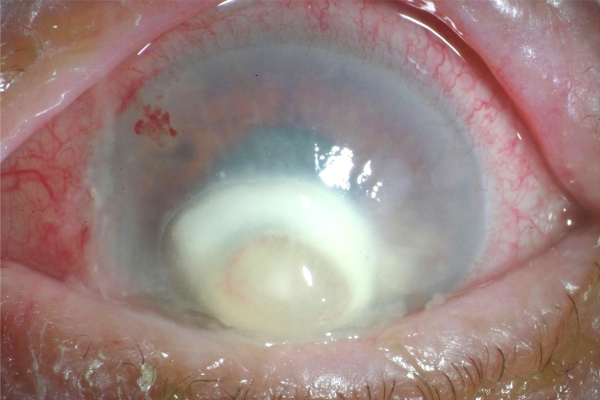
- Corneal ring infiltrate
- Rubeosis iridis
- Very high or very low intraocular pressure
- Older age and diabetes
Delay to Treatment
Bacteria keep multiplying and releasing toxins while the patient waits, so suspected endophthalmitis needs same-day assessment and intravitreal antibiotics. Delay matters most with virulent organisms, and unlike the organism, delay is a factor the clinician can control.
Postoperative Endophthalmitis Prognosis
Acute infection after cataract surgery usually involves skin flora, so many eyes recover useful vision. In the EVS, about half of eyes reached 20/40 or better, but a minority lost all useful vision despite treatment.
Post-Injection Endophthalmitis Prognosis
Infection after intravitreal injection shows a higher share of streptococcal cases than post-cataract infection, and oral flora may reach the injection site through droplets. Streptococcal cases also tend to have poorer visual outcomes, and many of these eyes already have macular disease that limits final acuity (see post-injection endophthalmitis).
Traumatic Endophthalmitis Prognosis
Open globe injury carries the worst outlook among exogenous types, and Bacillus species, retained intraocular foreign bodies and delayed primary repair raise the risk. The trauma itself causes retinal detachment, hemorrhage and lens damage, so final vision reflects both infection and injury.
Endogenous Endophthalmitis Prognosis
Endogenous infection spreads from the bloodstream, often in septic or immunocompromised patients. Diagnosis is often late, because clinicians may mistake the eye findings for uveitis.
Bacterial cases, particularly gram-negative organisms such as Klebsiella, often end with poor vision, while Candida infection tends to progress more slowly and may respond better (see endogenous endophthalmitis). Meanwhile, the systemic illness may threaten life.
Retinal Detachment and Late Complications
Necrotic retina tears easily, and detachment may follow infection or vitrectomy. Proliferative vitreoretinopathy often complicates repair, and macular edema, epiretinal membrane, glaucoma and hypotony can also limit recovery.
Does Early Vitrectomy Improve Endophthalmitis Prognosis?
The EVS supported immediate vitrectomy only for light perception vision after cataract surgery. However, modern small-gauge vitrectomy is safer than the techniques used in that trial.
Some surgeons now operate earlier in severe cases, although high-level evidence remains limited, and EVS findings also do not apply directly to traumatic or endogenous infection.
Monitoring Response in Endophthalmitis Prognosis
Clinical response over the first 48 hours guides the outlook, and less pain, a clearer anterior chamber and a returning red reflex suggest control. Worsening hypopyon or vitreous haze may need repeat injection or vitrectomy, and ultrasound helps when media opacity hides the retina.
Counseling Patients About Outcome
Patients usually ask whether they will see again. First, explain that the result depends on the organism and the early response, then offer a range of outcomes instead of a single figure. Finally, explain that vision may keep improving for months as inflammation settles.
Pitfalls to Avoid
- Do not promise full recovery before culture results return
- Never delay intravitreal antibiotics to wait for imaging or surgery
- Do not apply EVS rules automatically to traumatic or endogenous cases
- Examine the fellow eye in every endogenous case
- Arrange review within 24 to 48 hours after the first injection


Document what you see
Two smartphone imaging tools built for everyday clinic use — one for the slit lamp, one for the fundus.
From Choroida — the team behind this siteReferences
- Endophthalmitis Vitrectomy Study Group. Results of the Endophthalmitis Vitrectomy Study: a randomized trial of immediate vitrectomy and of intravenous antibiotics for the treatment of postoperative bacterial endophthalmitis. Arch Ophthalmol. 1995;113:1479-1496.
- Han DP, Wisniewski SR, Wilson LA, et al. Spectrum and susceptibilities of microbiologic isolates in the Endophthalmitis Vitrectomy Study. Am J Ophthalmol. 1996;122:1-17.
- McCannel CA. Meta-analysis of endophthalmitis after intravitreal injection of anti-vascular endothelial growth factor agents. Retina. 2011;31:654-661.
- Essex RW, Yi Q, Charles PG, Allen PJ. Post-traumatic endophthalmitis. Ophthalmology. 2004;111:2015-2022.
- Jackson TL, Eykyn SJ, Graham EM, Stanford MR. Endogenous bacterial endophthalmitis: a 17-year prospective series and review of 267 reported cases. Surv Ophthalmol. 2003;48:403-423.

Writes and reviews the clinical articles on Educate. Every post is checked against peer-reviewed sources before it goes live.