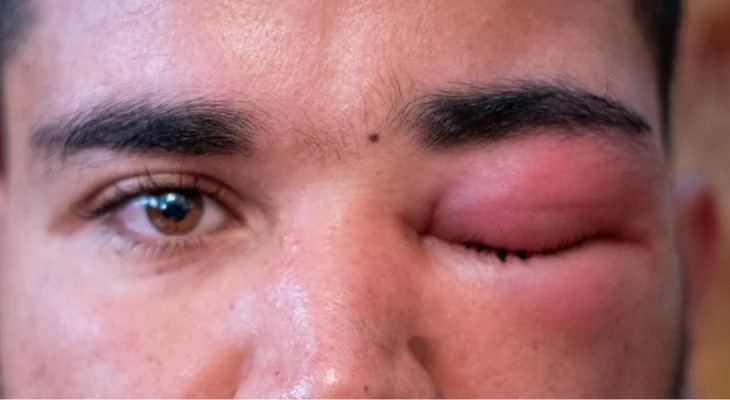
Eyelid swelling is one of the most common reasons patients present to an eye clinic.
The lid skin is thin and loose, so fluid collects there quickly.
As a result, a mild allergy and a dangerous infection can look alike at first.
A structured approach separates benign causes from those that need same-day care.
How to Approach Eyelid Swelling
First, ask whether one or both lids are involved.
Bilateral, painless swelling often points to allergy or a systemic cause.
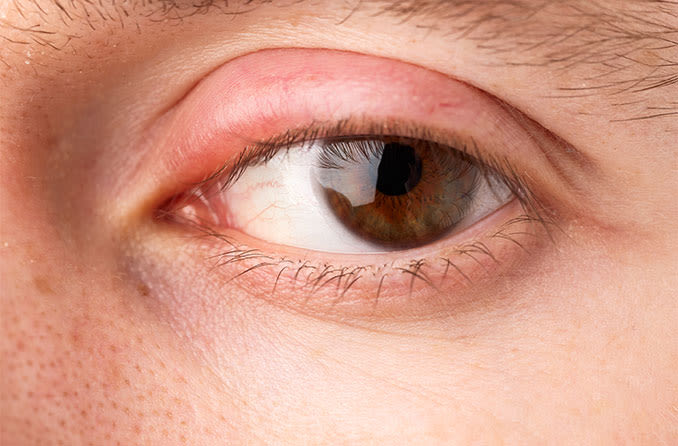
In contrast, unilateral tender swelling suggests local infection or inflammation.
Then examine the globe, because a quiet eye and a proptotic eye carry different risks.
History That Narrows the Differential
Next, take a short, focused history.
- Onset over hours or over weeks
- Pain, itch or no symptoms at all
- New drops, cosmetics, foods or medications
- Recent sinusitis, dental infection or insect bite
- Also fever, double vision or blurred vision
All-fit Slit-Lamp Adapter
Record and share exactly what you see at the slit lamp. One adapter fits any slit lamp or surgical microscope — and any smartphone.
From Choroida — the team behind this siteAllergic Eyelid Swelling
Allergic swelling is usually bilateral, soft, itchy and minimally tender.
Contact dermatitis from drops or cosmetics also adds dry, scaly, red skin.
Angiedema can swell both lids within minutes and may involve the lips or tongue.
Therefore, ask about breathing difficulty and ACE inhibitor use.
Hordeolum and Chalazion
A hordeolum is an acute, painful, usually staphylococcal infection of a lid gland.
A chalazion, by contrast, is a firm, painless lipogranuloma of a blocked meibomian gland.
At first, both can cause diffuse swelling before a discrete nodule appears.
Warm compresses help most cases (see lid hygiene technique).
However, biopsy a recurrent chalazion in the same spot, since sebaceous gland carcinoma can mimic it.
Preseptal Cellulitis
Preseptal cellulitis is infection anterior to the orbital septum.
The lid is red, warm, tender and often closed.
However, vision, pupils and eye movements remain normal, without proptosis.
Oral antibiotics with early review usually suffice in adults.
Young children, however, need a lower threshold for admission and imaging.
Orbital Cellulitis and Eyelid Swelling
When infection crosses the septum, the risk changes sharply.
Look for proptosis, painful or restricted motility, chemosis and reduced vision.
A relative afferent pupillary defect suggests optic nerve compromise.
Most cases follow ethmoid sinusitis, as the Chandler classification describes.
Therefore, arrange contrast CT, intravenous antibiotics and ENT review the same day (see orbital cellulitis).
Conjunctivitis With Lid Edema
Viral conjunctivitis often swells the lids, with follicles and a tender preauricular node.
Hyperacute purulent discharge with tense lid swelling suggests gonococcal infection.
That pattern needs same-day culture and systemic treatment, because the cornea can perforate.
Eyelid Swelling After Bites or Trauma
Insect bites cause sudden, itchy, unilateral swelling, often with a visible punctum.
After blunt trauma, lid edema and bruising are expected.
However, always check vision, pupils and motility, and exclude an open globe.
Also, crepitus after nose blowing suggests an orbital wall fracture.
Inflammatory Causes
Dacryoadenitis swells the lateral upper lid and produces an S-shaped lid contour.
Similarly, acute dacryocystitis causes tender swelling below the medial canthal tendon.
Idiopathic orbital inflammation presents with pain, swelling and sometimes restricted motility.
In addition, herpes zoster can swell the lid before the vesicular rash appears.
Thyroid Eye Disease and Eyelid Swelling
Thyroid eye disease causes periorbital fullness, lid retraction and lid lag.
Swelling is often worse in the morning.
Also, look for injection over the rectus insertions and caruncular edema.
Compressive optic neuropathy is uncommon, but it needs urgent treatment.
Systemic Causes of Eyelid Swelling
Bilateral, painless, pitting edema may reflect generalized fluid retention.
Nephrotic syndrome, heart failure, renal failure and hypothyroidism belong here.
For example, a child with puffy lids every morning may have proteinuria.
Therefore, request urinalysis and a medical review when the eye exam is normal.
Recurrent Eyelid Swelling
Episodic swelling that resolves completely raises a different list.
Hereditary or drug-induced angiedema is one possibility.
Blepharochalasis causes repeated attacks in young people and leaves thin, wrinkled skin (see blepharochalasis).
Meanwhile, persistent painless fullness may hide lymphoma, so image and biopsy when it fails to settle.
Red Flags in Eyelid Swelling
These findings need same-day assessment (see eye emergencies).
- Reduced vision or a relative afferent pupillary defect
- Proptosis or painful, restricted eye movements
- Fever with a tense, tender, closed lid
- Hyperacute purulent discharge
- Tongue or throat swelling with breathing difficulty
- Rapid progression despite oral antibiotics
Counseling the Patient
Explain the likely cause in plain terms.
Then give clear return advice for pain, fever, double vision or blurred vision.
Patients with allergy benefit from trigger avoidance and cool compresses.
Finally, warn parents that a child’s lid infection can worsen within hours.
Pitfalls to Avoid
- Do not label unilateral tender swelling as allergy
- Never skip motility and pupil testing in a swollen lid
- Do not repeat oral antibiotics when the orbit may be involved
- Avoid treating a recurrent chalazion indefinitely without biopsy


Document what you see
Two smartphone imaging tools built for everyday clinic use — one for the slit lamp, one for the fundus.
From Choroida — the team behind this siteReferences
- Carlisle RT, Digiovanni J. Differential diagnosis of the swollen red eyelid. Am Fam Physician. 2015;92:106-112.
- Chandler JR, Langenbrunner DJ, Stevens ER. The pathogenesis of orbital complications in acute sinusitis. Laryngoscope. 1970;80:1414-1428.
- Bartalena L, Kahaly GJ, Baldeschi L, et al. The 2021 European Group on Graves’ orbitopathy (EUGOGO) clinical practice guidelines for the medical management of Graves’ orbitopathy. Eur J Endocrinol. 2021;185:G43-G67.
- American Academy of Ophthalmology. Basic and Clinical Science Course, Section 7: Oculofacial Plastic and Orbital Surgery. San Francisco: AAO; 2023.
- Salmon JF. Kanski’s Clinical Ophthalmology: A Systematic Approach. 9th ed. Elsevier; 2020.
Test yourself
A few questions straight from this article.
-
In a patient with eyelid swelling, what does unilateral tender swelling usually suggest?
Bilateral painless lid swelling often points to allergy or a systemic cause, whereas unilateral tender swelling suggests local infection or inflammation and should not be labelled allergy. -
Which examination findings remain normal in preseptal cellulitis causing eyelid swelling?
Preseptal cellulitis is infection anterior to the orbital septum: the lid is red, warm and tender, but vision, pupils and eye movements are normal and there is no proptosis. -
A swollen eyelid comes with proptosis, painful restricted motility and chemosis. What is the appropriate same-day plan?
These signs mean infection has crossed the septum into the orbit, so contrast CT, intravenous antibiotics and ENT review are arranged the same day. -
In a patient with eyelid swelling and suspected orbital cellulitis, what does a relative afferent pupillary defect suggest?
A relative afferent pupillary defect suggests optic nerve compromise and is a red flag needing same-day assessment. -
Which description fits a chalazion as a cause of eyelid swelling?
A chalazion is a firm, painless lipogranuloma of a blocked meibomian gland, whereas a hordeolum is an acute, painful, usually staphylococcal gland infection. -
Why should a chalazion that keeps recurring in the same spot be biopsied?
Sebaceous gland carcinoma can mimic a chalazion, so a recurrent lesion in the same spot is biopsied rather than treated indefinitely. -
Hyperacute purulent discharge with tense eyelid swelling suggests which infection needing same-day culture and systemic treatment?
Hyperacute purulent discharge with tense lid swelling suggests gonococcal infection, which needs same-day culture and systemic treatment because the cornea can perforate. -
Which eyelid swelling pattern is typical of dacryoadenitis?
Dacryoadenitis swells the lateral upper lid and gives an S-shaped lid contour, whereas acute dacryocystitis causes tender swelling below the medial canthal tendon. -
A child has painless puffy eyelids every morning and a normal eye examination. What should be requested?
Bilateral painless pitting lid edema may reflect generalized fluid retention such as nephrotic syndrome, so a child with morning puffiness may have proteinuria and needs urinalysis and medical review. -
Which condition causes repeated attacks of eyelid swelling in young people and leaves thin, wrinkled lid skin?
Blepharochalasis causes episodic swelling in young people that resolves between attacks and leaves thin, wrinkled skin; persistent painless fullness instead raises concern for lymphoma.

Writes and reviews the clinical articles on Educate. Every post is checked against peer-reviewed sources before it goes live.