The Herpetic Eye Disease Study is a set of randomized trials that still shapes how we treat herpes simplex virus eye disease.
Done in the 1990s by the National Eye Institute, it answered practical questions about steroids, oral antivirals, and the prevention of recurrence.
Almost every guideline on the topic also quotes its numbers.
Why the Herpetic Eye Disease Study Was Needed
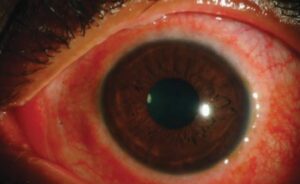
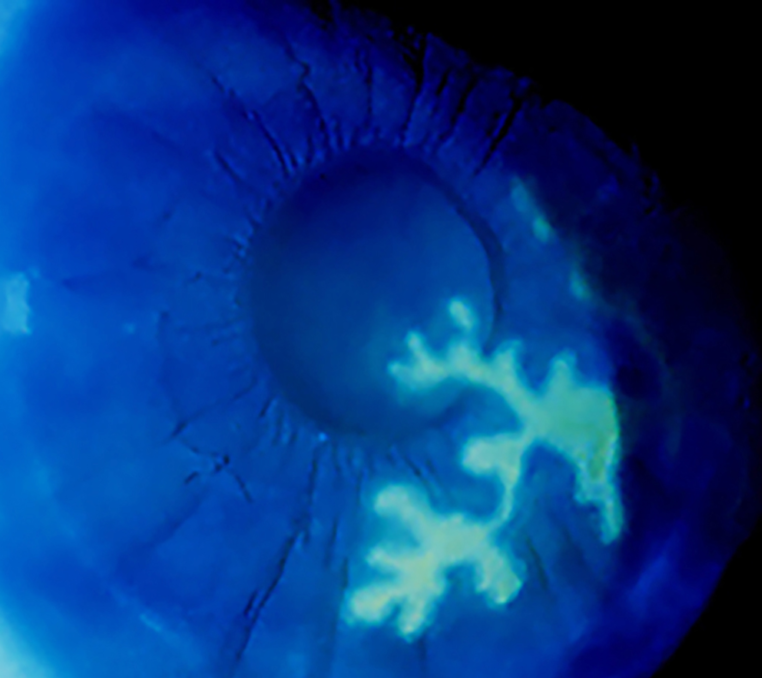
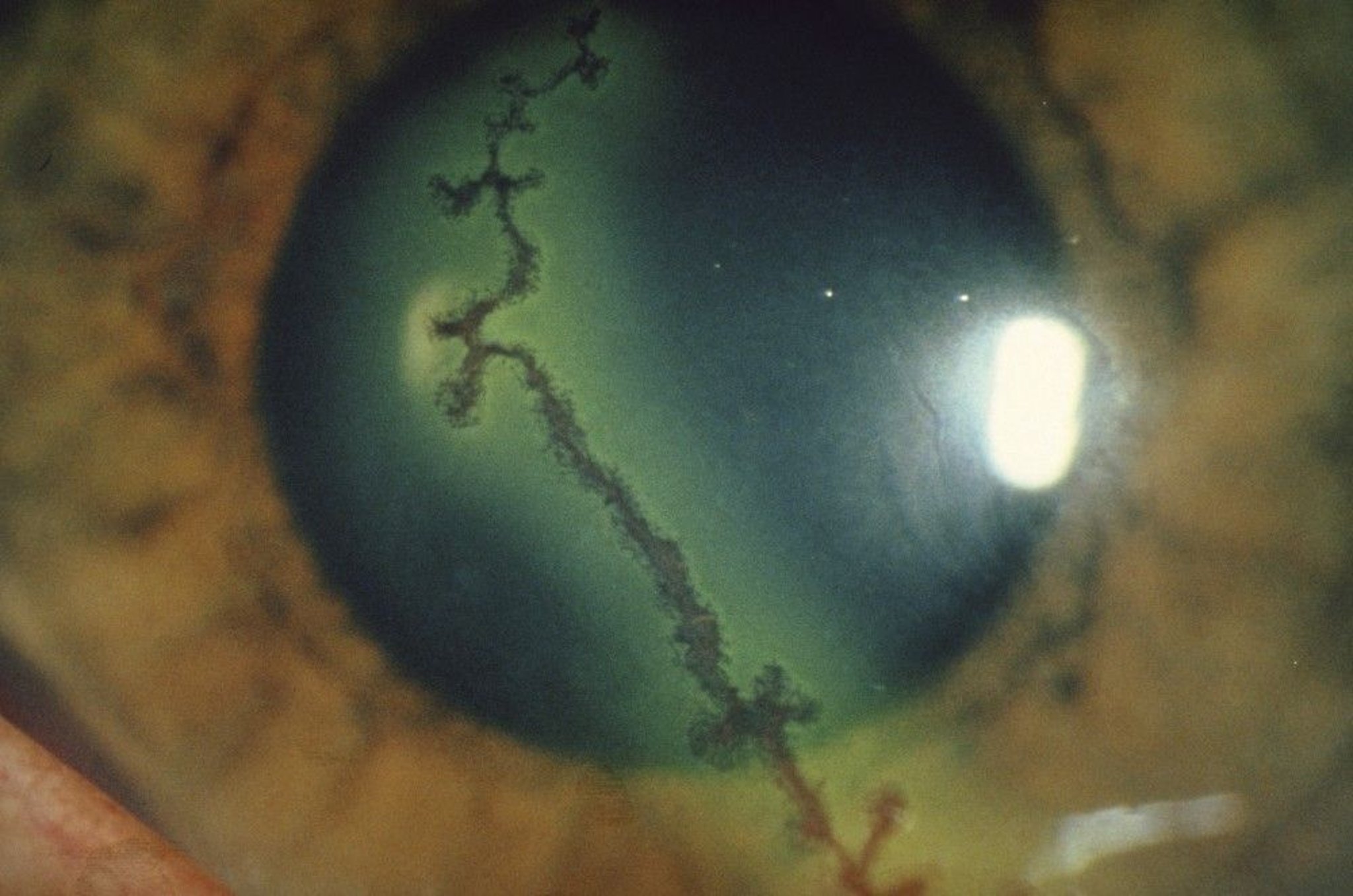
Herpes simplex keratitis is a leading infectious cause of corneal blindness in developed countries, and recurrences damage the cornea with each episode (see herpes simplex keratitis).
Before these trials, doctors used steroids in stromal disease on the basis of experience, used oral acyclovir without proof, and never tested long-term prophylaxis.
Investigators studied several questions in separate parallel trials.
Herpetic Eye Disease Study: The Trials and Their Results
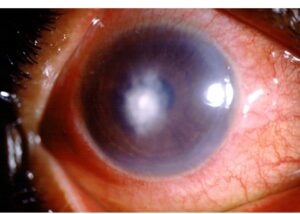
- Stromal keratitis with epithelial ulceration absent, steroid trial: topical prednisolone phosphate with a topical antiviral, tapered over ten weeks, reduced persistence and progression of stromal inflammation and shortened the time to resolution compared with placebo (see the references)
- Stromal keratitis, oral acyclovir trial: adding oral acyclovir to steroid and antiviral drops did not improve the outcome
- Iridocyclitis trial: the number of patients enrolled was small. The study suggested that oral acyclovir may help in patients with iridocyclitis whom doctors treated with steroids, though the trial was underpowered
- Epithelial keratitis trial: oral acyclovir did not prevent later stromal keratitis or iritis, after treatment with topical antivirals
- Acyclovir prevention trial: oral acyclovir 400 mg twice daily for one year cut the rate of recurrent ocular herpes by almost half, from about 32 percent to 19 percent (see the references)
The benefit in the prevention trial was greatest in patients with a history of stromal keratitis, in whom stromal recurrences fell by about half.
All-fit Slit-Lamp Adapter
Record and share exactly what you see at the slit lamp. One adapter fits any slit lamp or surgical microscope — and any smartphone.
From Choroida — the team behind this siteWhat Happened After Prophylaxis Stopped?
When investigators stopped the drug at the end of the year, recurrences rose in the treated group. This shows that the drug suppresses and does not cure the infection.
This finding supports continuing prophylaxis for years in patients with frequent recurrences or stromal disease.
Many clinicians follow this approach with a regular review of kidney function.
Herpetic Eye Disease Study: Predictors of Recurrence
The study cohort also showed that recurrence is more likely when the patient has a history of stromal keratitis, frequent previous episodes, or a recent episode of epithelial disease.
Stress, trauma, fever, sunlight, and certain procedures trigger recurrences, though they did not predict them consistently in the trial.
How to Use the Findings in Practice
- Treat epithelial keratitis with a topical antiviral or oral antiviral, and avoid steroids
- Treat stromal keratitis with topical steroids under antiviral cover, with a slow taper
- Consider long-term oral antiviral prophylaxis after stromal disease or multiple recurrences
- Counsel patients about triggers, and instruct them to report symptoms at once
- Reevaluate every few months, and check the renal function if prophylaxis is prolonged
Follow current labels for doses, and doctors often use valacyclovir in place of acyclovir for convenience.
Herpetic Eye Disease Study: Limits of the Data
The trials used older drugs and enrolled mostly adults, with a limited number of patients in some arms.
The study did not examine newer antivirals and topical ganciclovir.
Also, the practice of using longer courses is based on observational data.
Even so, the trials remain the best randomized evidence available.
A Typical Application of the Results
A man in his forties with a history of two episodes of stromal keratitis presents with a third, with a disc-shaped infiltrate and no epithelial defect.
Treatment follows the steroid trial, with prednisolone drops, a topical or oral antiviral, and a slow taper over weeks.
When the eye is quiet, the doctor starts oral prophylaxis at the dose used in the prevention trial. The plan includes a review of the kidney function and a reassessment of the need after a year.
Newer Evidence
Later studies and reviews have added data on valacyclovir, which has a higher bioavailability and is commonly used. They have also added data on topical ganciclovir gel as an alternative to older drops.
Studies of long-term prophylaxis in patients with recurrent disease continue to support a lower rate of recurrence. National guidelines generally agree with the findings of the original trials.
Counselling Patients
- Explain that the virus stays in the nerve ganglion for life, and that treatment reduces attacks but does not remove it
- Warn about steroid drops used without supervision, since they can worsen epithelial disease
- Describe the early signs of recurrence, such as redness, light sensitivity, and blurred vision, and the need to seek care without delay


Document what you see
Two smartphone imaging tools built for everyday clinic use — one for the slit lamp, one for the fundus.
From Choroida — the team behind this siteReferences
- Herpetic Eye Disease Study Group. Acyclovir for the prevention of recurrent herpes simplex virus eye disease. N Engl J Med. 1998;339:300-306.
- Wilhelmus KR, Gee L, Hauck WW, et al. Herpetic Eye Disease Study: a controlled trial of topical corticosteroids for herpes simplex stromal keratitis. Ophthalmology. 1994;101:1883-1895.
- Herpetic Eye Disease Study Group. Oral acyclovir for herpes simplex virus eye disease: effect on prevention of epithelial keratitis and stromal keratitis. Arch Ophthalmol. 2000;118:1030-1036.
- American Academy of Ophthalmology. Basic and Clinical Science Course, Section 8: External Disease and Cornea. AAO; current edition.

Writes and reviews the clinical articles on Educate. Every post is checked against peer-reviewed sources before it goes live.