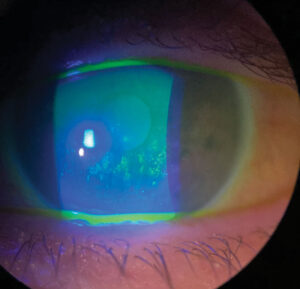
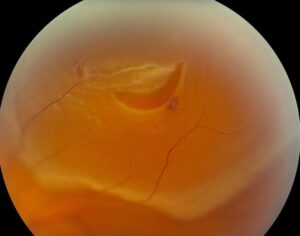
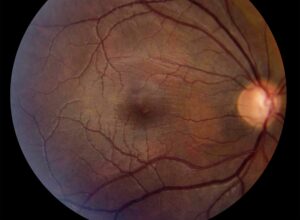
VKH treatment aims to suppress choroidal inflammation quickly and keep it suppressed for many months.
Vogt-Koyanagi-Harada disease is a bilateral granulomatous panuveitis directed against melanocytes. Earlier posts cover diagnosis and imaging, so this guide follows the management sequence step by step.
Why Timing Drives VKH Treatment
The choroid is the primary target in VKH, so any delay allows stromal inflammation to destroy melanocytes and damage the retinal pigment epithelium. Patients treated late more often progress to chronic recurrent disease. As a result, therapy usually begins within days of a secure diagnosis.
Before Starting Steroids
First, exclude infectious mimics, because high-dose steroids worsen them. Most uveitis clinics order syphilis serology and tuberculosis testing routinely, and also ask about penetrating trauma or eye surgery, which points toward sympathetic ophthalmia. Then record baseline intraocular pressure, blood glucose, blood pressure and weight.
All-fit Slit-Lamp Adapter
Record and share exactly what you see at the slit lamp. One adapter fits any slit lamp or surgical microscope — and any smartphone.
From Choroida — the team behind this siteInitial High-Dose Corticosteroids
Most clinicians start oral prednisone at about 1 to 1.5 mg/kg per day. Some give intravenous methylprednisolone for three days first, especially with large serous detachments. However, a multicenter comparison found no clear difference in visual outcome between intravenous and oral routes, so the choice depends on severity, systemic risk and local practice.
The Steroid Taper in VKH Treatment
The taper is where many cases fail. A rapid taper invites recurrence, often as granulomatous anterior uveitis. Lai and colleagues found fewer recurrences when initial oral steroids lasted at least six months.
Therefore, most experts plan a slow taper over six months or longer (compare the shorter anterior uveitis steroid taper), and they reduce the dose only while the eye stays quiet at each step.
Local Steroids as Adjuncts
Topical prednisolone acetate and a cycloplegic control anterior chamber inflammation. Periocular or intravitreal steroid helps selected eyes, for example during a localized flare. However, local therapy cannot replace systemic treatment, because VKH is a systemic disease.
Early Immunomodulatory Therapy
Many uveitis specialists now add immunomodulatory therapy (IMT) early, sometimes at diagnosis. Paredes and colleagues reported good visual outcomes with first-line IMT in a small series, and later retrospective cohorts suggest early IMT may reduce recurrences and chronic depigmentation. However, randomized evidence is limited, so the decision stays individualized.
Choosing Agents in VKH Treatment
Common steroid-sparing options include:
- Antimetabolites: methotrexate, azathioprine or mycophenolate mofetil
- Calcineurin inhibitors: cyclosporine, often combined with an antimetabolite
- Anti-TNF biologics: adalimumab or infliximab for refractory disease
- Combination therapy when a single agent fails
Antimetabolites take several weeks to act, so start them while steroid cover is still high.
Biologics in Refractory Disease
In the VISUAL I trial, adalimumab reduced treatment failure in active noninfectious uveitis, and VKH patients were among those enrolled. Before starting adalimumab or infliximab, screen for latent tuberculosis and hepatitis B.
Preventing Sunset Glow Fundus
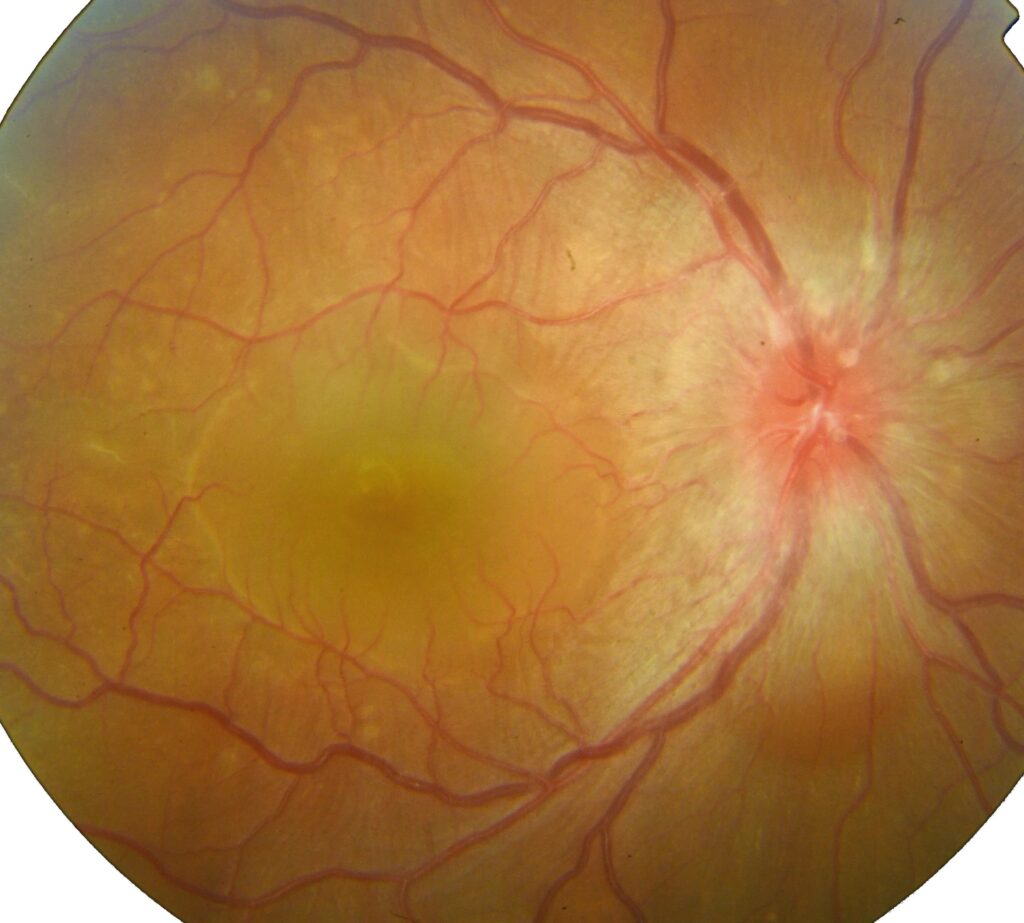
Sunset glow fundus reflects loss of choroidal melanocytes after prolonged inflammation, and it appears months after onset, usually when inflammation was incompletely controlled (see sunset glow fundus). Several cohorts associate early, adequate therapy with a lower rate of this change. However, once depigmentation develops, no treatment reverses it.
Follow-up Markers After VKH Treatment
A quiet anterior chamber does not prove a quiet choroid. Indocyanine green angiography can reveal hypofluorescent dark dots that signal ongoing stromal choroiditis. Enhanced depth OCT also tracks choroidal thickness, which rises with activity and falls with control (see modern VKH imaging), and laser flare photometry helps where available.
Steroid Side Effects During VKH Treatment
High-dose steroids raise intraocular pressure, accelerate cataract and disturb glucose control, so check pressure at every visit. Also arrange bone protection, gastric protection and blood pressure review with the patient’s physician.
Managing Late Complications
Cataract surgery works best after at least three months of complete quiet. Choroidal neovascularization responds to anti-VEGF injection, while subretinal fibrosis carries a poor prognosis.
Counseling in VKH Treatment
Explain that therapy lasts many months, often more than a year. Patients should never stop prednisone abruptly, because adrenal suppression and rebound inflammation follow. Also warn that hearing changes, vitiligo and poliosis may appear despite good ocular control.
Duration and Stopping VKH Treatment
No fixed end point exists, but many clinicians continue IMT through one to two years of sustained remission before tapering. Then they withdraw drugs one at a time while imaging confirms a quiet choroid.
Pitfalls to Avoid
- Do not stop the taper early once the detachments resolve
- Never start IMT before excluding tuberculosis and hepatitis B
- Do not judge activity by anterior chamber cells alone
- Avoid cataract surgery in an inflamed eye
- Do not miss a steroid-induced pressure rise


Document what you see
Two smartphone imaging tools built for everyday clinic use — one for the slit lamp, one for the fundus.
From Choroida — the team behind this siteReferences
- Read RW, Holland GN, Rao NA, et al. Revised diagnostic criteria for Vogt-Koyanagi-Harada disease: report of an international committee on nomenclature. Am J Ophthalmol. 2001;131:647-652.
- Read RW, Yu F, Accorinti M, et al. Evaluation of the effect on outcomes of the route of administration of corticosteroids in acute Vogt-Koyanagi-Harada disease. Am J Ophthalmol. 2006;142:119-124.
- Lai TY, Chan RP, Chan CK, Lam DS. Effects of the duration of initial oral corticosteroid treatment on the recurrence of inflammation in Vogt-Koyanagi-Harada disease. Eye (Lond). 2009;23:543-548.
- Paredes I, Ahmed M, Foster CS. Immunomodulatory therapy for Vogt-Koyanagi-Harada patients as first-line therapy. Ocul Immunol Inflamm. 2006;14:87-90.
- Jaffe GJ, Dick AD, Brezin AP, et al. Adalimumab in patients with active noninfectious uveitis. N Engl J Med. 2016;375:932-943.

Writes and reviews the clinical articles on Educate. Every post is checked against peer-reviewed sources before it goes live.