The apraclonidine test helps confirm oculosympathetic paresis in a patient with suspected Horner syndrome.
It relies on denervation supersensitivity of the iris dilator muscle, so a positive result can reverse the anisocoria within an hour. However, a negative result does not exclude a recent lesion.
What the Apraclonidine Test Detects
Apraclonidine is a strong alpha-2 agonist and a weak alpha-1 agonist, and clinicians use the 0.5% or 1% glaucoma formulation for this test. Therefore, the drop has little dilating effect on a normally innervated iris, while a denervated dilator responds strongly to the same weak stimulus.
Why the Horner Pupil Dilates
Sympathetic denervation leads to upregulation of alpha-1 receptors on the dilator muscle. As a result, the weak alpha-1 effect now produces visible mydriasis.
Meanwhile, the normal pupil may constrict slightly because alpha-2 stimulation reduces norepinephrine release, and these opposing responses explain why the pupil sizes can switch sides.
All-fit Slit-Lamp Adapter
Record and share exactly what you see at the slit lamp. One adapter fits any slit lamp or surgical microscope — and any smartphone.
From Choroida — the team behind this siteWho Needs the Apraclonidine Test
Consider testing when mild ptosis accompanies a smaller pupil on the same side, and note that dilation lag and greater anisocoria in darkness also support the diagnosis. However, physiologic anisocoria can look similar, especially when the ptosis is subtle, so a structured anisocoria assessment should therefore come first.
How to Perform the Apraclonidine Test
- First, record both pupils in dim and bright light, and measure the palpebral fissures.
- Avoid tonometry beforehand, because corneal contact can alter drug penetration.
- Confirm that the patient takes no monoamine oxidase inhibitor.
- Instill one drop in each eye, so the fellow eye serves as a control.
- Wait 30 to 45 minutes, then repeat the measurements under the same lighting.
Reading a Positive Apraclonidine Test
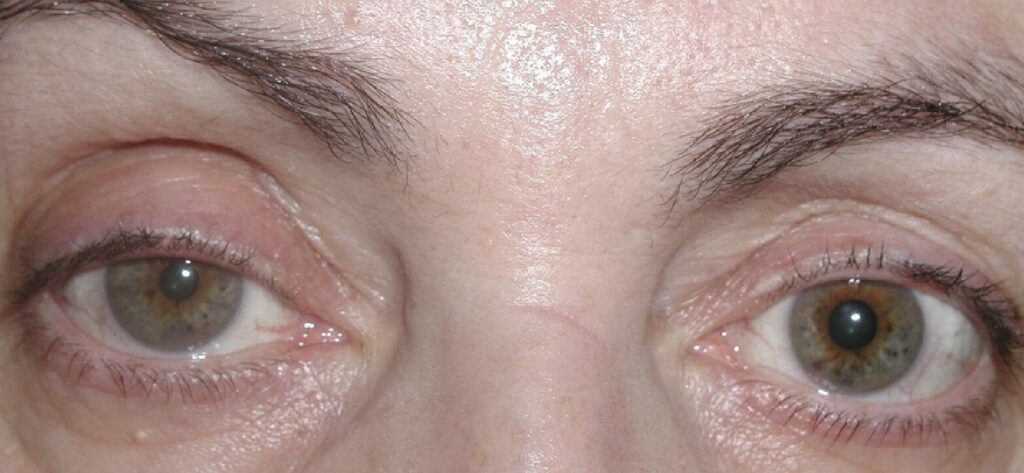
Reversal of anisocoria is the classic positive result, and the smaller pupil enlarges while the fellow pupil stays stable or shrinks slightly. For example, a right pupil that started smaller may now measure larger than the left.
Dim light makes this change easier to see, and ptosis may also improve, because the denervated Müller muscle responds. However, lid height varies with many factors, so interpret it alongside the pupil.
Interpreting a Negative Result
A negative test shows no reversal and no meaningful dilation of the smaller pupil, which is how physiologic anisocoria usually behaves. Nevertheless, a negative result lowers suspicion without excluding the diagnosis, and therefore clinical context should decide the next step.
False Negatives in the Apraclonidine Test
Timing is the main concern, because supersensitivity needs time to develop, and a very recent lesion may therefore produce little or no response. Case reports describe both early positive and early negative results, so no safe cutoff exists.
Mild or incomplete denervation may also blunt the response, but a cocaine test may answer the question if the drug is available. Adie pupil and other causes deserve review when the pattern does not fit (see Adie tonic pupil).
Apraclonidine Test Versus Cocaine
Cocaine blocks norepinephrine reuptake at the nerve terminal, so a denervated pupil dilates poorly, and Kardon and colleagues linked post-cocaine anisocoria of at least 0.8 mm with Horner syndrome. However, cocaine is harder to obtain and raises regulatory problems, while apraclonidine, by contrast, is widely available and gives a positive sign that is easy to see.
Localization Limits of the Apraclonidine Test
The test confirms the syndrome, but it does not localize the lesion. Hydroxyamphetamine may separate postganglionic from more proximal lesions, although availability varies, and associated signs and imaging usually guide localization (see Horner syndrome).
When Imaging Should Not Wait
Acute Horner syndrome with neck pain, headache or neurologic symptoms needs urgent vascular imaging, and carotid artery dissection is the main concern. Therefore, never let a pending or negative drop test delay referral, and similarly, a child with new Horner syndrome needs evaluation for neuroblastoma.
Apraclonidine Test Safety in Infants
Infants can absorb alpha-2 agonists systemically, and Watts and colleagues reported lethargy and related adverse effects in infants after diagnostic use. Consequently, many clinicians avoid the test in infants, while older children and adults usually tolerate it well, although drowsiness can occur.
Counseling the Patient
Explain that the drop tests nerve supply and does not treat the droop or pupil difference, and then warn about temporary changes in pupil size and lid height. Patients should also know that a positive result usually leads to further investigation.
Pitfalls to Avoid
- Do not compare measurements taken under different lighting
- Never treat a negative early test as proof of a normal pathway
- Do not test only the suspected eye
- Avoid corneal contact before the drop
- Never delay imaging when dissection is possible


Document what you see
Two smartphone imaging tools built for everyday clinic use — one for the slit lamp, one for the fundus.
From Choroida — the team behind this siteReferences
- Morales J, Brown SM, Abdul-Rahim AS, Crosson CE. Ocular effects of apraclonidine in Horner syndrome. Arch Ophthalmol. 2000;118:951-954.
- Brown SM, Aouchiche R, Freedman KA. The utility of 0.5% apraclonidine in the diagnosis of Horner syndrome. Arch Ophthalmol. 2003;121:1201-1203.
- Koc F, Kavuncu S, Kansu T, Acaroglu G, Firat E. The sensitivity and specificity of 0.5% apraclonidine in the diagnosis of oculosympathetic paresis. Br J Ophthalmol. 2005;89:1442-1444.
- Kardon RH, Denison CE, Brown CK, Thompson HS. Critical evaluation of the cocaine test in the diagnosis of Horner’s syndrome. Arch Ophthalmol. 1990;108:384-387.
- Watts P, Satterfield D, Lim MK. Adverse effects of apraclonidine used in the diagnosis of Horner syndrome in infants. J AAPOS. 2007;11:282-283.
Test yourself
A few questions straight from this article.
-
Which mechanism allows apraclonidine to dilate a Horner pupil?
Sympathetic denervation upregulates alpha-1 receptors on the dilator muscle, so apraclonidine's weak alpha-1 effect now produces visible mydriasis. -
What receptor profile makes apraclonidine useful for testing suspected Horner syndrome?
Apraclonidine is a strong alpha-2 and weak alpha-1 agonist, so it barely dilates a normally innervated iris but strongly dilates a denervated one. -
After instilling apraclonidine for suspected Horner syndrome, how long should you wait before re-measuring the pupils?
Measurements are repeated after 30 to 45 minutes under the same lighting used for the baseline recording. -
What is the classic positive apraclonidine test result in Horner syndrome?
The smaller pupil enlarges while the fellow pupil stays stable or shrinks slightly, so the side of the smaller pupil can switch. -
Why should tonometry be avoided before an apraclonidine test for Horner syndrome?
Corneal contact from tonometry can change how much drug penetrates, which would distort the comparison between the two eyes. -
What is the main reason an apraclonidine test can be falsely negative in genuine Horner syndrome?
Supersensitivity needs time to develop, so a very recent lesion may give little or no response; no safe time cutoff exists. -
In the cocaine test for Horner syndrome, what post-cocaine anisocoria was linked with the diagnosis by Kardon and colleagues?
Cocaine blocks norepinephrine reuptake, so the denervated pupil dilates poorly; post-cocaine anisocoria of at least 0.8 mm was linked with Horner syndrome. -
Which drop may help separate a postganglionic Horner syndrome from a more proximal lesion?
Apraclonidine confirms the syndrome but does not localize it; hydroxyamphetamine may separate postganglionic from more proximal lesions, though availability varies. -
Acute Horner syndrome with neck pain or headache needs urgent vascular imaging chiefly to exclude what?
Carotid artery dissection is the main concern, so a pending or negative drop test must never delay referral for imaging. -
Why do many clinicians avoid the apraclonidine test for Horner syndrome in infants?
Infants can absorb alpha-2 agonists systemically, and lethargy and related adverse effects have been reported after diagnostic use.

Writes and reviews the clinical articles on Educate. Every post is checked against peer-reviewed sources before it goes live.