BEAT-ROP and RAINBOW are the main randomized trials of anti-VEGF injections in retinopathy of prematurity.
BEAT-ROP tested bevacizumab, and RAINBOW tested ranibizumab against laser.
Therefore, they shaped how clinicians treat severe disease in premature infants.
Why BEAT-ROP Tested Anti-VEGF Therapy
Laser has been the standard treatment for severe retinopathy of prematurity.
It destroys peripheral retina and can cause myopia and field loss.
Also, VEGF drives the abnormal vessels in the disease.
As a result, blocking VEGF became an attractive option.
BEAT-ROP Trial Design
Mintz-Hittner and colleagues enrolled 150 infants with stage 3 disease with plus in zone I or posterior zone II.
Infants received bevacizumab 0.625 mg or conventional laser.
Also, the primary outcome was recurrence of disease needing retreatment by 54 weeks.
Therefore, the trial tested efficacy in the most severe cases.
Fundus Explorer Pro
Photograph the retinal findings described here with the phone already in your pocket — 22 D optics and built-in illumination in one handheld unit.
From Choroida — the team behind this siteBEAT-ROP Results
Recurrence was lower with bevacizumab than with laser overall.
The benefit was clear in zone I disease but not in posterior zone II.
Also, the study was small and not powered for systemic outcomes.
As a result, it raised questions as well as hopes.
Concerns After BEAT-ROP
Bevacizumab enters the systemic circulation and lowers VEGF levels for weeks.
VEGF is important for organ and brain development.
Also, the trial could not assess neurodevelopment.
Therefore, later studies looked at long-term outcomes.
RAINBOW Trial Design
Stahl and colleagues randomized 225 infants to ranibizumab 0.1 mg, ranibizumab 0.2 mg or laser.
The infants had very low birth weight and treatment-requiring disease.
Also, the main outcome was treatment success at 24 weeks.
Therefore, the design suited a regulatory decision.
RAINBOW Results
Ranibizumab 0.2 mg showed a higher rate of treatment success than laser.
The difference was borderline for statistical significance.
Also, the lower dose performed less well.
As a result, the higher dose was chosen for use.
FIREFLEYE and Aflibercept
The FIREFLEYE trial tested aflibercept 0.4 mg against laser.
Treatment success rates were high in both groups.
Also, the trial did not prove superiority.
In addition, an extension followed the infants.
Refractive and Structural Outcomes
Anti-VEGF therapy allows continued vascularization of the peripheral retina in many eyes.
Studies report less high myopia compared with laser.
Also, structural results at the posterior pole were favorable.
Therefore, anti-VEGF may preserve peripheral vision.
Late Reactivation
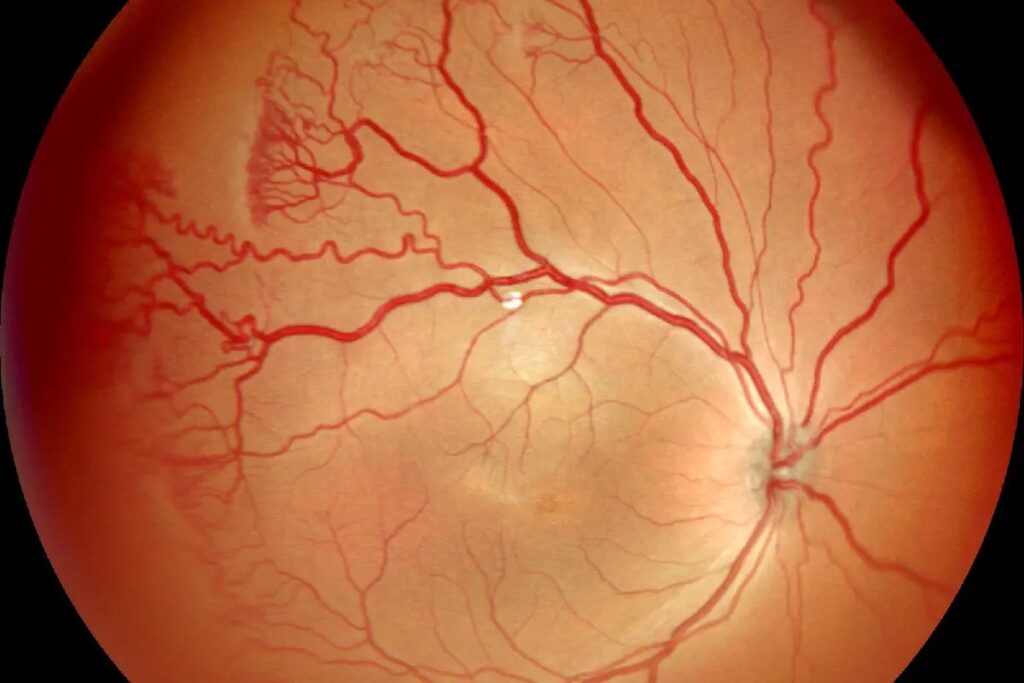
Disease can recur weeks to months after injection.
Some infants need repeat treatment even after months.
Also, long follow-up is mandatory.
As a result, schedule weekly checks at first and then regular visits.
Neurodevelopment Concerns
Morin and colleagues found more severe neurodevelopmental disability in infants treated with bevacizumab than with laser in a cohort study.
Other studies show conflicting results.
Also, confounding factors limit interpretation.
Therefore, weigh the systemic risk with the family.
BEAT-ROP and Systemic VEGF Suppression
Serum VEGF falls after bevacizumab injection and stays low for weeks.
Ranibizumab and aflibercept have different half-lives.
Also, the clinical importance of these differences is unclear.
As a result, dose and drug choice remain debated.
Selecting Infants for Treatment
Use the criteria from the Early Treatment trial to decide who needs therapy (see ETROP).
Consider anti-VEGF drugs in zone I disease and aggressive posterior forms.
Also, laser remains reasonable in zone II disease.
Therefore, individualize the choice.
Technique of Injection
Use a sterile technique in the neonatal unit or operating room.
Inject through the pars plana with a small needle at about 1 to 2 millimeters from the limbus.
Also, the dose is a fraction of the adult dose.
In addition, monitor intraocular pressure and the vessels afterward.
Follow-Up Schedule
Examine weekly until the vessels reach the periphery.
Continue visits for at least a year.
Also, monitor refraction and strabismus.
As a result, late problems are caught.
Counseling Parents After BEAT-ROP
Explain the benefits and the uncertainties of the two options.
Describe the need for long follow-up.
Also, mention the lack of data on long-term outcomes for some agents.
Therefore, document informed consent.
Pitfalls to Avoid
- Do not treat anti-VEGF drugs as a replacement for follow-up
- Never use adult doses in infants
- Do not assume that disease cannot return
- Never ignore the systemic considerations in very small infants
Aggressive Posterior ROP
This form shows rapid progression in zone I with flat vessels and strong plus disease.
Anti-VEGF therapy is popular in such cases.
Also, laser may be hard to place in posterior zones.
Therefore, injection can save time and vision.
Regulatory Status
Ranibizumab has regulatory approval for this use in some regions.
Bevacizumab and aflibercept are used with different local approvals.
Also, practice varies by center.
As a result, follow local guidance and consent rules.


Document what you see
Two smartphone imaging tools built for everyday clinic use — one for the slit lamp, one for the fundus.
From Choroida — the team behind this siteReferences
- Mintz-Hittner HA, Kennedy KA, Chuang AZ. Efficacy of intravitreal bevacizumab for stage 3+ retinopathy of prematurity. N Engl J Med. 2011;364:603-615.
- Stahl A, Lepore D, Fielder A, et al. Ranibizumab versus laser therapy for the treatment of very low birthweight infants with retinopathy of prematurity (RAINBOW): an open-label randomised controlled trial. Lancet. 2019;394:1551-1559.
- Stahl A, Sukgen EA, Wu WC, et al. Effect of intravitreal aflibercept vs laser photocoagulation on treatment success of retinopathy of prematurity: the FIREFLEYE randomized clinical trial. JAMA. 2022;328:348-359.
- Morin J, Luu TM, Superstein R, et al. Neurodevelopmental outcomes following bevacizumab injections for retinopathy of prematurity. Pediatrics. 2016;137:e20153218.

Writes and reviews the clinical articles on Educate. Every post is checked against peer-reviewed sources before it goes live.