Ethambutol optic neuropathy is a toxic injury of the optic nerve caused by a drug that is a mainstay of tuberculosis treatment.
It causes bilateral, painless loss of central vision and color perception, and it is also largely preventable with screening and early withdrawal (see toxic nutritional optic neuropathy).
How Common Is Ethambutol Optic Neuropathy?
The risk depends on dose and duration.
At 15 milligrams per kilogram a day, the incidence is about 1 percent or less.
It rises to several percent at 25 milligrams per kilogram, and higher with 35 (see the references).
Most cases develop two to eight months after the start of treatment, but later onset is possible.
Risk Factors of Ethambutol Optic Neuropathy
- High dose or long duration
- Kidney disease, since the kidneys clear the drug
- Older age, diabetes, and hypertension
- Alcohol use, smoking, and poor nutrition
- Pre-existing optic nerve or retinal disease
- Use with other drugs that affect the nerve, such as isoniazid and linezolid
Doses should be based on lean body weight and adjusted in renal failure.
Fundus Explorer Pro
Photograph the retinal findings described here with the phone already in your pocket — 22 D optics and built-in illumination in one handheld unit.
From Choroida — the team behind this siteEthambutol Optic Neuropathy: How the Drug Damages the Nerve
Ethambutol chelates metals such as copper and zinc and may impair mitochondrial function in retinal ganglion cells.
The papillomacular bundle is the most vulnerable, so patients lose central vision and color first.
Symptoms and Signs of Ethambutol Optic Neuropathy
- Blurred vision, with colors looking faded, often red-green first
- Reduced acuity, from mild to counting fingers
- Central or cecocentral scotomas on visual fields
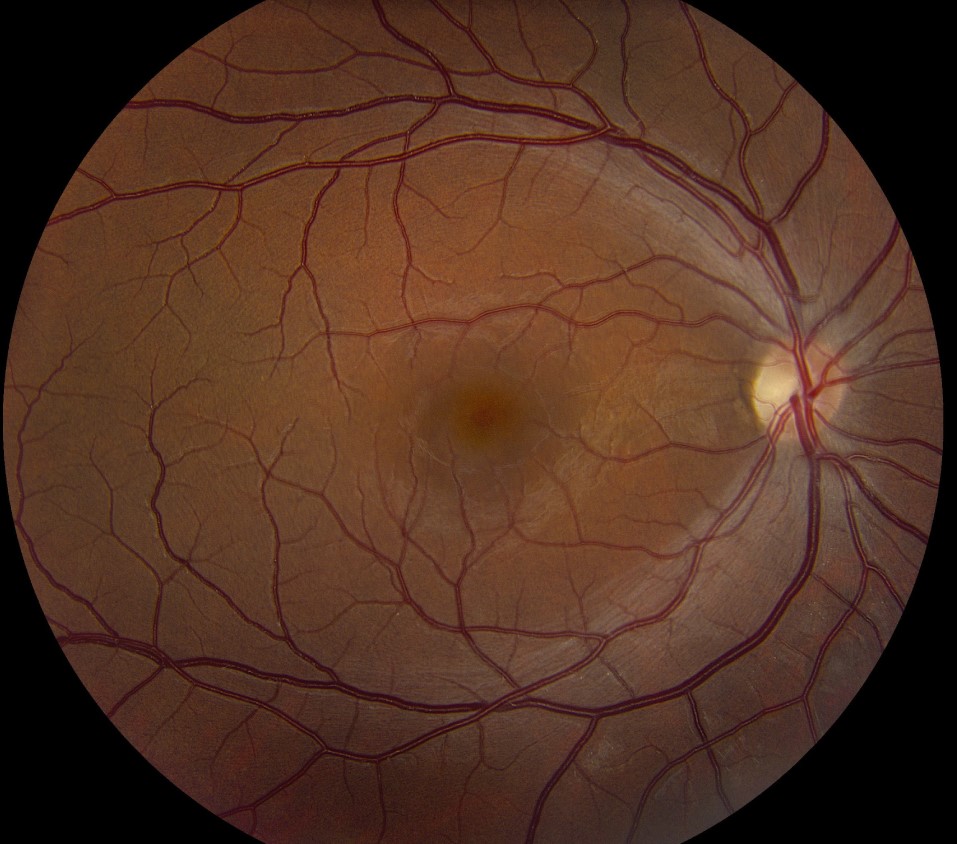
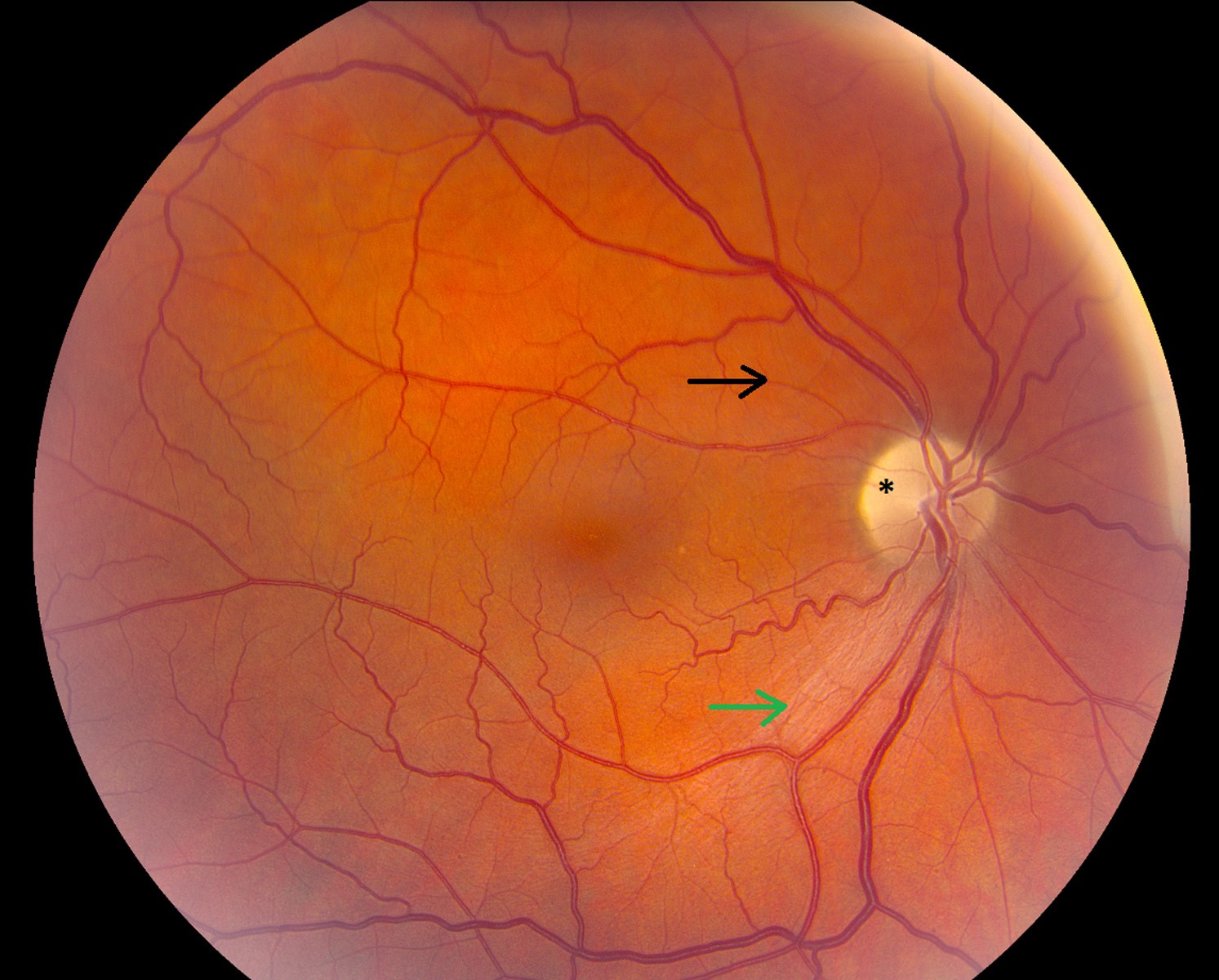
- Normal or mildly swollen disc early, with temporal pallor later
Both eyes are usually affected, and symmetrical, though there can be a delay between eyes.
Screening
Check acuity, color vision, and a field, such as a central field or Amsler grid, before starting treatment, and ask about symptoms each month (see color vision deficiency).
Monthly color vision tests are reasonable for high-risk patients, and OCT of the retinal nerve fiber layer helps in documentation.
Tell patients to report blurred vision or loss of color at once.
Diagnostic Tests
Visual evoked potentials may show prolonged latency or reduced amplitude (see visual evoked potentials).
OCT shows thinning of the temporal retinal nerve fiber layer and the ganglion cell layer, and doctors advise MRI when the picture is atypical to exclude compression or demyelination.
Management for Ethambutol Optic Neuropathy
Stop ethambutol as soon as toxicity is suspected, and coordinate with the physician treating tuberculosis, who will choose an alternative drug.
Check for other causes, such as nutritional deficiency, and give a balanced diet and vitamins.
There is no proven drug treatment for recovery.
Prognosis of Ethambutol Optic Neuropathy
Many patients improve within weeks to months after stopping the drug, especially those with milder loss, but recovery is incomplete in a share, and some are left with permanent loss.
Delay in stopping the drug is the main factor in poor outcome.
Practical Use
Document baseline function, educate patients, and follow monthly, with prompt referral for any change (see ocular tuberculosis).
An Example Case
A 58-year-old man with diabetes and reduced kidney function starts treatment for pulmonary tuberculosis with ethambutol at 25 milligrams per kilogram.
At four months he notices that colors look gray and that reading is harder, and acuity is 20/60 in both eyes, with central scotomas and a normal disc.
The physician stops ethambutol the same week, and after four months his acuity recovers to 20/30, with some persistent color loss.
Practical Steps in the Clinic
- Dose by weight and adjust for kidney function
- Obtain baseline acuity, color vision, and a field before starting
- Re-test monthly in high-risk patients and ask about visual changes
- Contact the treating physician at once if loss occurs
Counselling Patients
Tell patients that vision problems from this drug are uncommon, that they usually improve if the drug is stopped early, and that they should call right away for blurred vision or color loss.
Explain that they should not stop tuberculosis treatment on their own, since untreated infection is dangerous.
Key Points to Remember
- Risk rises with dose, duration, and kidney disease
- Patients lose central vision and color first
- Early withdrawal gives the best recovery
- Monthly checks help to catch problems early
Looking Ahead
Shorter tuberculosis regimens, such as those that replace ethambutol, may reduce the risk of toxicity, and OCT screening could find damage before symptoms appear.
Studies of drugs that protect mitochondria are exploring ways to prevent or reverse the damage.
Prevention in Programs
National tuberculosis programs should include visual screening in their protocols, with clear forms, training for nurses, and a rapid pathway to an eye clinic.
This cuts delays and improves recovery, and it is low-cost compared with the burden of blindness.


Document what you see
Two smartphone imaging tools built for everyday clinic use — one for the slit lamp, one for the fundus.
From Choroida — the team behind this siteReferences
- Chamberlain PD, Sadaka A, Berry S, Lee AG. Ethambutol optic neuropathy. Curr Opin Ophthalmol. 2017;28:545-551.
- Leibold JE. The ocular toxicity of ethambutol and its relation to dose. Ann N Y Acad Sci. 1966;135:904-909.
- Talbert Estlin KA, Sadun AA. Risk factors for ethambutol optic toxicity. Int Ophthalmol. 2010;30:63-72.
- American Academy of Ophthalmology. Basic and Clinical Science Course, Section 5: Neuro-Ophthalmology. AAO; current edition.

Writes and reviews the clinical articles on Educate. Every post is checked against peer-reviewed sources before it goes live.