Pediatric cataract visual outcomes depend as much on what happens after surgery as on the operation itself.
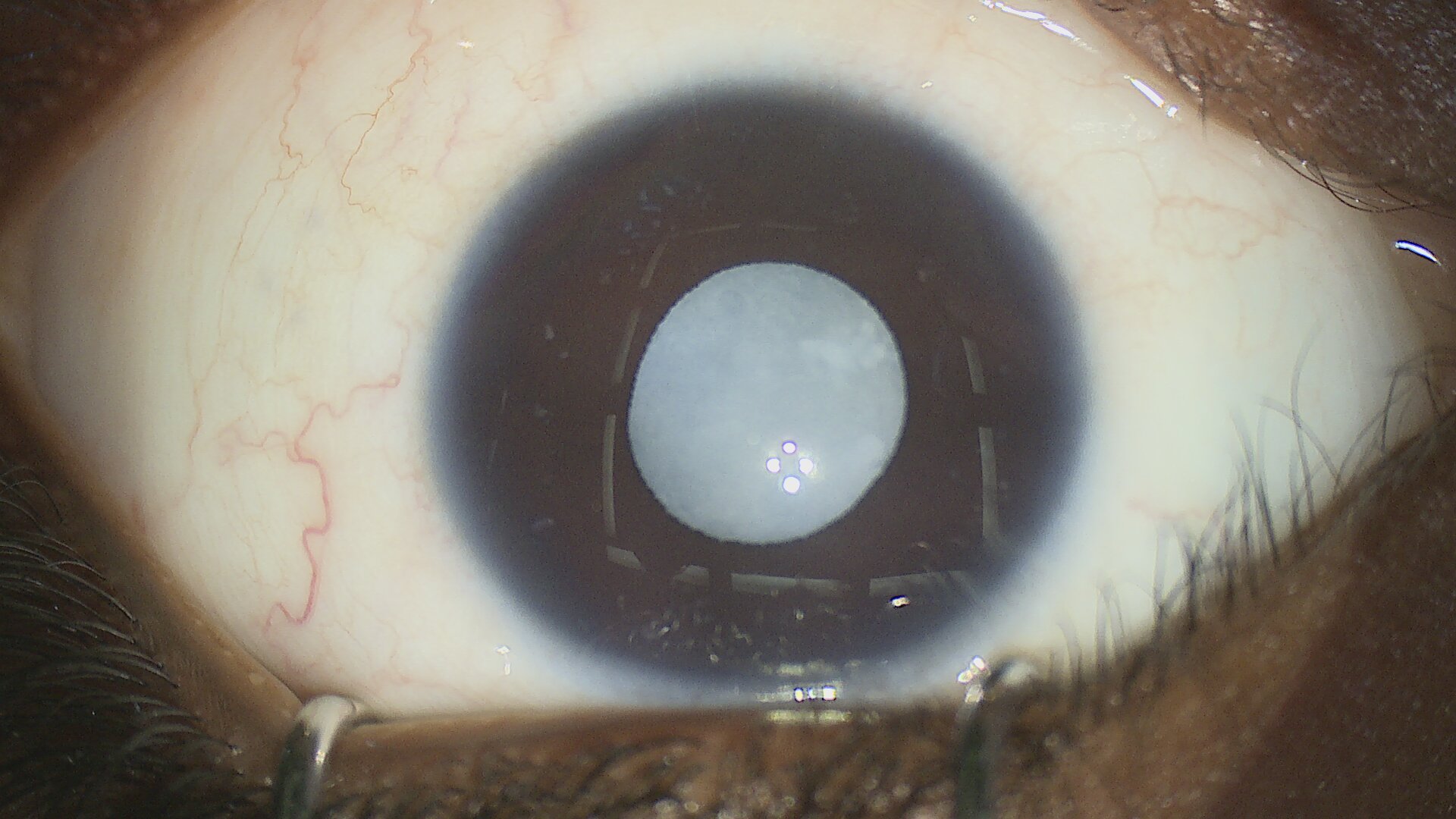
A child with a dense cataract is at risk of deprivation amblyopia, and the brain’s visual system develops only if the retina receives a clear image early.
Timing, optical correction, and treatment of amblyopia are the three pillars.
Critical Period and Pediatric Cataract Visual Outcomes
Studies of infants with dense cataract show that a delay in treatment reduces the chance of good vision.
- For dense unilateral congenital cataract, the best results come when surgery is done in the first six weeks of life (see the references)
- For dense bilateral cataract, surgery before about ten weeks gives better results
- Partial or small cataracts may be observed, with careful monitoring
Delay beyond these windows is linked to poorer vision and to nystagmus in bilateral cases (see congenital cataract).
Pediatric Cataract Visual Outcomes: The Infant Aphakia Treatment Study
This randomized trial compared contact lens correction with primary IOL implantation after surgery for unilateral cataract in infants of 1 to 6 months.
- At 4.5 years, visual acuity did not differ between the groups, and the median was similar, though many children had poor vision (see the references)
- The IOL group had more adverse events and more additional surgeries, mostly to clear visual axis opacification
- At 10.5 years, there was again no difference in visual acuity between the groups, and glaucoma-related events had occurred in a significant proportion of children in both groups (see the references)
The study led to an approach that favors careful discussion of options, and often contact lenses in the first year, with IOL in older infants and children (see pediatric cataract surgery and IOL timing).
All-fit Slit-Lamp Adapter
Record and share exactly what you see at the slit lamp. One adapter fits any slit lamp or surgical microscope — and any smartphone.
From Choroida — the team behind this siteOptical Correction
- Contact lenses: give a controlled correction in aphakic infants, but require good parental skills
- IOLs: provide a constant partial correction, with a risk of later refractive shifts
- Glasses: are used for bilateral aphakia and for residual error
The refractive plan must account for the growth of the eye, which causes a myopic shift over years.
Amblyopia Treatment
- Patching of the better eye is the usual treatment for unilateral cataract, started soon after surgery, with close monitoring of adherence
- Correction of refractive error with a bifocal or add for near
- Treatment of strabismus, which is common after cataract surgery
Poor adherence is the most common reason for poor outcomes, so family support is essential.
Complications of Pediatric Cataract Visual Outcomes
- Visual axis opacification: frequent after infant surgery, and prevented by a posterior capsulotomy and anterior vitrectomy in young children
- Glaucoma: a serious late complication that can appear years after surgery, so lifelong pressure monitoring is needed (see glaucoma after pediatric cataract surgery)
- Strabismus and nystagmus
- Retinal detachment, late
- Endophthalmitis, rare
Factors That Affect the Outcome
- Age at surgery, and the density and type of cataract
- Unilateral versus bilateral disease
- Associated eye anomalies, such as microphthalmia or persistent fetal vasculature
- Adherence to patching and correction
- Complications, particularly glaucoma
Children with systemic disease may also have neurological problems that limit vision.
Follow-Up for Pediatric Cataract Visual Outcomes
- Frequent early review, then at least yearly for life
- Pressure checks, with gonioscopy as needed
- Refraction and amblyopia monitoring
- Examination of the retina and optic nerve
Counselling Parents
Explain that surgery is only the start, and that daily patching and lens care are essential.
Give realistic expectations, and a plan for follow-up and support.
Visual Outcomes in Numbers
Outcomes vary widely.
Children with bilateral cataract treated early often reach 20/60 or better, while unilateral cases usually do worse, and many remain below 20/100, even with good care (see the references).
Nystagmus, late surgery, and poor adherence to patching predict worse results.
Support for the Family
- Provide written instructions and a contact number
- Teach lens insertion and removal with practice, and check technique at visits
- Arrange early referral to pediatric low vision and developmental services when needed
- Reinforce the plan at each visit, and thank parents for their work
Late Complications to Watch
Glaucoma can appear many years after surgery, so any child with a cataract history should have pressure checked for life.
Lens opacities, retinal detachment, and shifts in refraction need review at regular intervals.
Regular school-age vision screening and review of the refraction every few months in early childhood help to catch changes early, and good records allow the next clinician to see how the visual function developed.


Document what you see
Two smartphone imaging tools built for everyday clinic use — one for the slit lamp, one for the fundus.
From Choroida — the team behind this siteReferences
- Birch EE, Stager DR. The critical period for surgical treatment of dense congenital unilateral cataract. Invest Ophthalmol Vis Sci. 1996;37:1532-1538.
- Lambert SR, Lynn MJ, Hartmann EE, et al. Comparison of contact lens and intraocular lens correction of monocular aphakia during infancy: a randomized clinical trial of HOTV optotype acuity at age 4.5 years and clinical findings at age 5 years. JAMA Ophthalmol. 2014;132:676-682.
- Lambert SR, Cotsonis G, DuBois L, et al. Long-term effect of intraocular lens vs contact lens correction on visual acuity after cataract surgery during infancy: a randomized clinical trial. JAMA Ophthalmol. 2020;138:365-372.
- American Academy of Ophthalmology. Basic and Clinical Science Course, Section 6: Pediatric Ophthalmology and Strabismus. AAO; current edition.

Writes and reviews the clinical articles on Educate. Every post is checked against peer-reviewed sources before it goes live.