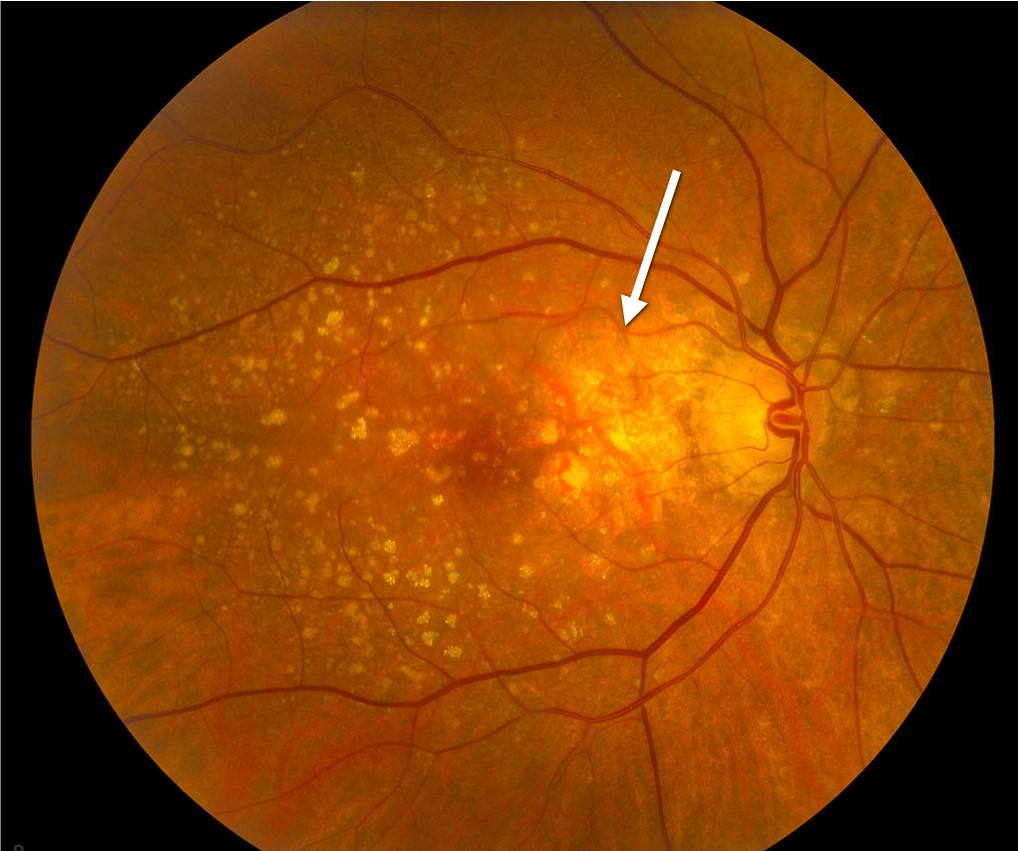
Photobiomodulation is the use of low-level red or near-infrared light to stimulate cells, and it has been proposed as a treatment for dry age-related macular degeneration (see age-related macular degeneration).
It is the first non-drug therapy for early and intermediate dry AMD that controlled trials have tested and that some countries now use clinically.
The evidence suggests a small benefit, and experts are still defining its place in practice.
What Is Photobiomodulation?
Cytochrome c oxidase in the mitochondria absorbs light in the red and near-infrared range, which may increase cellular energy production, reduce oxidative stress, and lower inflammation.
In experimental studies, treated retinal cells showed better function and survival.
The retina is rich in mitochondria and highly active, so it is a plausible target in a disease in which cellular energy and stress response are impaired.
Also, the dose is low, and the treatment does not heat the tissue or damage it.
Photobiomodulation: How It Is Delivered
- A device delivers light at several wavelengths, such as yellow, red, and near-infrared, through the pupil to the macula, with the patient fixing on a target
- Each session lasts a few minutes per eye
- A course consists of several sessions over a few weeks, with repeat courses at intervals, according to the protocol
- The treatment is noninvasive and painless, and no dilation may also be needed with some devices
Protocols differ between manufacturers, so the doses and wavelengths are not interchangeable.
Fundus Explorer Pro
Photograph the retinal findings described here with the phone already in your pocket — 22 D optics and built-in illumination in one handheld unit.
From Choroida — the team behind this siteWhat the Studies Show
- Early studies: a pilot trial reported improvement in visual acuity and reduction of drusen volume after treatment of dry AMD (see the references)
- LIGHTSITE I and later trials: sham-controlled studies in dry AMD reported small average gains in visual acuity in treated eyes compared with sham, with some improvement in other measures such as contrast sensitivity and drusen volume
- LIGHTSITE III: a larger randomized sham-controlled trial reported that treated eyes had a greater improvement in best-corrected acuity than sham eyes over about a year, and fewer new areas of atrophy in some analyses
The size of the effect is small, a few letters on average, and experts debate its clinical importance.
A regulator has authorized the device in some regions on the basis of these data.
Photobiomodulation: Limits of the Evidence
- The trials were relatively small and short, with follow-up of a year or so
- The improvement in acuity might not translate into lasting benefit, and the impact on progression to advanced disease is unknown
- Many patients in the trials had early or intermediate disease, with minimal baseline vision loss
- Trials used different devices and protocols, which makes comparison difficult
- The sham treatment may not fully mask patients, since they can see the light
- Cost and access limit availability
Independent confirmation and long-term data are needed.
Safety
Studies report few adverse events, and no serious safety concerns have emerged from the trials.
In addition, some patients report transient light sensitivity or discomfort.
Also, the labeling contraindicates the treatment in patients with photosensitivity or in those taking certain photosensitizing drugs.
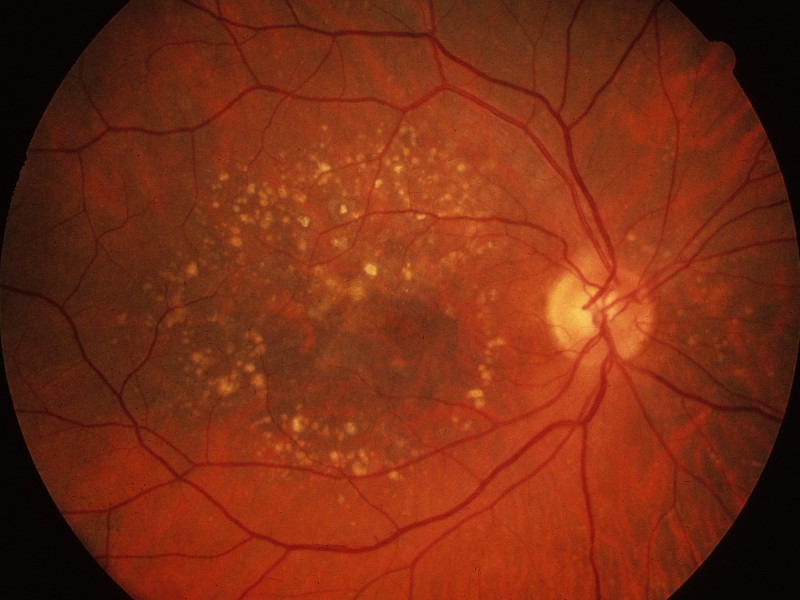
Photobiomodulation: Who Might Consider It
- Patients with intermediate dry AMD who want a noninvasive option, understanding the uncertain benefit
- Patients with early geographic atrophy who are not candidates for injections
- Those enrolled in research programs
It should not replace proven measures, such as stopping smoking, taking AREDS2 supplements when indicated (see AREDS2 supplements), and monitoring for neovascular disease.
Counselling
Be clear about the evidence: the effect appears small, results vary, and long-term benefit is not proven.
Explain the practical aspects, such as cost, the number of sessions, and the need for follow-up.
Do not allow the treatment to delay attention to symptoms of neovascular AMD, such as new distortion.
Practical Questions
- How many sessions? Protocols vary, and a typical course is several sessions over a few weeks, repeated after a number of months
- Does it hurt? No, the treatment is painless, although patients may see bright light during the session
- Is it covered by insurance? In many places it is not, so access is affected
- Can it be combined with other treatments? Yes, there is no known conflict with supplements or injections
Make sure patients do not stop proven care because of a treatment with limited evidence.
What Future Studies Need
Larger trials with longer follow-up and patient-centered outcomes, such as reading ability and the rate of progression to advanced disease, are needed.
Studies that compare protocols and examine which patients respond best would help to refine the use.


Document what you see
Two smartphone imaging tools built for everyday clinic use — one for the slit lamp, one for the fundus.
From Choroida — the team behind this siteReferences
- Merry GF, Munk MR, Dotson RS, et al. Photobiomodulation reduces drusen volume and improves visual acuity and contrast sensitivity in dry age-related macular degeneration. Acta Ophthalmol. 2017;95:e270-e277.
- Markowitz SN, Devenyi RG, Munk MR, et al. A double-masked, randomized, sham-controlled, single-center study with photobiomodulation for the treatment of dry age-related macular degeneration. Retina. 2020;40:1471-1482.
- Ryan SJ, Schachat AP, Wilkinson CP, et al, eds. Retina. 6th ed. Elsevier; 2018.
- American Academy of Ophthalmology. Basic and Clinical Science Course, Section 12: Retina and Vitreous. AAO; current edition.

Writes and reviews the clinical articles on Educate. Every post is checked against peer-reviewed sources before it goes live.