
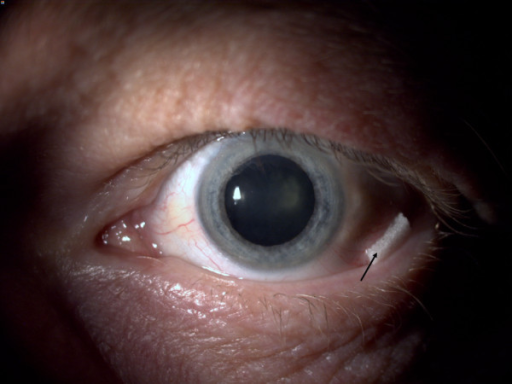
Intraoperative floppy iris syndrome is a now well-recognized triad of iris billowing, progressive intraoperative miosis, and iris prolapse toward the phacoemulsification incision, most strongly associated with the alpha-1 adrenergic receptor antagonist tamsulosin, and its recognition transformed how cataract surgeons approach preoperative medication history, since a medication taken for an entirely unrelated condition, benign prostatic hyperplasia, can meaningfully complicate a routine cataract operation years after the drug was started, or even after it has been discontinued.
Why Tamsulosin Affects the Iris
The iris dilator muscle is under sympathetic, alpha-1 adrenergic control, and tamsulosin, a highly selective alpha-1A receptor antagonist used to relax smooth muscle in the prostate and improve urinary flow in benign prostatic hyperplasia, also blocks these same receptors in the iris dilator muscle, since the drug’s selectivity for the prostate is not absolute.
This chronic alpha-1 blockade appears to cause a degree of iris dilator muscle atrophy over time, which is why the syndrome can persist even after a patient has stopped taking tamsulosin, sometimes for years, distinguishing it from a simple, reversible pharmacologic effect that would resolve promptly with drug discontinuation.
The Clinical Triad
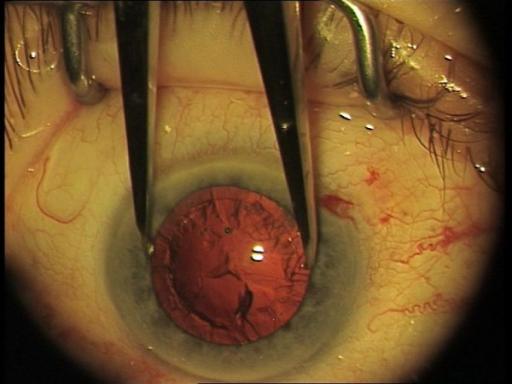
- Iris billowing: a flaccid, undulating movement of the iris stroma in response to normal intraoperative fluid currents, rather than the iris remaining relatively stable as it does in an unaffected eye
- Progressive intraoperative miosis: the pupil, which may have dilated adequately preoperatively, progressively constricts during the course of surgery despite standard intraoperative measures to maintain dilation
- Iris prolapse: the flaccid iris tends to prolapse toward and through the phacoemulsification incisions, increasing the risk of iris trauma and surgical complications if not anticipated and managed
All-fit Slit-Lamp Adapter
Record and share exactly what you see at the slit lamp. One adapter fits any slit lamp or surgical microscope — and any smartphone.
From Choroida — the team behind this siteOther Associated Medications
While tamsulosin carries the strongest and most extensively documented association, other alpha-1 antagonists used for benign prostatic hyperplasia and, in some cases, alpha-blockers used for other indications, including certain antihypertensives, have also been associated with intraoperative floppy iris syndrome to varying, generally lesser, degrees.
Why Preoperative History Matters
Because the risk associated with tamsulosin is not reliably eliminated by stopping the medication before surgery, given the apparent structural change to the iris dilator muscle with chronic use, the key clinical value of identifying tamsulosin use preoperatively is not primarily to guide a medication-stopping strategy, but rather to allow the surgeon to anticipate the syndrome and prepare appropriate intraoperative strategies in advance.
- A history of any current or past tamsulosin use, specifically asked about given that patients may not volunteer or recall this detail, or may not associate a urinary medication with their upcoming eye surgery
- Assessment of pupil size and iris appearance preoperatively, though a normally dilating pupil preoperatively does not reliably predict absence of intraoperative floppy iris syndrome
Intraoperative Management Strategies
- Use of iris hooks or a pupil expansion ring device, placed early in the case, to mechanically maintain pupillary dilation and support the iris margin throughout surgery
- Intracameral use of a mydriatic-anesthetic combination or other pharmacologic agents to help sustain intraoperative dilation
- Adjusted phacoemulsification fluidic parameters, including reduced flow rates, to minimize the fluid currents that provoke iris billowing
- Careful, deliberate surgical technique around the iris margin, anticipating the tendency toward prolapse at the incision sites
Outcomes With Appropriate Preparation
With preoperative recognition and appropriate intraoperative strategies in place, cataract surgery in patients with intraoperative floppy iris syndrome can be performed safely, with complication rates similar to unaffected eyes; the main risk arises when the syndrome is not anticipated, since managing it reactively once significant miosis and iris prolapse have already developed is considerably more difficult and carries a higher complication risk than proactive preparation.
Prognosis
With appropriate anticipation and intraoperative management, most patients with a history of tamsulosin use undergo successful cataract surgery without significant complications related to the syndrome.
This condition is a clear example of why a thorough medication history, including medications that seem entirely unrelated to the eye, is a genuinely important part of preoperative cataract surgery planning, not a routine formality.
Document what you see
Two smartphone imaging tools built for everyday clinic use — one for the slit lamp, one for the fundus.
From Choroida — the team behind this siteReferences
- Chang DF, Campbell JR. Intraoperative floppy iris syndrome associated with tamsulosin. J Cataract Refract Surg. 2005;31:664-673.
- Chang DF, Osher RH, Wang L, Koch DD. Prospective multicenter evaluation of cataract surgery in patients taking tamsulosin (Flomax). Ophthalmology. 2007;114:957-964.
- Bell CM, Hatch WV, Fischer HD, et al. Association between tamsulosin and serious ophthalmic adverse events in older men following cataract surgery. JAMA. 2009;301:1991-1996.
- Chang DF, Braga-Mele R, Mamalis N, et al. Clinical experience with intraoperative floppy-iris syndrome. J Cataract Refract Surg. 2008;34:1201-1209.
