Bleb needling frees scar tissue around a failing filtering bleb, and it restores aqueous flow in many eyes.
It is a minor procedure that can be done at the slit lamp or in the operating room.
Therefore, it is often the first step when a trabeculectomy begins to fail.
Why Blebs Fail
Fibroblasts proliferate under the conjunctiva and the scleral flap and scar the outflow path.
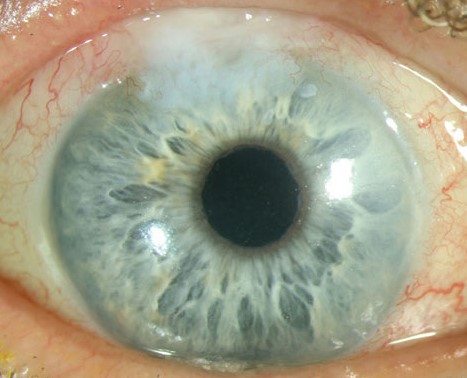
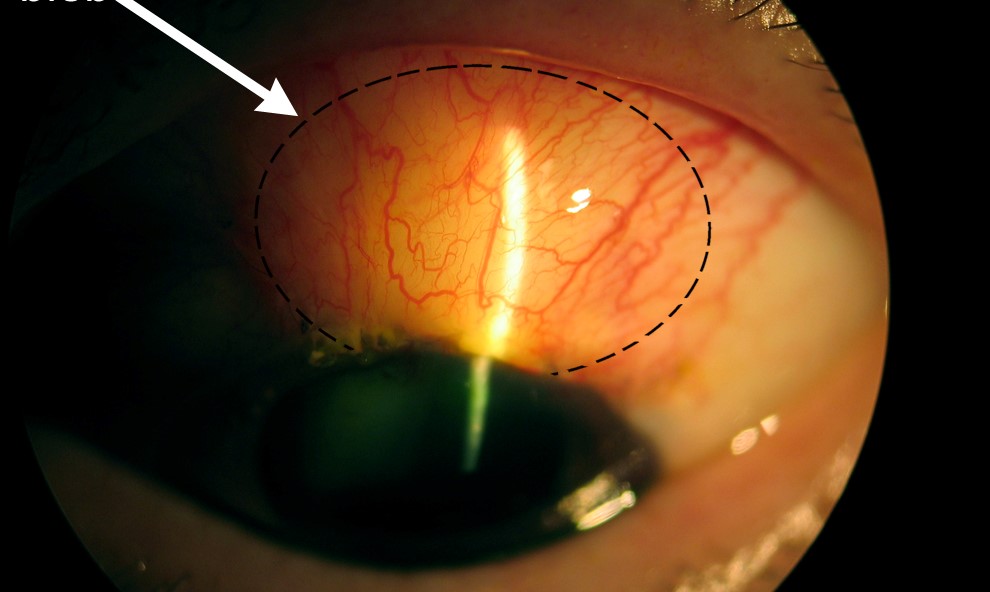
The result is a flat, vascular bleb or an encapsulated, tense one.
Also, pressure rises when the scar blocks the flow.
Because scarring is the main cause, antimetabolites help in the rescue.
Indications for Bleb Needling
The main indication is a rise in pressure with a bleb that has lost its function.
A flat, vascular bleb and a high, tense, encapsulated bleb both qualify.
Also, early needling gives better results than late attempts.
Therefore, review blebs closely in the first weeks.
All-fit Slit-Lamp Adapter
Record and share exactly what you see at the slit lamp. One adapter fits any slit lamp or surgical microscope — and any smartphone.
From Choroida — the team behind this siteContraindications and Cautions
Avoid needling an active bleb leak or a blebitis.
Be careful in eyes with thin conjunctiva and in eyes with a single functioning eye.
Also, use caution when the anterior chamber is shallow.
Because complications can be severe, weigh the risks.
Preparing for Bleb Needling
Explain the procedure and obtain consent.
Instill topical anesthetic and povidone-iodine, and use a speculum.
Also, prepare a fine needle on a syringe and the antimetabolite.
Then position the patient at the slit lamp or under the microscope.
Technique of Bleb Needling
Insert the needle through the conjunctiva at a distance from the bleb, to avoid leaking.
Pass it under the conjunctiva and across the scleral flap edges to sweep the scar.
Elevate the flap gently and release the adhesions.
Also, aim to restore a diffuse bleb and to see aqueous flow.
Antimetabolites With Bleb Needling
Mitomycin C and 5-fluorouracil reduce scarring.
Broadway and colleagues reported good results with adjunctive 5-fluorouracil.
Mardelli and colleagues reported benefit from mitomycin C.
Because both agents carry risks, use measured doses and avoid contact with the cornea.
Results of Bleb Needling
Studies report that a majority of blebs improve in the short term.
Some eyes need repeat needling or other procedures.
Also, results are better with vascular blebs treated early.
Therefore, counsel patients that the effect may not last.
Complications of Bleb Needling
Bleb leak, hypotony and hyphema are the main early problems.
Choroidal effusion and maculopathy can follow low pressure (see hypotony maculopathy).
Also, blebitis and endophthalmitis are rare but serious (see blebitis).
Because infection can follow, give clear warnings.
After the Procedure
Check the pressure and the bleb the next day.
Use topical steroids to reduce inflammation, and stop or adjust the glaucoma drops as needed.
Also, review the eye every few days at first.
Therefore, close follow-up ensures early recognition of problems.
When Bleb Needling Fails
Consider repeat needling, revision of the flap or a tube (see glaucoma drainage devices).
Laser or cyclodestructive procedures are alternatives in some patients.
Also, discuss the options with the patient.
Patient Education
Explain the signs of infection and sudden vision loss.
Tell patients to avoid rubbing and heavy lifting for a short period.
Also, remind them to attend all visits.
Slit-Lamp Versus Operating Room Needling
Slit-lamp needling is quick and avoids a theater booking.
Operating-room needling allows a speculum, a microscope and control of the eye.
Also, the choice depends on the bleb, the patient and the surgeon.
Therefore, choose the setting that gives the safest access.
Assessing the Bleb Before Needling
Look at the height, the vascularity and the extent of the bleb.
Check for leaks with fluorescein and test the pressure.
Also, examine the angle and the flap for patency.
Because a tight flap may need release, plan the approach.
Laser Suture Lysis and Its Role
Suture lysis can open a tight flap early after surgery.
It is a useful step before needling in some eyes.
Also, it is less invasive and carries fewer risks.
Therefore, consider lysis first when the bleb is flat but the flap is tight.
Dosing and Handling of Antimetabolites
Use a clean technique and a fixed dose.
Dispose of equipment according to local policy.
Also, avoid spillage onto the cornea.
Because both agents are toxic to tissues, handle them with care.
Postoperative Drops and Pressure Control
Restart or stop glaucoma drops according to the pressure.
Steroid drops reduce scarring and inflammation.
Also, a bleb massage may help in selected eyes.
Therefore, follow the plan until the pressure is stable.
For the latest studies, see the PubMed results for bleb needling.


Document what you see
Two smartphone imaging tools built for everyday clinic use — one for the slit lamp, one for the fundus.
From Choroida — the team behind this siteReferences
- Mardelli PG, Lederer CM Jr, Murray PL, Pastor SA, Hassanein KM. Slit-lamp needle revision of failed filtering blebs using mitomycin C. Ophthalmology. 1996;103:1946-1955.
- Broadway DC, Bloom PA, Bunce C, Thiagarajan M, Khaw PT. Needle revision of failing and failed trabeculectomy blebs with adjunctive 5-fluorouracil: survival analysis. Ophthalmology. 2004;111:665-673.
- Shin DH, Juzych MS, Khatana AK, Swendris RP, Parrow KA. Needling revision of failed filtering blebs with adjunctive 5-fluorouracil. Ophthalmic Surg. 1993;24:242-248.
- Wilkins M, Indar A, Wormald R. Intra-operative mitomycin C for glaucoma surgery. Cochrane Database Syst Rev. 2005;(4):CD002897.

Writes and reviews the clinical articles on Educate. Every post is checked against peer-reviewed sources before it goes live.