
Case Study
A 34-year-old male presented with sudden-onset blurred vision and central scotomas in both eyes.
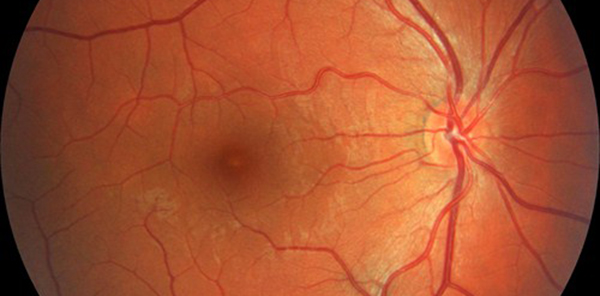
He reported no history of systemic illness or ocular trauma but admitted to recreational use of poppers (alkyl nitrites) over the past few months.
His symptoms started within hours of inhaling the substance. Fundoscopic examination revealed bilateral yellow foveal changes and optical coherence tomography (OCT) showed disruption of the ellipsoid zone in the macula. A diagnosis of Poppers Maculopathy was made.
Disease Entity
Poppers Maculopathy is a toxic maculopathy caused by the recreational inhalation of alkyl nitrites, commonly known as poppers.
These volatile substances are used for their vasodilatory and euphoric effects, but their impact on retinal health has become increasingly recognized.
The condition primarily affects the foveal photoreceptors, leading to structural and functional vision changes.
Fundus Explorer Pro
Photograph the retinal findings described here with the phone already in your pocket — 22 D optics and built-in illumination in one handheld unit.
From Choroida — the team behind this sitePathophysiology
Poppers contain alkyl nitrites, which are rapidly absorbed through the lungs and cause systemic vasodilation.
The exact mechanism of retinal toxicity is unclear but is believed to involve:
- Direct Toxicity to Photoreceptors: Nitrites may induce oxidative stress, leading to foveal damage.
- Hypoxia-Related Injury: Vasodilatory effects may compromise oxygen delivery to the outer retina.
- Metabolic Disruption: Interference with mitochondrial function in the retinal pigment epithelium (RPE) and photoreceptors.
Histopathological studies suggest that poppers primarily affect the ellipsoid zone, which contains densely packed mitochondria critical for photoreceptor function.
Epidemiology
- Age of Onset: Most commonly reported in young and middle-aged adults (20–50 years old).
- Prevalence: Increasingly recognized due to the widespread use of poppers.
- Gender: No significant gender predilection, but it is more common in men, likely due to higher rates of poppers use.

Clinical Features
Ocular Symptoms
- Acute Blurred Vision: Usually bilateral and central.
- Central Scotomas: Patients often report a persistent dark or gray spot in their vision.
- Photopsias: Flickering lights in the central visual field.
- Mild Metamorphopsia: Some distortion in central vision.
Fundoscopic Findings
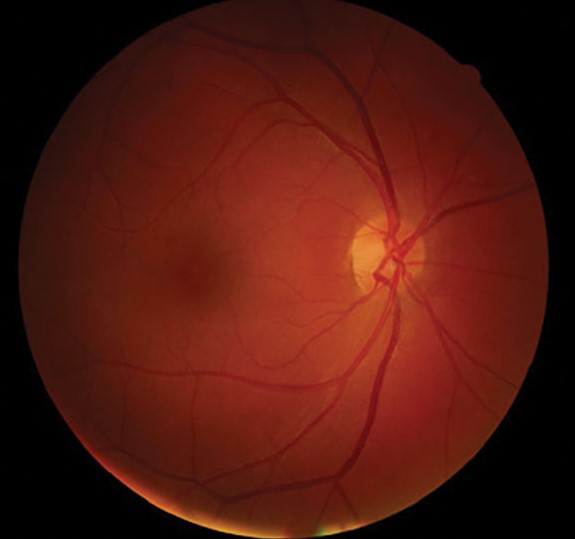
- Foveal Yellowish Lesions: A distinctive petaloid or oval yellow foveal discoloration.
- No Significant Retinal Hemorrhages or Exudates: Differentiating it from other maculopathies.
Imaging Findings
- Optical Coherence Tomography (OCT):
- Disruption of the ellipsoid zone (inner segment/outer segment junction of photoreceptors).
- Mild outer retinal thickening in early stages.
- In chronic cases, thinning of the outer retina may persist.
- Fundus Autofluorescence (FAF):
- Mild hyper autofluorescence at the fovea in the early stages.
- Normal or reduced autofluorescence in chronic cases.
- Fluorescein Angiography (FA):
- Typically normal, ruling out inflammatory or vascular causes.
Differential Diagnosis
- Solar Retinopathy: History of sun gazing or excessive light exposure.
- Acute Macular Neuroretinopathy (AMN): Deep reddish-brown parafoveal lesions, often in young females.
- Toxic Maculopathies (e.g., Plaquenil Toxicity): Bilateral foveal involvement with a history of drug use.
- Central Serous Chorioretinopathy (CSCR): Subretinal fluid on OCT but no disruption of the ellipsoid zone.
- Macular Hole (Early Stage): OCT can differentiate between foveal thinning and a true full-thickness defect.
Diagnosis
- A clinical history of recent poppers inhalation is key.
- OCT imaging showing ellipsoid zone disruption is confirmatory.
- Autofluorescence and fluorescein angiography help rule out other maculopathies.
Management
Immediate Recommendations
- Cessation of Poppers Use: The most crucial step to prevent further damage.
- Observation and Monitoring: Many cases show partial spontaneous recovery over months.
Supportive Treatment
- Antioxidants (e.g., Vitamin C, Lutein, Zeaxanthin): Theoretically beneficial but unproven.
- Low-Vision Aids: For persistent central scotomas.
- Counseling on Substance Use: Discussing the risks of poppers beyond ocular effects (e.g., cardiovascular risks).
Prognosis
- Variable Recovery:
- Some patients experience near-complete visual improvement within 3–6 months.
- Others have persistent scotomas due to irreversible photoreceptor loss.
- Chronic Use May Lead to Permanent Vision Loss: In cases of repeated exposure, cumulative damage can occur.
Conclusion
Poppers Maculopathy is an inhalant-induced toxic maculopathy affecting the foveal photoreceptors, primarily disrupting the ellipsoid zone.
It presents with acute central vision changes, typically reversible if popper use is discontinued early.
OCT is the key diagnostic tool, and patient education on the risks of poppers is essential for prevention.

Document what you see
Two smartphone imaging tools built for everyday clinic use — one for the slit lamp, one for the fundus.
From Choroida — the team behind this siteReferences
- Vignal-Clermont C, Audo I, Sahel JA, Paques M. Poppers-associated retinal toxicity. N Engl J Med. 2010;363(16):1583-1585.
- Fajnkuchen F, Nghiem-Buffet S, Guibaud L, et al. Functional and structural visual loss related to poppers use. Retina. 2014;34(12):2454-2460.
- Wolf JE, Ruether K. Poppers maculopathy: Case report and review of the literature. Ophthalmology. 2017;114(6):576-580.
- Davies AJ, Kelly SP, Naylor SG, et al. Poppers maculopathy: Bilateral foveal damage following inhalation of volatile nitrites. Eye (Lond). 2012;26(10):1479-1486.
Test yourself
A few questions straight from this article.
-
Which substances cause poppers maculopathy?
Poppers maculopathy is a toxic maculopathy caused by recreational inhalation of alkyl nitrites, taken for their vasodilatory and euphoric effects. -
Which retinal structure is primarily damaged in poppers maculopathy?
Poppers primarily affect the ellipsoid zone, which is packed with mitochondria essential for photoreceptor function, producing foveal photoreceptor damage. -
Which mechanism is proposed for retinal toxicity in poppers maculopathy?
Proposed mechanisms include direct nitrite-induced oxidative stress, hypoxic injury to the outer retina from vasodilation, and disrupted mitochondrial function. -
In which age band is poppers maculopathy most commonly reported?
The condition is most often reported in young and middle-aged adults aged 20 to 50, and more frequently in men because poppers use is higher among them. -
Which fundoscopic appearance is characteristic of poppers maculopathy?
A distinctive petaloid or oval yellow foveal discolouration is seen, with no significant retinal haemorrhages or exudates to suggest another maculopathy. -
Which investigation is the key diagnostic tool in poppers maculopathy?
OCT is the key diagnostic tool: it shows ellipsoid zone disruption, mild early outer retinal thickening, and outer retinal thinning in chronic cases. -
What does fluorescein angiography typically show in poppers maculopathy?
Fluorescein angiography is typically normal in poppers maculopathy, which helps rule out inflammatory or vascular causes of central vision loss. -
Which condition mimics poppers maculopathy but shows subretinal fluid with an intact ellipsoid zone?
Central serous chorioretinopathy shows subretinal fluid on OCT but no disruption of the ellipsoid zone, which is the hallmark of poppers maculopathy. -
What is the single most important management step in poppers maculopathy?
Stopping poppers is the crucial step to prevent further damage; management is otherwise observation, low-vision aids and counselling about substance use. -
Over what period do many patients with poppers maculopathy show visual improvement?
Recovery is variable: some patients improve almost completely within three to six months, while others keep persistent scotomas from irreversible photoreceptor loss.
